
Why the Same Drain Keeps Clogging and What to Do Next
Tired of recurring drain clogs? Stop relying on temporary fixes and schedule a professional inspection with a trusted Plumber in Arvada today.

Clear a drain, and a few weeks later it's backed up again. Clear it a second time, and the pattern repeats until you start half-joking that the pipe is cursed. It isn't. A drain that keeps clogging usually points to buildup or another underlying problem that a quick plunge never fully removes.
It's easy to treat a recurring clog like a headache: take something for it and move on. A plunger or a bottle of drain cleaner restores flow, the sink drains fine for a while, and the actual cause may remain unaddressed. If that sounds familiar, homeowners searching for Plumber Arvada services may want to arrange an inspection rather than repeat the same short-term fix every few weeks. Once you know which of a few common causes is behind the problem, fixing it properly stops being a guessing game.
The Clog You See Isn't Always the Clog That Matters
Although some blockages form around the drain opening or trap, recurring clogs often involve buildup farther along the pipe. Hair, soap scum, and grease coat the inside of a pipe gradually, and each layer narrows the opening a little more. A plunger or chemical cleaner can punch a channel through the middle of that buildup, which gets water moving again but may leave much of the buildup behind. Give it a few weeks, and the remaining buildup restricts the flow all over again.
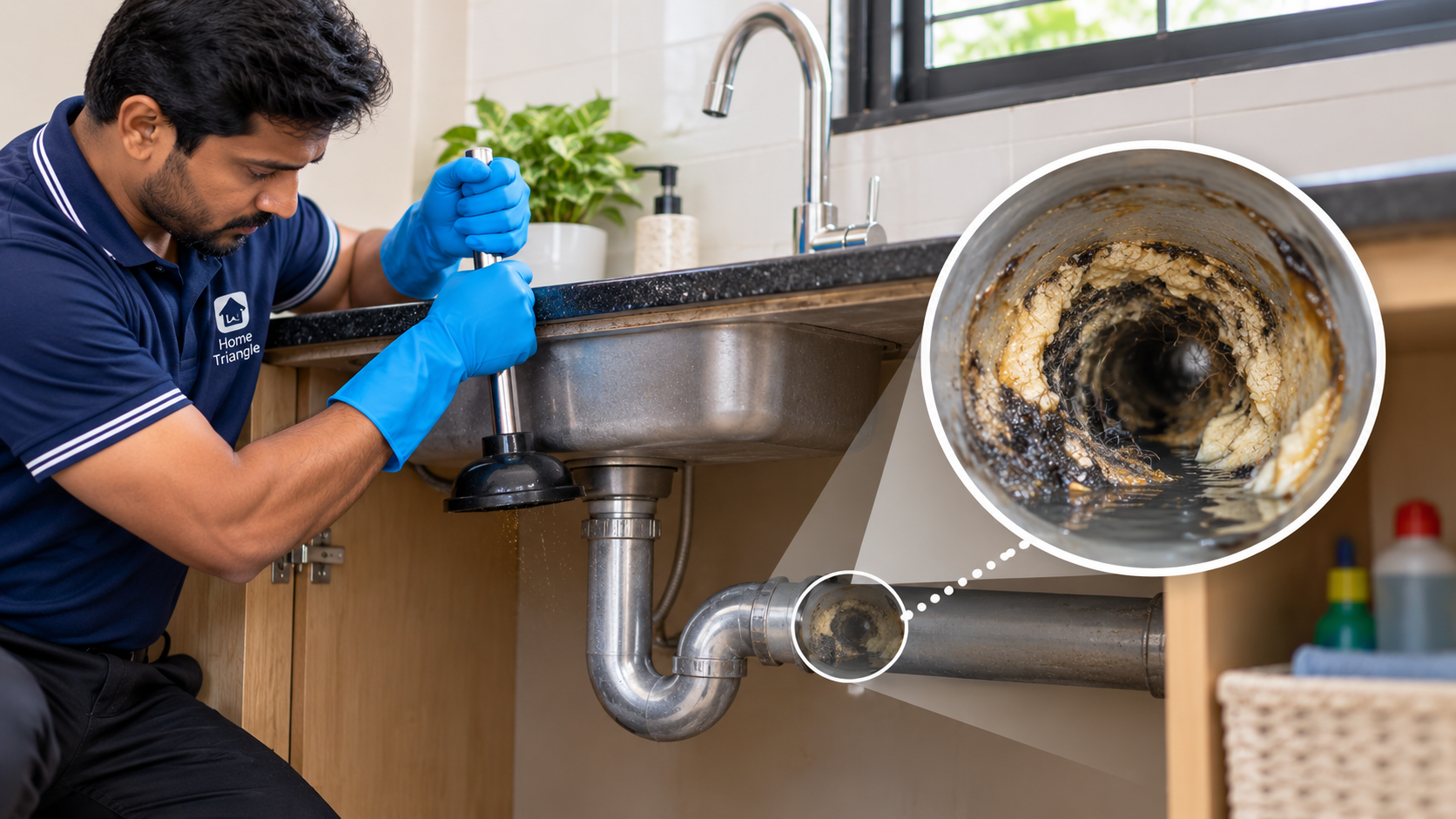
That's the real reason a drain clogs over and over: it usually has little to do with what went down the sink this week. It's residue from months, sometimes years, of ordinary use finally catching up with a pipe that was never fully cleaned.
Pipe Slope and Age Play a Bigger Role Than People Expect
Drains work on gravity, and gravity only does its job when the pipe holds the correct slope. In older homes, settlement, soil movement, or weakened supports can leave sections of pipe flatter than intended. Water moving through a flattened section carries less momentum, so debris that would normally wash through starts settling instead.
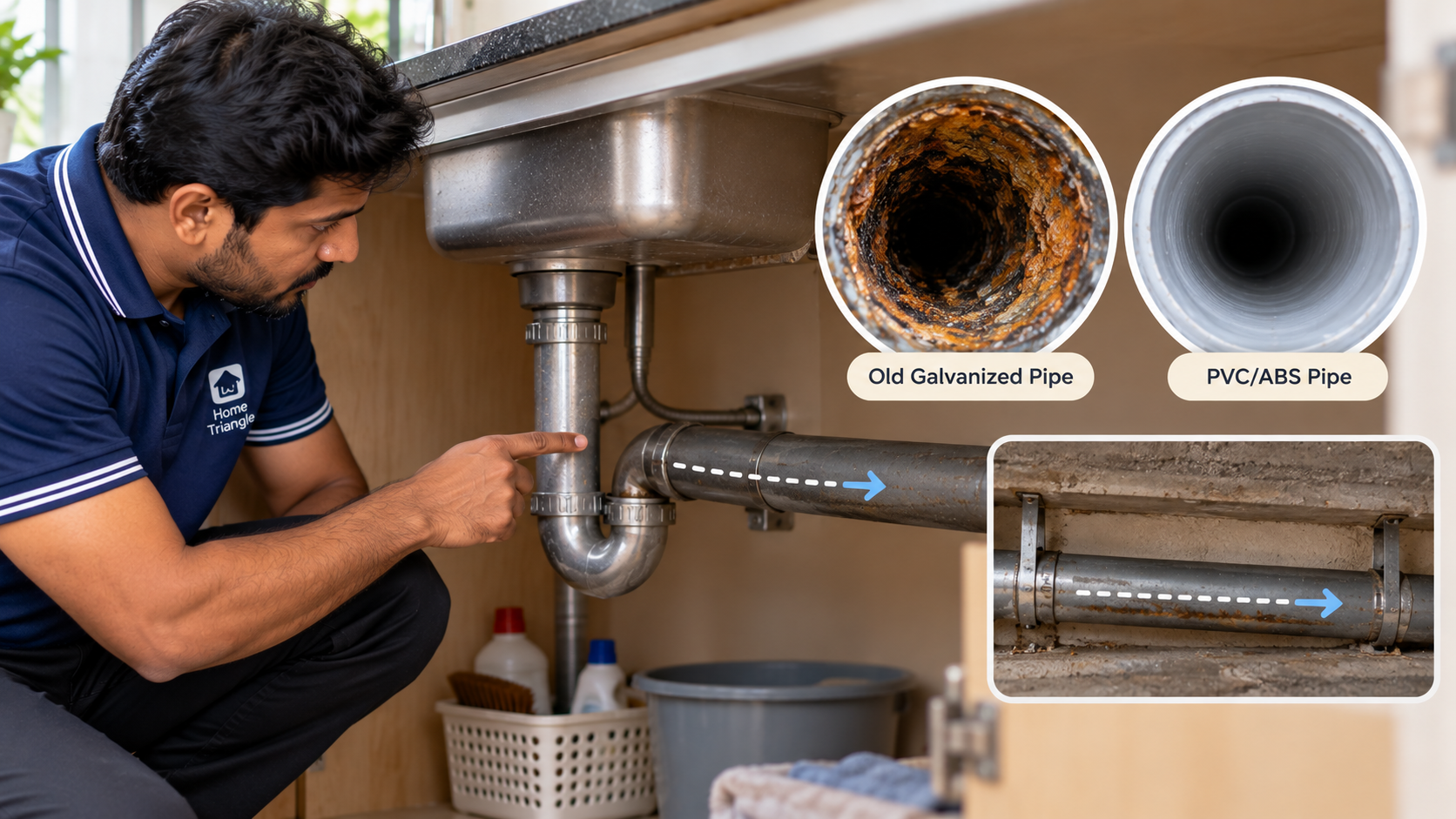
Pipe material matters just as much. Galvanized steel corrodes from the inside over time, and that corrosion roughens the interior surface, giving debris something to grip onto that it wouldn't find in smoother PVC or ABS. If your house is several decades old and one particular drain never seems to fully behave, the pipe itself may be part of the explanation.
Tree Roots and Shared Line Issues
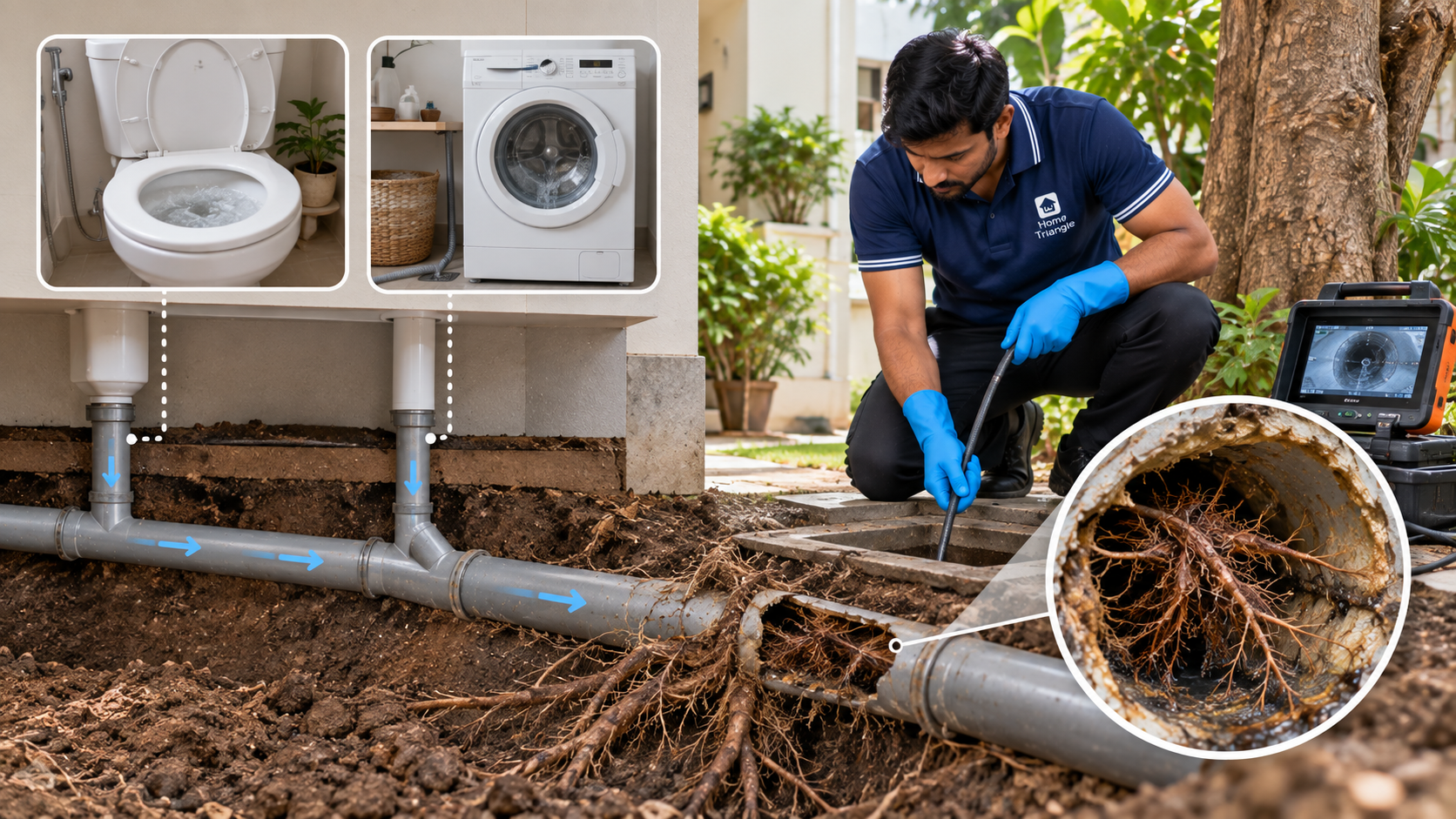
When more than one fixture acts up at once, say, a toilet gurgles every time the washing machine drains, the problem is usually somewhere shared: a branch line serving several fixtures, or the main sewer line itself. In buried sewer lines, tree roots are another frequent cause. Roots grow toward moisture and nutrients in the surrounding soil, and once they find a sewer line, they exploit any existing crack, loose joint, or weak spot to get in. From there, they expand slowly, gradually reducing the pipe's flow capacity.
The University of Florida IFAS Extension recommends keeping hair, grease, and food debris out of household drains because these materials commonly contribute to blockages.
What Actually Stops the Cycle
A handful of habits make a real difference. Keeping fats, oils, and grease out of the drain altogether matters more than most people realize, since hot water doesn't dissolve grease so much as push it further down the pipe, where it cools and hardens anyway. A mesh strainer over bathroom sink and shower drains catches hair before it ever enters the pipe, and that alone can prevent many of the most common bathroom clogs.
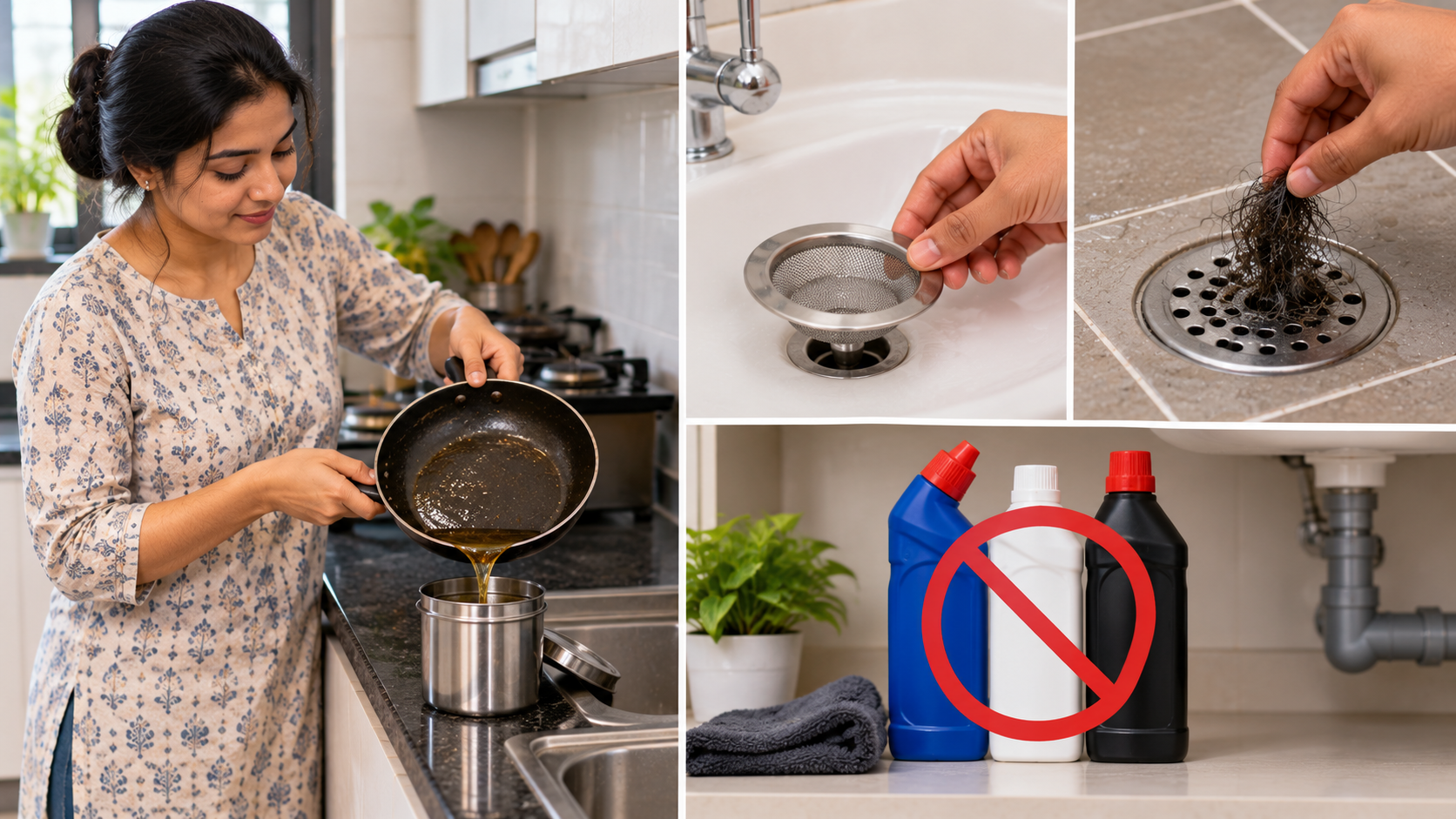
Chemical drain cleaners deserve a second look too. Used too often or contrary to their label instructions, they can damage some seals and fixture finishes. Residual cleaner may also endanger anyone who subsequently works on the drain, so a plumber should always be told if one has recently been used.
Even with good habits, some clogs keep coming back, and at that point a professional inspection is usually the most reliable way to find out what's going on inside the pipe. A camera inspection can reveal buildup, root intrusion, or a sagging section, none of which show up from the surface. For a broader look at related issues, this guide to common plumbing problems every home faces covers several other warning signs worth knowing, since drainage trouble often shows up alongside other plumbing wear.
When to Call a Plumber
At some point, clearing a drain yourself stops being a fix and turns into a stalling tactic. If the same drain needs plunging or snaking repeatedly within a few months, or a clog starts affecting multiple fixtures at once, it's worth bringing in a professional before things escalate into a sewage backup, an overflowing fixture, or a damaged drain line. Left alone, recurring clogs don't resolve themselves. They tend to get more frequent, and more expensive to fix, the longer they're ignored.

Comments ()