
Water Tank Cleaning in India (2026): Cost, the Hygienic Process & the Step Cheap Operators Skip
Water tank cleaning cost in India 2026 by size and type, the 6-step vacuum process, why food-grade disinfection matters, how often to clean, and hidden charges.
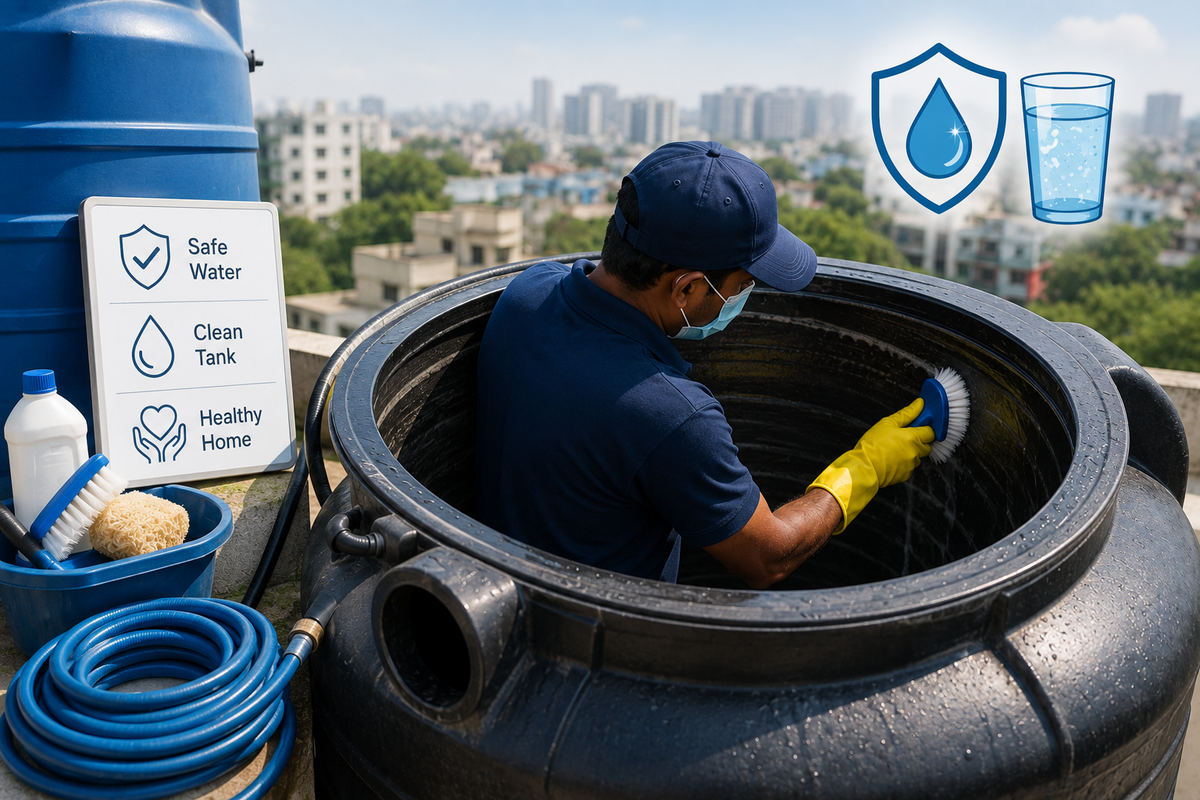
Water tank cleaning in India costs about ₹300–₹500 for tanks up to 500 L, ₹700–₹1,600 for 1,000–10,000 L overhead tanks, and ₹1,400–₹4,000+ for underground sumps in 2026. On HomeTriangle, overhead tank cleaning starts at ₹749 and underground sump cleaning at ₹1,399. The hygienic process is done without anyone entering the tank: drain, sludge removal, scrubbing, high-pressure jetting, vacuum extraction, and food-grade disinfection, then a final rinse. The Bureau of Indian Standards recommends cleaning every 6 months — quarterly for high-TDS borewell areas. The step cheap operators skip is food-grade disinfection, which is what actually makes the water safe.
Water tank cleaning cost in India (2026) depends on size, tank type, accessibility and sludge level. Overhead plastic/Sintex tanks are cheapest (₹300–₹500 up to 500 L; ₹700–₹1,600 for 1,000–10,000 L); underground sumps cost more (₹1,400–₹4,000+) because access is limited and sediment is heavier; RCC/cement tanks can cost 20–30% more than plastic due to manual scrubbing. HomeTriangle lists overhead cleaning from ₹749 and sump cleaning from ₹1,399. The professional process needs no one to enter the tank: drain, remove sludge, scrub walls, high-pressure jet, wet-vacuum the sediment slurry, disinfect with food-grade chlorine or hydrogen peroxide (about 10-minute contact time), and final-rinse. It takes 45–90 minutes for a 1,000 L tank, 2–4 hours for large sumps. BIS recommends cleaning every 6 months, quarterly for high-TDS borewell water; discoloured water, odour or visible slime mean it's overdue. The critical quality signal is whether the quote includes food-grade disinfection — low-cost operators often skip it, and that step is what makes the stored water safe to drink.
WHY THIS IS A HEALTH JOB, NOT A CHORE
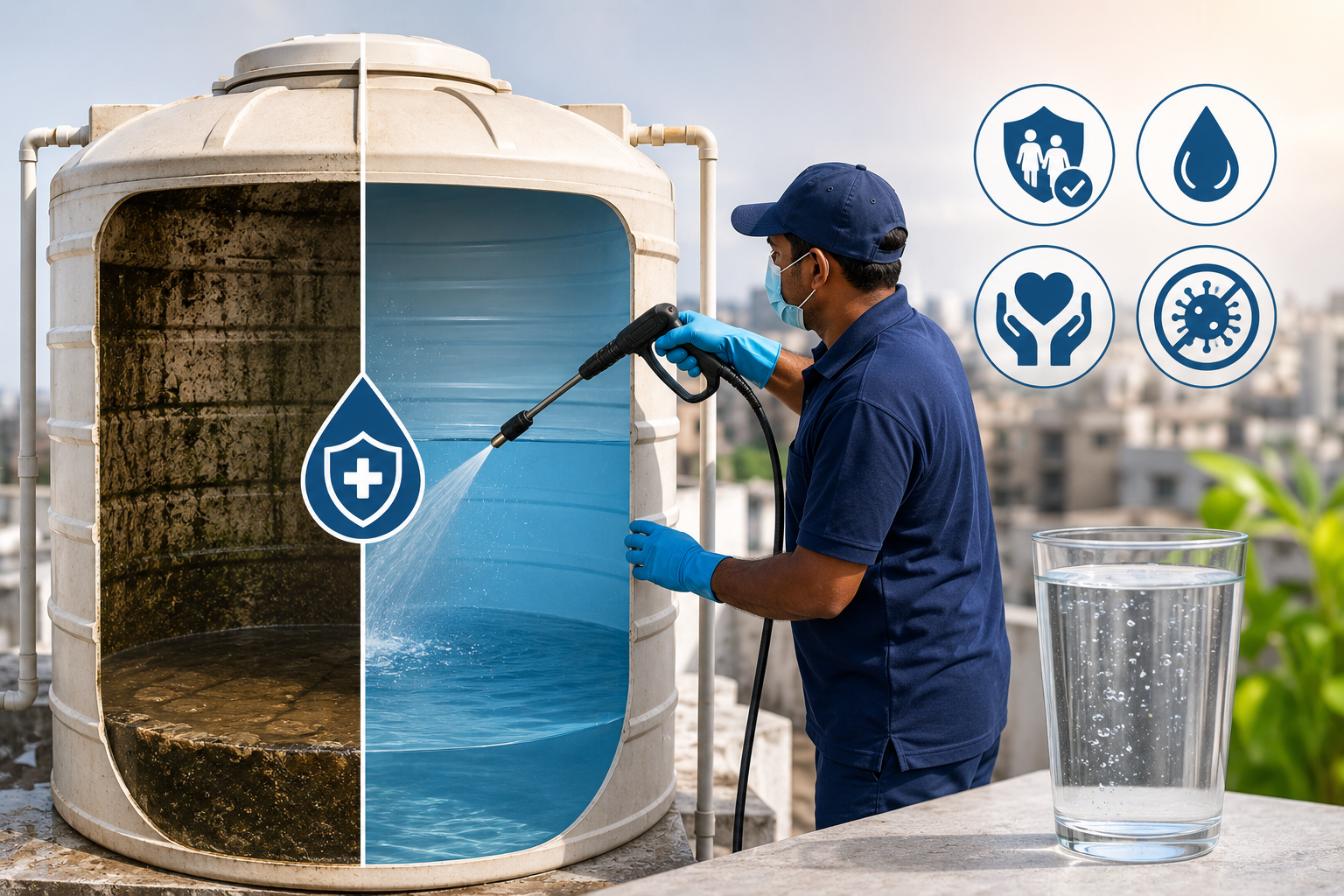
The water your family drinks, cooks with and bathes in sits in a tank you almost never look inside. Over months, that tank quietly accumulates sediment, sludge, algae and biofilm — and in many Indian cities it builds faster than people realise, because supply water carries silt, post-monsoon dust and high dissolved solids (TDS) from borewells.
A dirty tank contaminates every drop that passes through it, and contaminated stored water is a direct route to waterborne illness. So tank cleaning isn't housekeeping — it's one of the most important, and most overlooked, things you can do for your household's health. The good news: it's affordable, quick, and done entirely without anyone climbing inside.
WHAT IT COSTS IN 2026
Cost scales with capacity, tank type and access:
| Tank | Typical 2026 cost |
|---|---|
| Up to 500 L | ₹300–₹500 |
| 1,000 L overhead | ₹700–₹900 |
| 2,000–5,000 L | ₹900–₹1,600 |
| 10,000 L overhead (society) | ₹1,200–₹1,600 |
| Underground sump | ₹1,400–₹4,000+ |
| Large/industrial sump (20,000 L+) | ₹4,000 and up |
On HomeTriangle, overhead tank cleaning starts at ₹749 and underground sump cleaning at ₹1,399, with final pricing by size and accessibility.
What moves the price:
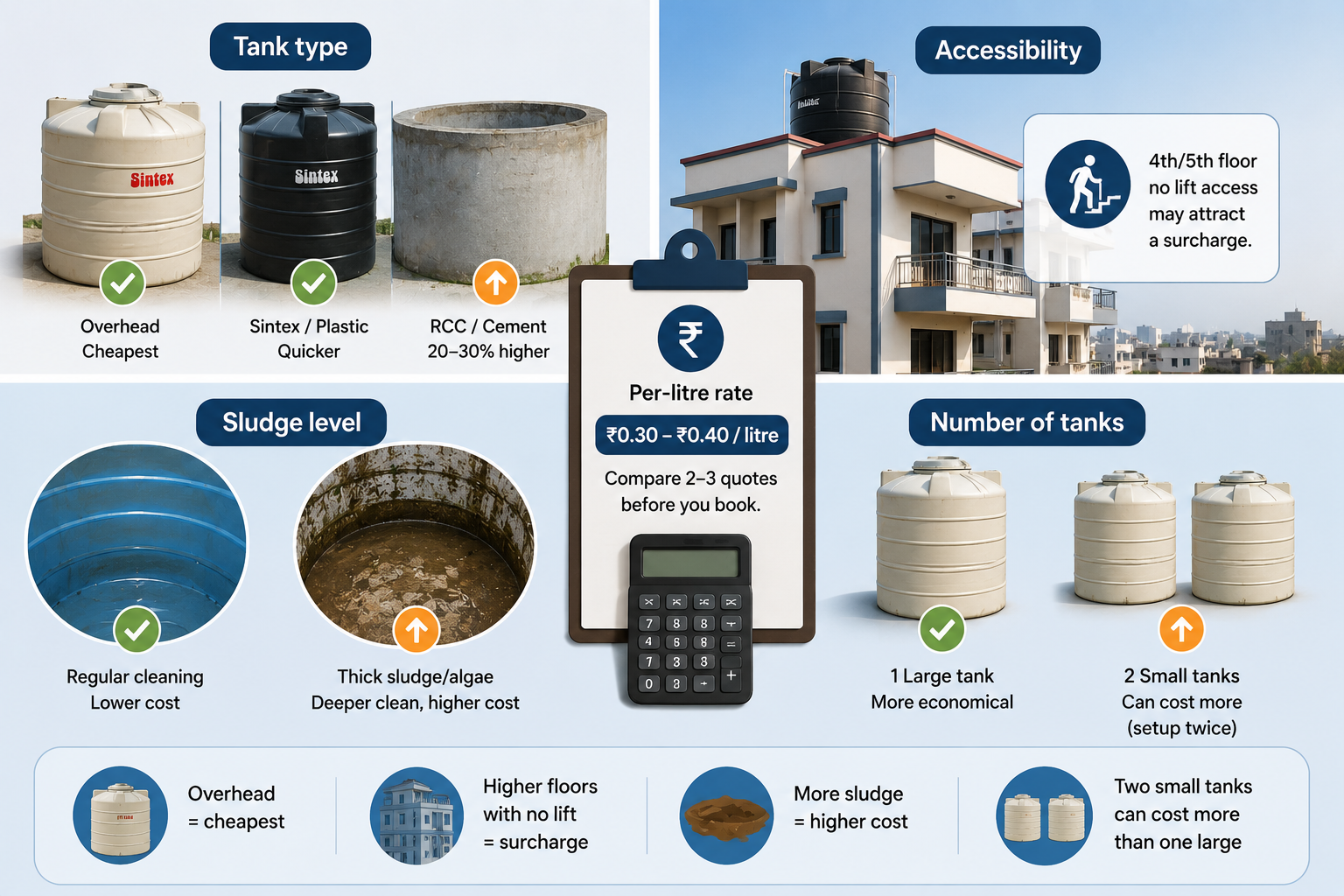
- Tank type: overhead is cheapest (easy access); underground sumps cost more (limited access, heavier sediment, safety equipment); Sintex/plastic is quicker than RCC/cement, which needs more scrubbing and can run 20–30% higher.
- Accessibility: a tank on a 4th/5th-floor terrace with no lift access can attract a surcharge.
- Sludge level: a tank not cleaned in years with thick sludge/algae needs a deeper clean.
- Number of tanks: oddly, two small tanks can cost more than one large one, because the crew sets up and moves twice.
Some providers quote a per-litre rate (around ₹0.30–₹0.40/litre); comparing two or three quotes helps.
THE HYGIENIC PROCESS (NO ONE ENTERS THE TANK)
A proper modern clean is a machine-led, 6-step process — nobody climbs into your drinking-water tank:
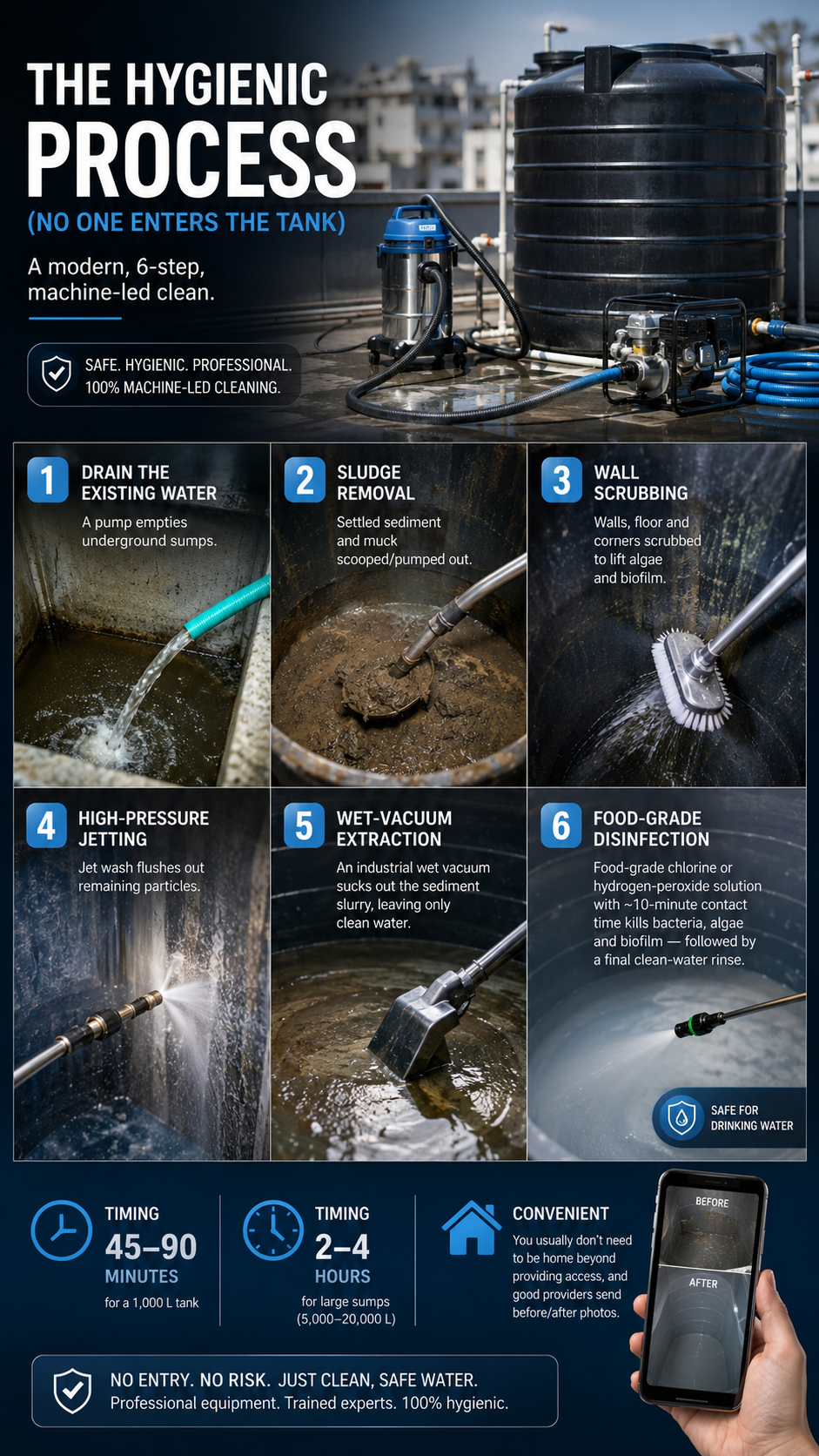
- Drain the existing water (a pump empties underground sumps).
- Sludge removal — settled sediment and muck scooped/pumped out.
- Wall scrubbing — walls, floor and corners scrubbed to lift algae and biofilm.
- High-pressure jetting — jet wash flushes out remaining particles.
- Wet-vacuum extraction — an industrial wet vacuum sucks out the sediment slurry, leaving only clean water.
- Food-grade disinfection — a food-grade chlorine or hydrogen-peroxide solution with ~10-minute contact time kills bacteria, algae and biofilm — followed by a final clean-water rinse.
Timing: about 45–90 minutes for a 1,000 L tank; 2–4 hours for large sumps (5,000–20,000 L). You usually don't need to be home beyond providing access, and good providers send before/after photos.
THE STEP CHEAP OPERATORS SKIP (THE KEY QUALITY SIGNAL)
Here's the single most important thing to check, and it's where the "suspiciously cheap" quotes cut corners: food-grade disinfection.
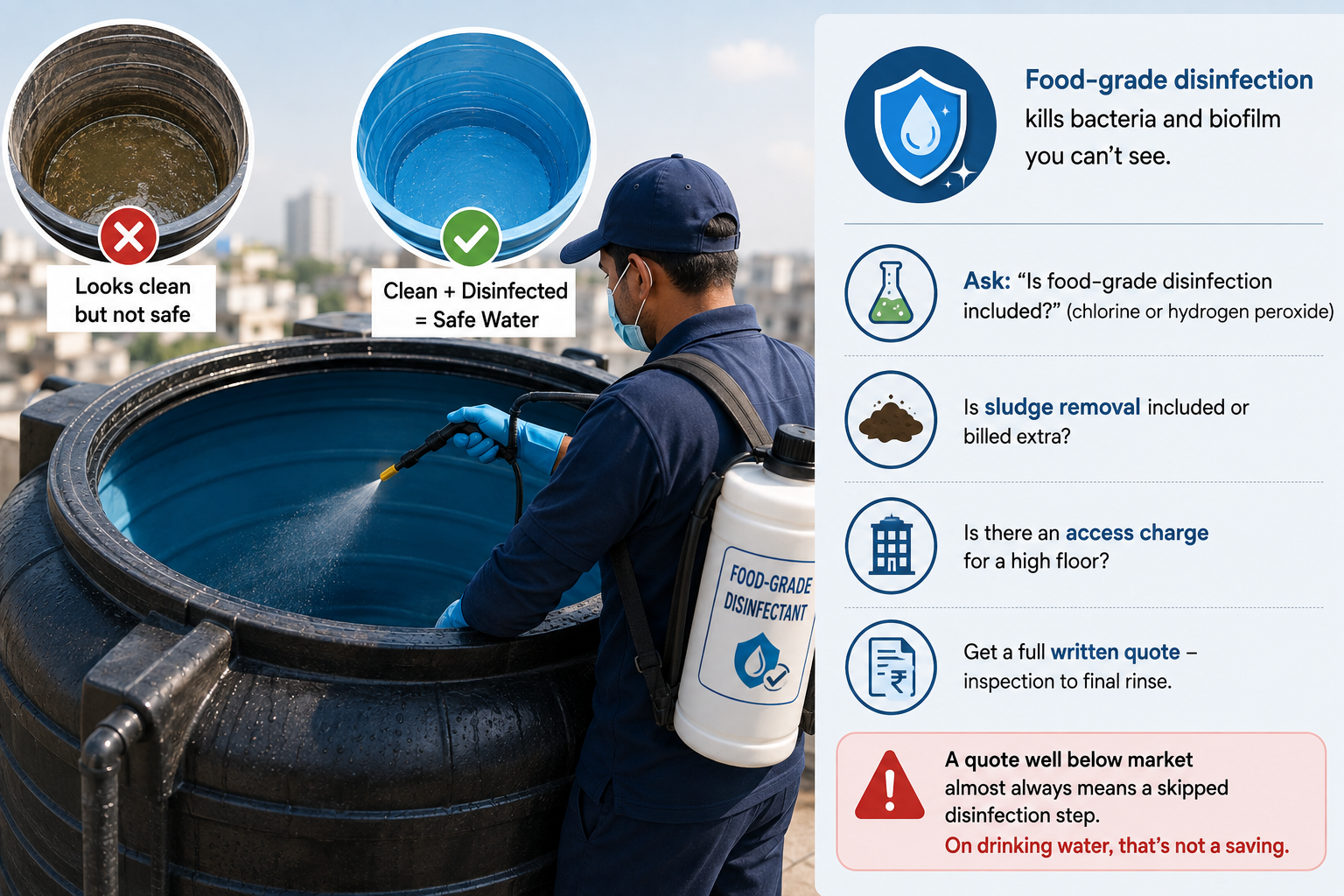
Scrubbing and vacuuming remove the visible dirt. But it's the food-grade chemical disinfection step that actually makes the water safe to drink — killing the bacteria and biofilm you can't see. Many low-cost, unorganised operators skip this step entirely, leaving you with a tank that looks clean but isn't hygienically safe.
So before booking, ask directly:
- "Is food-grade disinfection included?" (chlorine or hydrogen peroxide) — the make-or-break question.
- Is sludge removal included or billed extra?
- Is there an access charge for a high floor?
- Get a full written quote — inspection to final rinse — so hidden add-ons don't appear later.
A quote well below market almost always means a skipped disinfection step. On drinking water, that's not a saving.
HOW OFTEN TO CLEAN
- Bureau of Indian Standards (BIS) recommendation: every 6 months.
- Quarterly in high-TDS borewell areas (common in parts of Bangalore, Hyderabad and other cities) where iron and mineral content build sediment faster.
- Immediately, regardless of schedule, if you notice: discoloured water, an unusual odour, visible slime, or sediment coming from taps — these mean cleaning is overdue.
For societies and RWAs, an annual maintenance contract typically saves 10–15% over individual bookings and keeps the schedule on track.
OVERHEAD vs UNDERGROUND SUMP
Overhead tanks (rooftop plastic/Sintex) are the most-booked clean — every home and society has one, they're easy to access, and they're cheapest. A standard 1,000 L takes under 90 minutes.
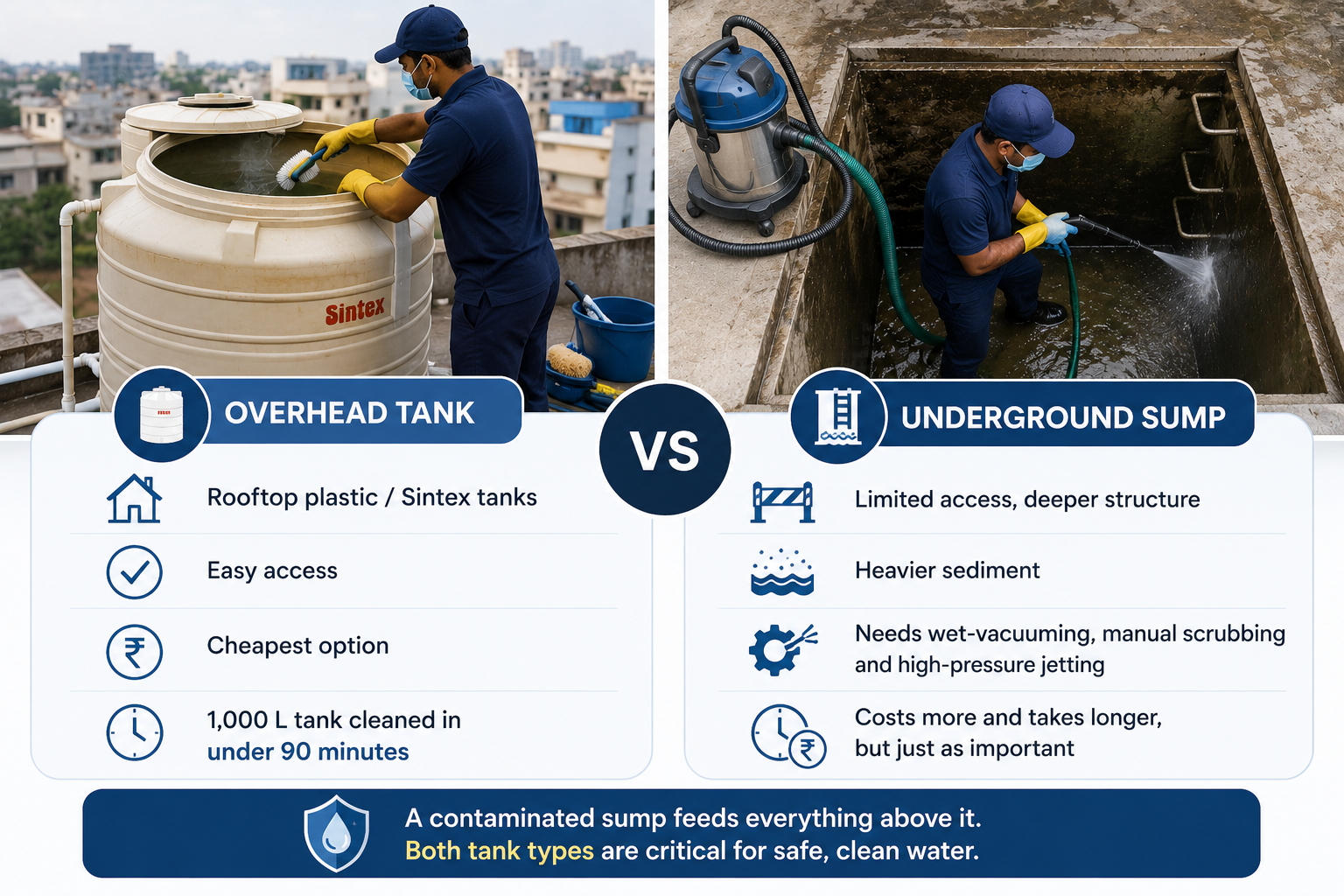
Underground sumps are structurally harder: limited access, heavier sediment, and the process leans more on wet-vacuuming, manual scrubbing and high-pressure jetting before disinfection. They cost more and take longer, but they're just as important — a contaminated sump feeds everything above it.
PAIR IT WITH TANK WATERPROOFING
One useful cross-check while the tank is empty: if it's an RCC tank that leaks or shows cracks, that's the ideal moment to address tank waterproofing (with non-toxic, food-safe systems), since the tank is already drained and accessible. A leaking tank wastes water and damages the structure around it — see the Home Waterproofing Guide. Booking cleaning and any needed waterproofing together saves a second drain-down.
KEY TAKEAWAYS
- Water tank cleaning: ₹300–₹500 (≤500 L) up to ₹4,000+ (large sumps). HomeTriangle from ₹749 (overhead) / ₹1,399 (sump).
- Overhead is cheapest; underground sumps and RCC/cement tanks cost more.
- The process is machine-led — no one enters the tank: drain, sludge removal, scrub, jet, vacuum, disinfect, rinse.
- Food-grade disinfection is the step cheap operators skip — it's what makes water safe. Always confirm it's included.
- BIS: clean every 6 months; quarterly for high-TDS borewell water.
- Discoloured water, odour or slime = clean now.
- Pair with tank waterproofing if an RCC tank leaks, while it's drained.
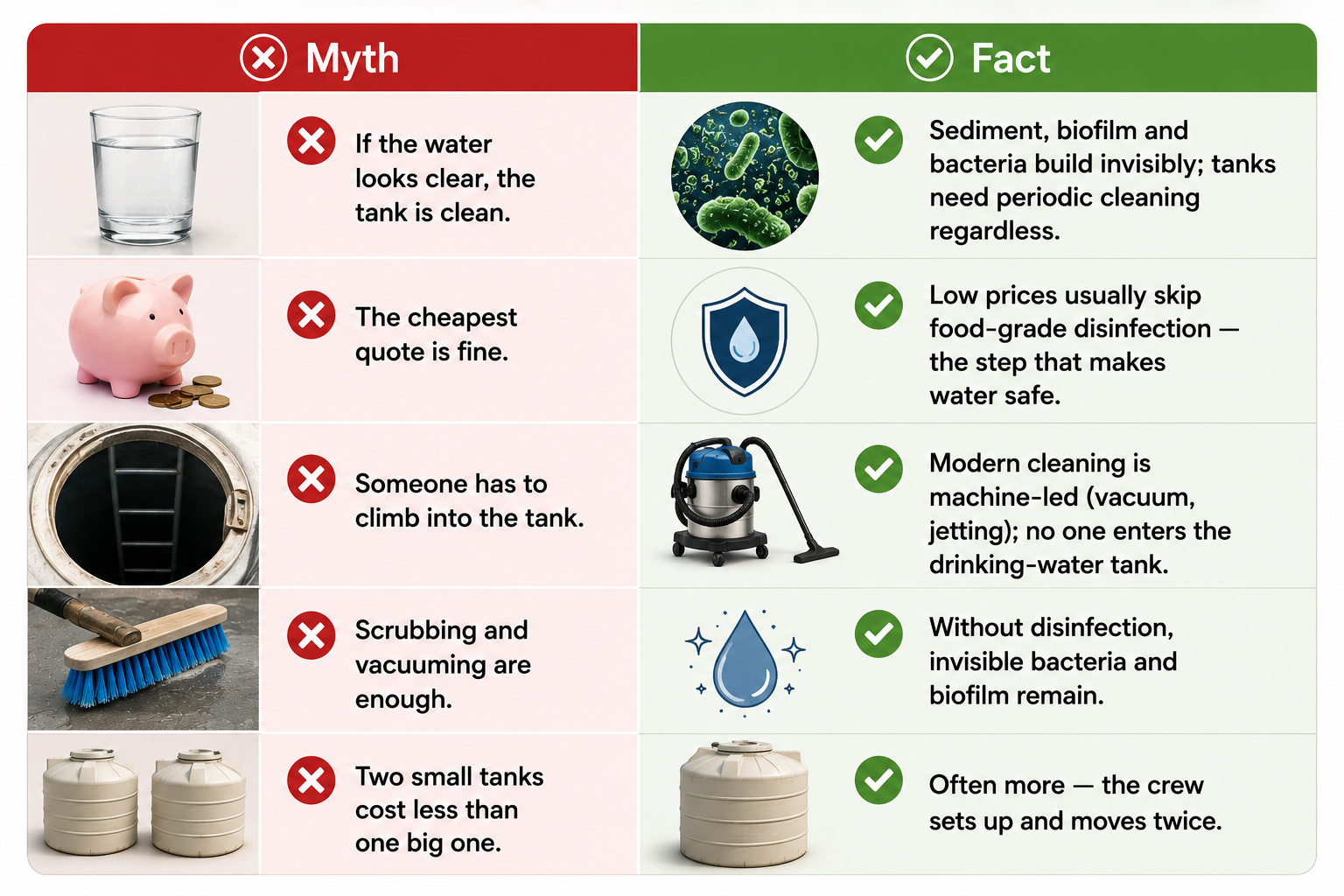
MYTH vs FACT
COMMON MISTAKES
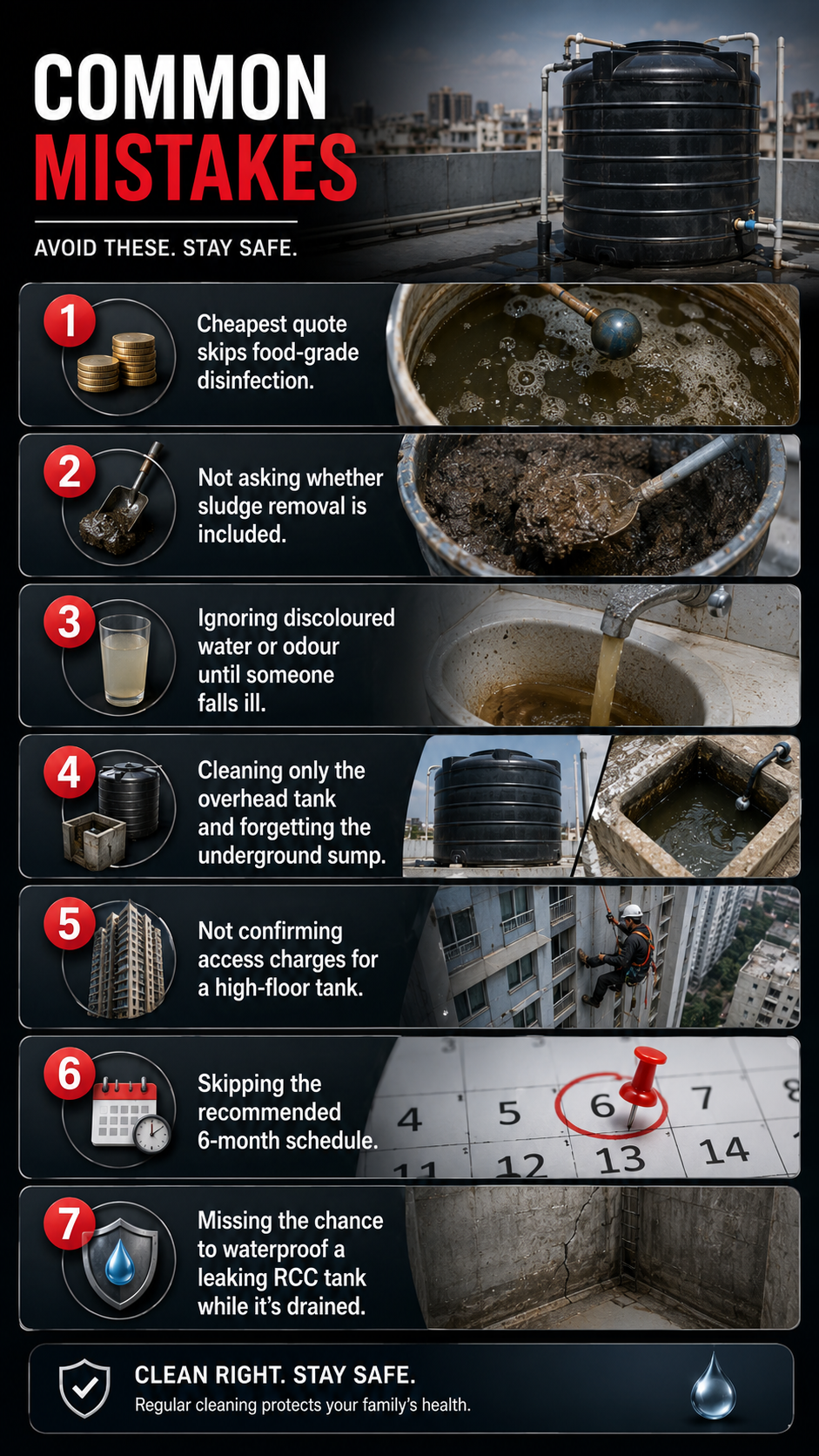
- Booking the cheapest quote that skips food-grade disinfection.
- Not asking whether sludge removal is included.
- Ignoring discoloured water or odour until someone falls ill.
- Cleaning only the overhead tank and forgetting the underground sump.
- Not confirming access charges for a high-floor tank.
- Skipping the recommended 6-month schedule.
- Missing the chance to waterproof a leaking RCC tank while it's drained.

Comments ()