
Pre-Navratri 2026 Home Prep: Cleaning for Nine Nights, Golu & Garba (India Checklist)
Prepare your home for Navratri 2026 (Oct 11–19): a cleaning checklist for nine nights of hosting, Golu doll-display setup, Garba space, and Kanya Pujan prep.

Navratri 2026 runs 11–19 October, with Ghatasthapana (Kalash Sthapana) on the morning of 11 October (muhurat ~6:19–10:12 AM IST; Abhijit alternative ~11:44 AM–12:31 PM) and Dussehra on 20 October. Because it's a nine-night festival with daily puja and guest hosting, prepare the home a week ahead: deep clean the whole house with priority on the puja area, set up the Kalash and (in the South) a Golu doll display on odd-numbered steps, clear space for Garba/Dandiya if you dance at home, and plan for Kanya Pujan hosting on Ashtami/Navami. Then maintain daily tidiness through the nine days.
Sharad Navratri 2026 is 11–19 October, beginning with Ghatasthapana (Kalash installation) on the morning of 11 October — muhurat roughly 6:19–10:12 AM IST, with an Abhijit alternative around 11:44 AM–12:31 PM; it is not performed after midday, and city timings vary (confirm via panchang). Dussehra (Vijayadashami) follows on 20 October. Unlike a one-day festival, Navratri needs the home ready for nine nights of daily Devi puja and guest hosting, so preparation focuses on both a pre-festival deep clean and maintaining cleanliness through the nine days. Prep: deep clean the whole home a week ahead, prioritising the puja space; install the Kalash and akhand jyoti; in Tamil Nadu, Karnataka and Andhra Pradesh set up a Golu/Bommai Kolu doll display on odd-numbered steps (kept open for visitors welcomed with kumkum and sundal); in Gujarat and Maharashtra clear floor space for Garba and Dandiya; and prepare for Kanya Pujan (worship of nine young girls) on Ashtami (18 Oct) or Navami (19 Oct). It's also the start of the festive-cleaning season leading into Dussehra and Diwali, so booking cleaning help now gets ahead of the rush.
Navratri Is Nine Nights — Prep Differently
Most festival cleaning is about one big day. Navratri is different: nine nights of daily puja, and often nine days of guests. That changes how you prepare. It's not just "clean the house before the festival" — it's "get the home ready to stay clean, sacred and guest-welcoming for nine days," with a doll display or dance space set up and maintained throughout.
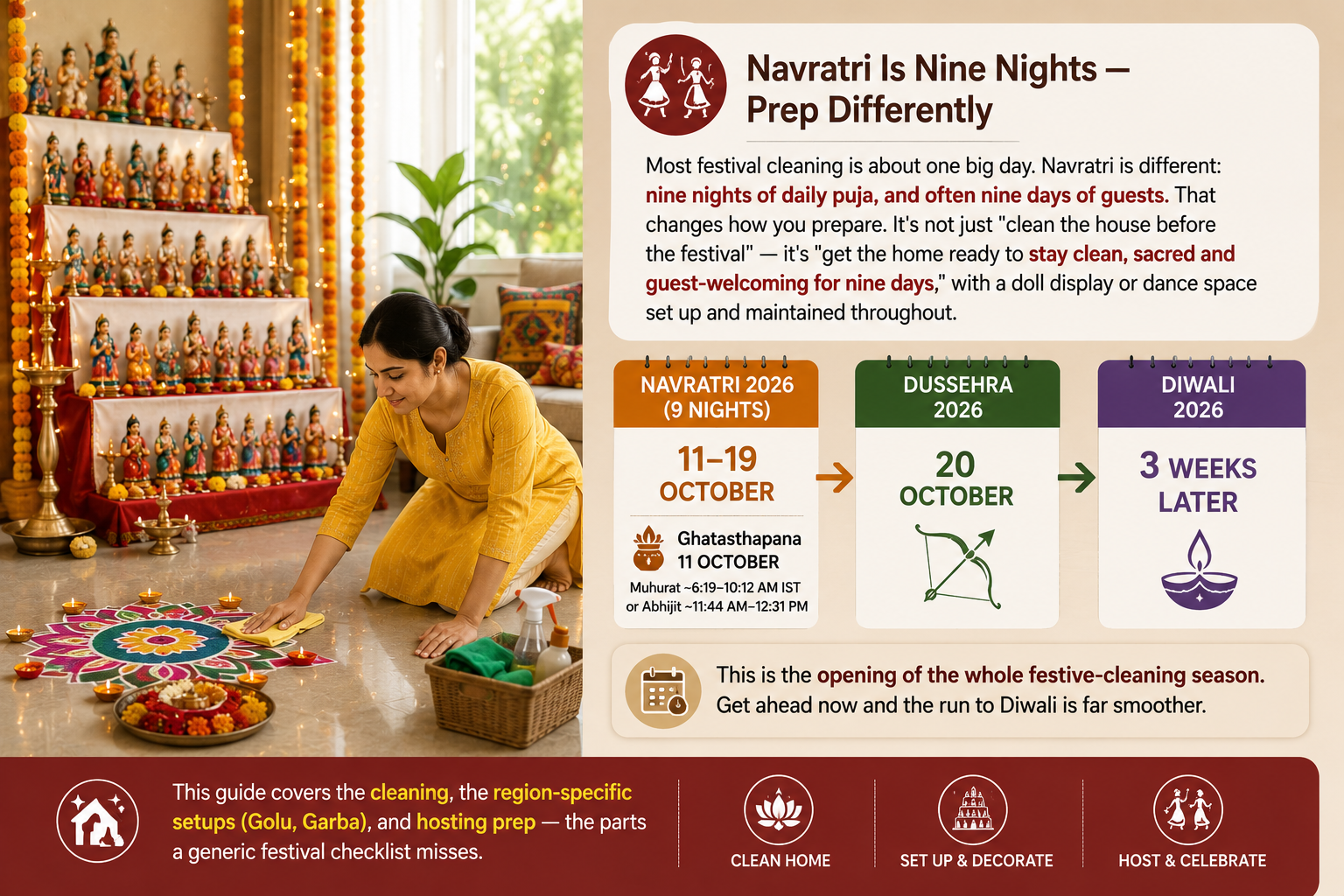
Navratri 2026 runs 11–19 October, opening with Ghatasthapana on the morning of the 11th (muhurat ~6:19–10:12 AM IST, or the Abhijit window ~11:44 AM–12:31 PM if you miss it — it's not done after midday; confirm your city's timing with a panchang). It flows straight into Dussehra on 20 October, and then Diwali three weeks later — so this is really the opening of the whole festive-cleaning season. Get ahead now and the run to Diwali is far smoother.
This guide covers the cleaning, the region-specific setups (Golu, Garba), and hosting prep — the parts a generic festival checklist misses.
A Week Ahead: The Deep Clean
Start about a week before (so from early October). Because guests visit across nine days, focus on a proper clean now so you only maintain during the festival. Work room by room, top to bottom (see the full method in our Home Deep Cleaning Guide):
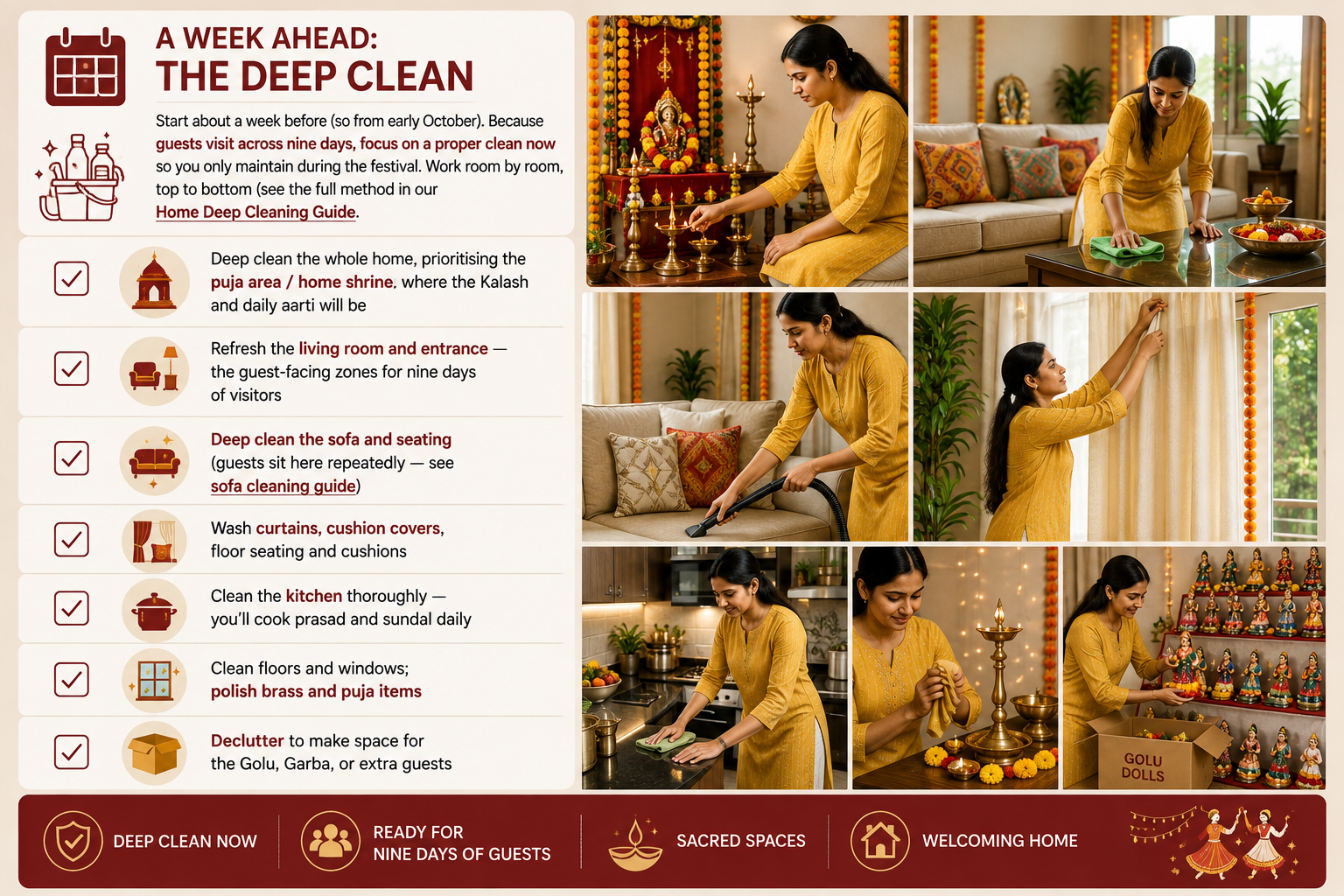
- [ ] Deep clean the whole home, prioritising the puja area / home shrine where the Kalash and daily aarti will be
- [ ] Refresh the living room and entrance — the guest-facing zones for nine days of visitors
- [ ] Deep clean the sofa and seating (guests sit here repeatedly — see sofa cleaning)
- [ ] Wash curtains, cushion covers, floor seating and cushions
- [ ] Clean the kitchen thoroughly — you'll cook prasad and sundal daily
- [ ] Clean floors and windows; polish brass and puja items
- [ ] Declutter to make space for the Golu, Garba, or extra guests
Set Up The Puja & Kalash
The spiritual centre of the home for nine days:
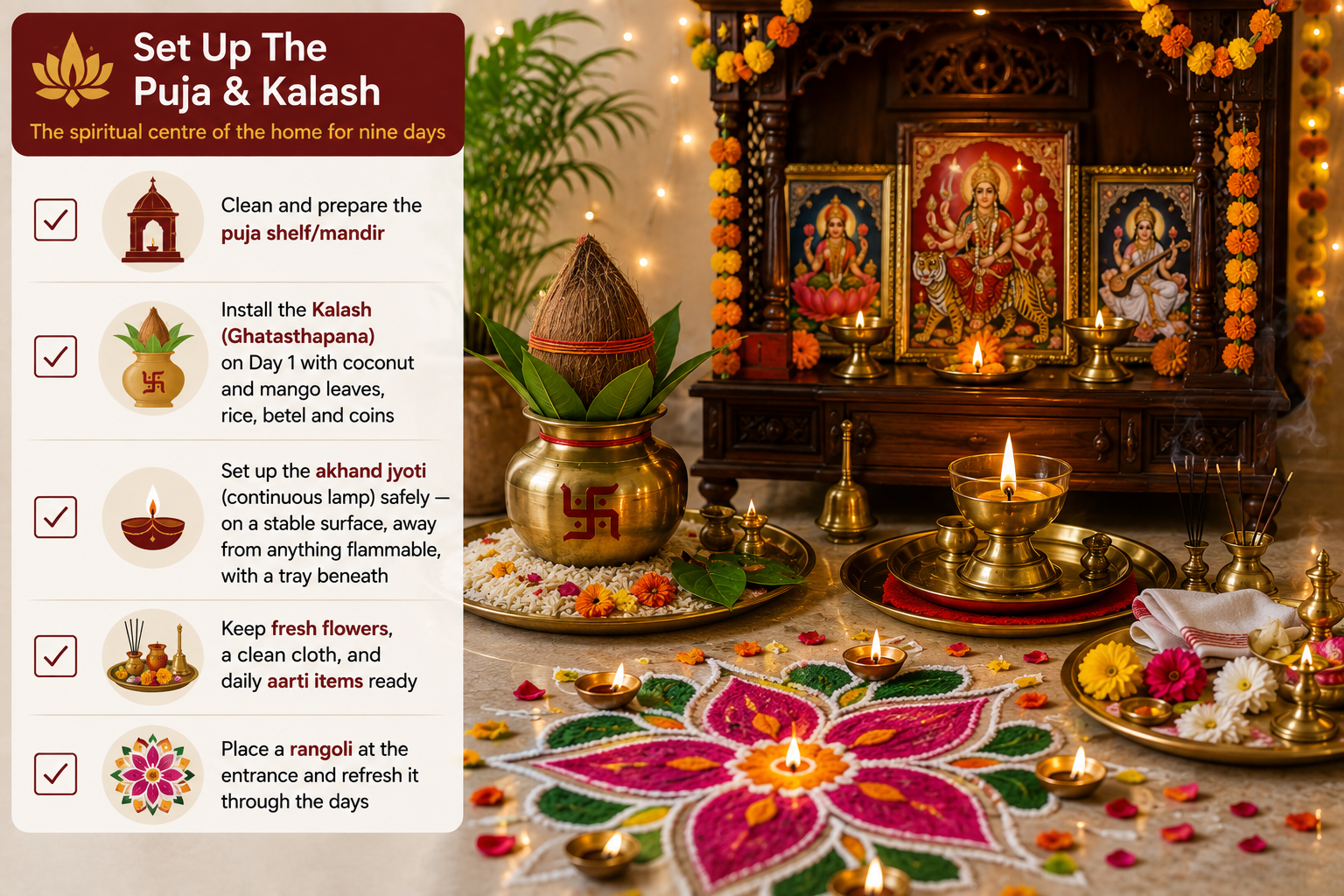
- [ ] Clean and prepare the puja shelf/mandir
- [ ] Install the Kalash (Ghatasthapana) on Day 1 with coconut and mango leaves, rice, betel and coins
- [ ] Set up the akhand jyoti (continuous lamp) safely — on a stable surface, away from anything flammable, with a tray beneath
- [ ] Keep fresh flowers, a clean cloth, and daily aarti items ready
- [ ] Place a rangoli at the entrance and refresh it through the days
Region-specific Setup
Navratri's home traditions vary beautifully by region — set up what applies to you.
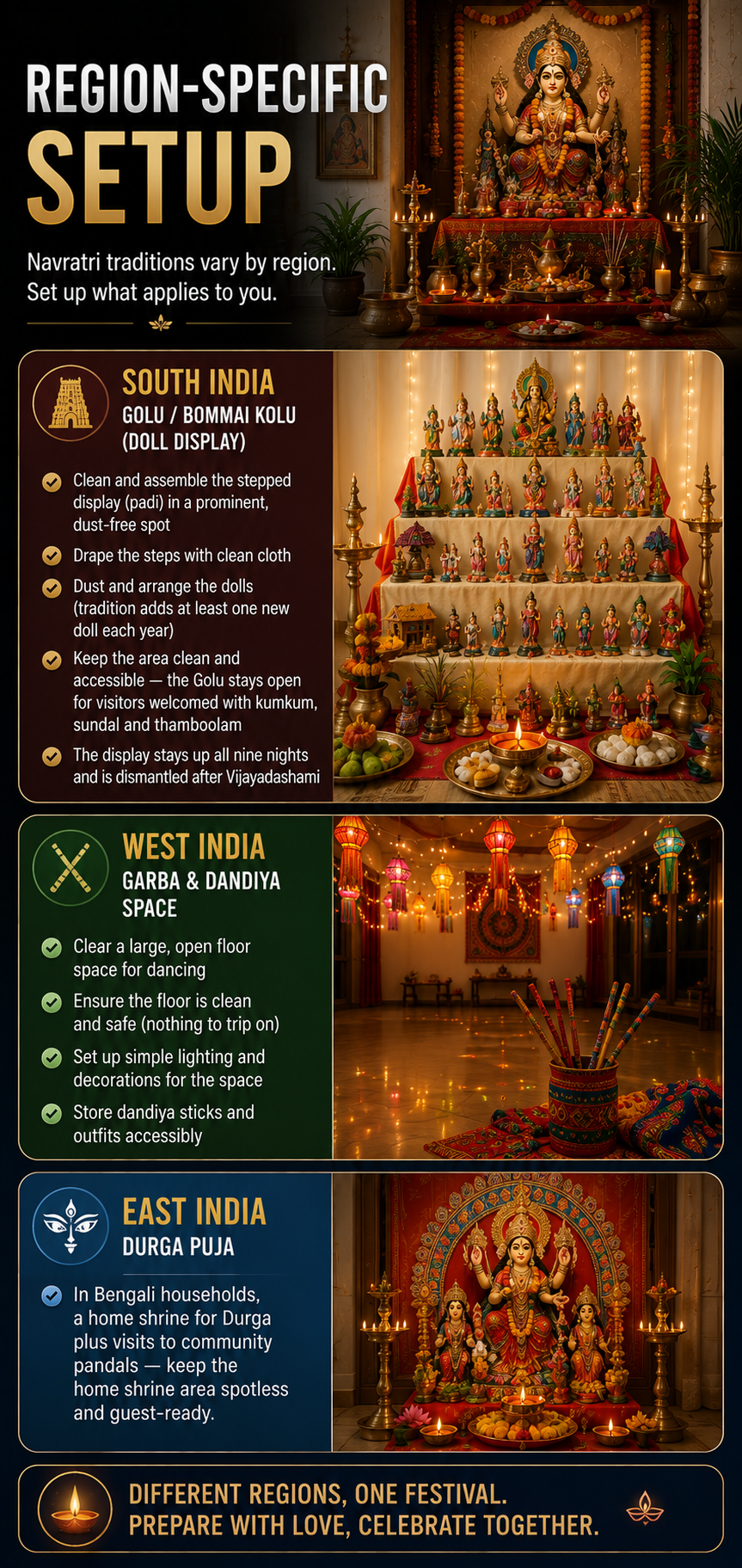
South India — Golu / Bommai Kolu (doll display)
In Tamil Nadu, Karnataka and Andhra Pradesh, families arrange a Golu — a tiered display of dolls and figurines on odd-numbered steps (5, 7, 9…), with the Kalash and goddesses at the top and a whole miniature world below. Prep:
- [ ] Clean and assemble the stepped display (padi) in a prominent, dust-free spot
- [ ] Drape the steps with clean cloth
- [ ] Dust and arrange the dolls (tradition adds at least one new doll each year)
- [ ] Keep the area clean and accessible — the Golu stays open for visitors welcomed with kumkum, sundal and thamboolam
- [ ] The display stays up all nine nights and is dismantled after Vijayadashami
West India — Garba & Dandiya space
In Gujarat and Maharashtra, evenings mean Garba and Dandiya:
- [ ] Clear a large, open floor space for dancing
- [ ] Ensure the floor is clean and safe (nothing to trip on)
- [ ] Set up simple lighting and decorations for the space
- [ ] Store dandiya sticks and outfits accessibly
East India — Durga Puja
In Bengali households, a home shrine for Durga plus visits to community pandals — keep the home shrine area spotless and guest-ready.
Hosting Prep: Kanya Pujan & Daily Guests
Two hosting moments to plan for:
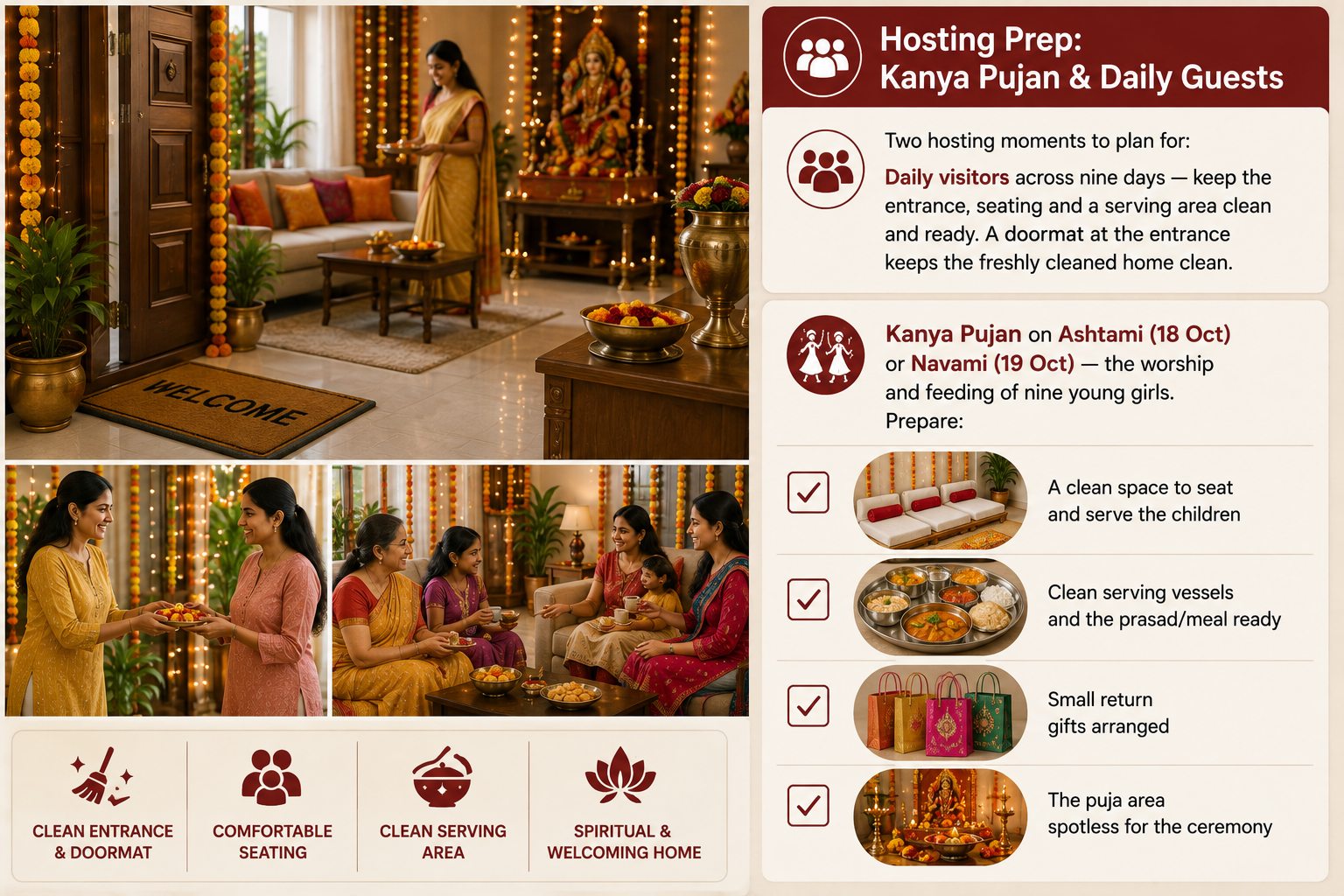
Daily visitors across nine days — keep the entrance, seating and a serving area clean and ready. A doormat at the entrance keeps the freshly cleaned home clean.
Kanya Pujan on Ashtami (18 Oct) or Navami (19 Oct) — the worship and feeding of nine young girls. Prepare:
- [ ] A clean space to seat and serve the children
- [ ] Clean serving vessels and the prasad/meal ready
- [ ] Small return gifts arranged
- [ ] The puja area spotless for the ceremony
Maintaining Clean Through Nine Days
The Navratri-specific challenge: keeping it all clean during the festival, not just before. Practical habits:
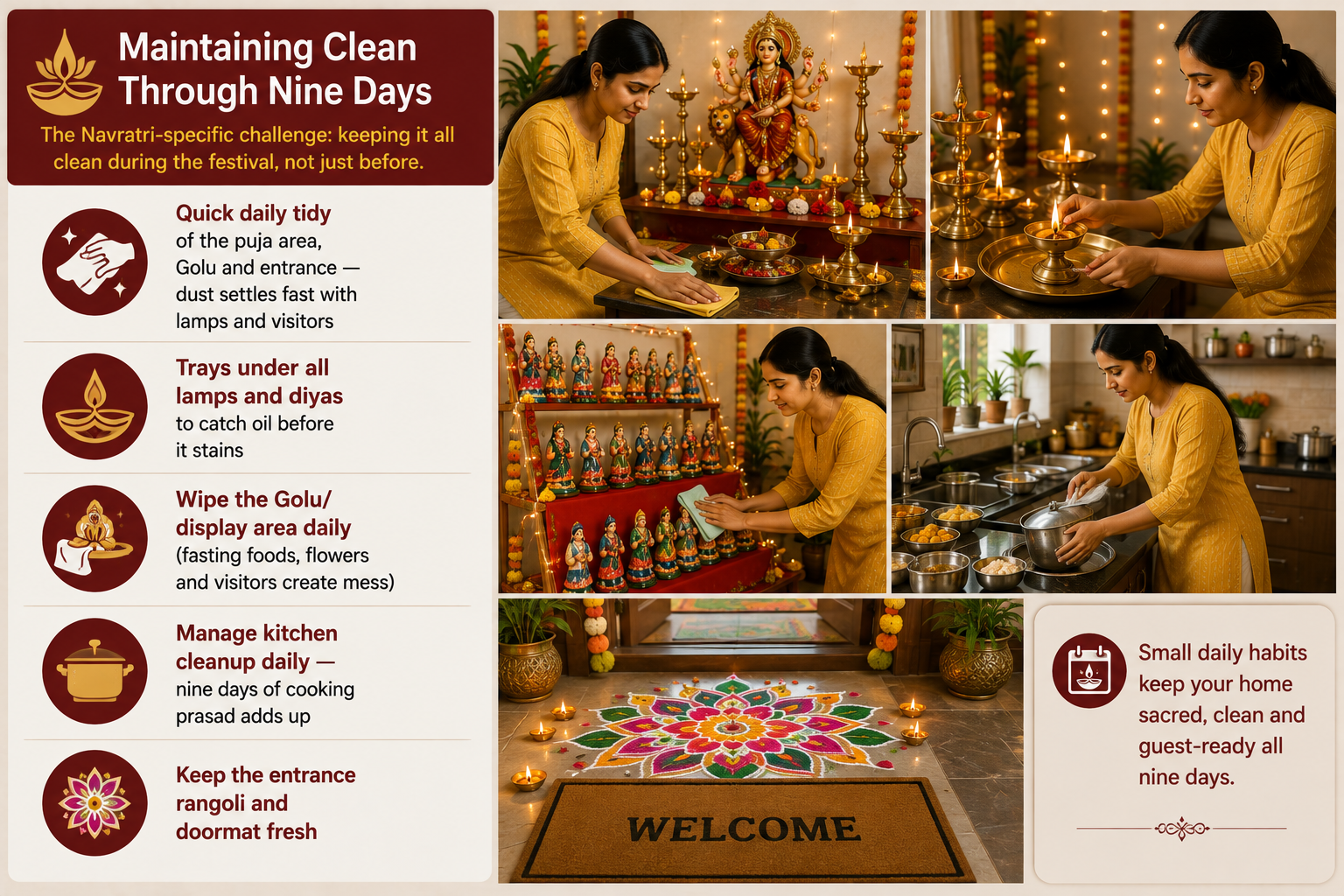
- Quick daily tidy of the puja area, Golu and entrance — dust settles fast with lamps and visitors
- Trays under all lamps and diyas to catch oil before it stains
- Wipe the Golu/display area daily (fasting foods, flowers and visitors create mess)
- Manage kitchen cleanup daily — nine days of cooking prasad adds up
- Keep the entrance rangoli and doormat fresh
Book Help Now — It's The Start Of Festive Season
Because Navratri opens the festive season leading to Dussehra and Diwali, cleaning demand starts climbing now. Booking a pre-Navratri deep clean gets you ahead of the rush that peaks before Diwali. And a smart move: a thorough clean now means less to do before Diwali (8 Nov) — you're maintaining, not restarting. Pair with the Diwali deep cleaning checklist to plan the whole festive run.
Key Takeaways
- Navratri 2026: 11–19 October; Ghatasthapana morning of 11 Oct (muhurat ~6:19–10:12 AM; confirm via panchang); Dussehra 20 Oct.
- It's nine nights of daily puja and hosting — prep to stay clean, not just clean once.
- Deep clean a week ahead, prioritising the puja area and guest-facing zones.
- Set up region-specific: Golu (South, odd-numbered steps), Garba space (West), Durga shrine (East).
- Plan Kanya Pujan hosting on Ashtami (18 Oct) or Navami (19 Oct).
- Maintain daily — tidy puja/Golu/entrance, trays under lamps.
- Book cleaning now — it's the start of festive season; gets you ahead for Diwali.
Common Mistakes
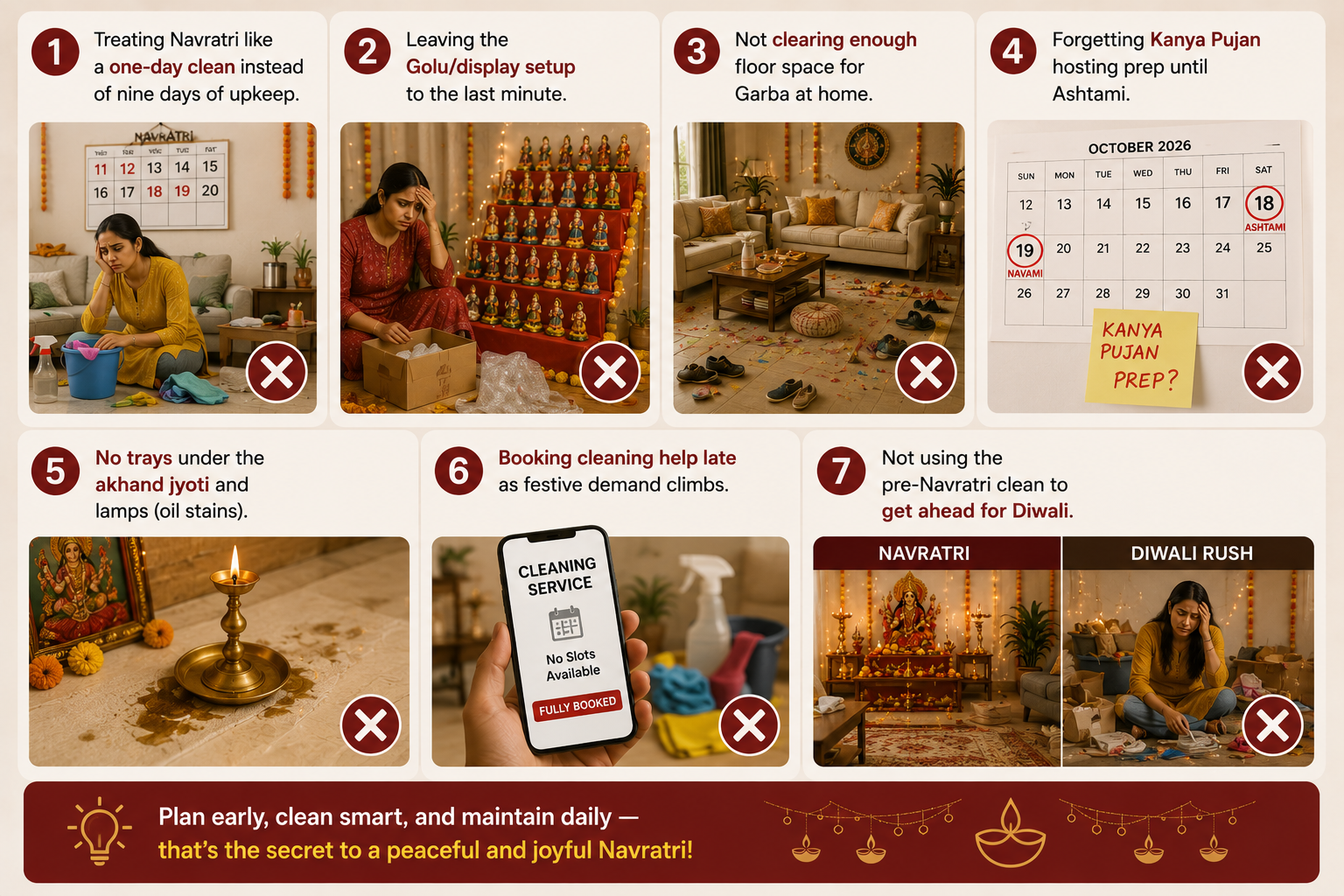
- Treating Navratri like a one-day clean instead of nine days of upkeep.
- Leaving the Golu/display setup to the last minute.
- Not clearing enough floor space for Garba at home.
- Forgetting Kanya Pujan hosting prep until Ashtami.
- No trays under the akhand jyoti and lamps (oil stains).
- Booking cleaning help late as festive demand climbs.
- Not using the pre-Navratri clean to get ahead for Diwali.
Comments ()