
Marble & Floor Polishing in India (2026): Cost, Methods & How to Restore Shine Without Replacing the Floor
Marble and floor polishing cost in India 2026 per sq ft, the methods (diamond, crystallization, nano-coating), when to polish vs replace, and how to protect the shine.
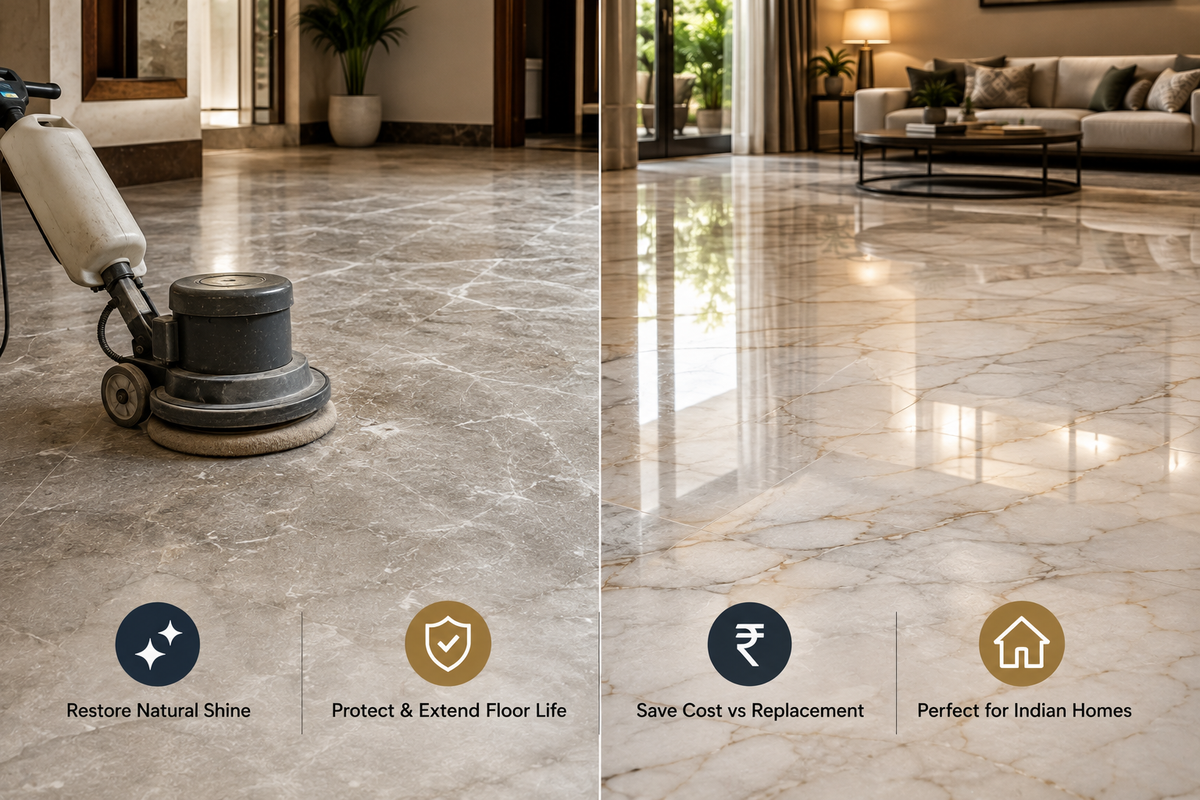
Marble floor polishing in India costs ₹15–₹35 per sq ft for diamond polishing, ₹30–₹60 for premium finishes (mirror gloss, crystallization), and ₹40–₹120+ for Italian marble in 2026; nano-coating or silicate sealing adds about ₹10–₹15 per sq ft. Basic floor polishing (non-marble) starts around ₹5–₹30 per sq ft. Polishing restores a dull, scratched floor without replacing it, through grinding, honing, diamond polishing and buffing. It's recommended every 2–5 years depending on traffic, and the shine lasts far longer if the floor is sealed or nano-coated afterward.
Marble and floor polishing cost in India (2026) is priced per sq ft by method and stone: diamond polishing ₹15–₹35, premium/mirror-gloss and crystallization ₹30–₹60, Italian marble ₹40–₹120+, with nano-coating or silicate densifier sealing adding ₹10–₹15; basic non-marble floor polishing runs ₹5–₹30. Polishing is a multi-step restoration — grinding (removes the dull top layer and high points), honing (removes deeper scratches and stains), diamond polishing through progressively finer grits (M75 up to M15000), crack/joint filling with epoxy, and buffing or crystallization for gloss. It restores dull, scratched floors without replacement, which is far cheaper than re-laying. Crystallization gives a mirror shine via chemical-plus-mechanical action but isn't suited to every marble; nano-coating and silicate sealing protect against stains and water and make the shine last. Recommended every 2–5 years by traffic level. Always get a free site inspection, as the right method depends on stone type and floor condition.
Executive Summary
A dull, scratched marble floor makes an entire home look tired — and the instinct to replace it is usually wrong and expensive. The better answer, in almost every case, is polishing: a multi-step restoration that takes a worn floor back to a mirror shine at a fraction of the cost of re-laying.
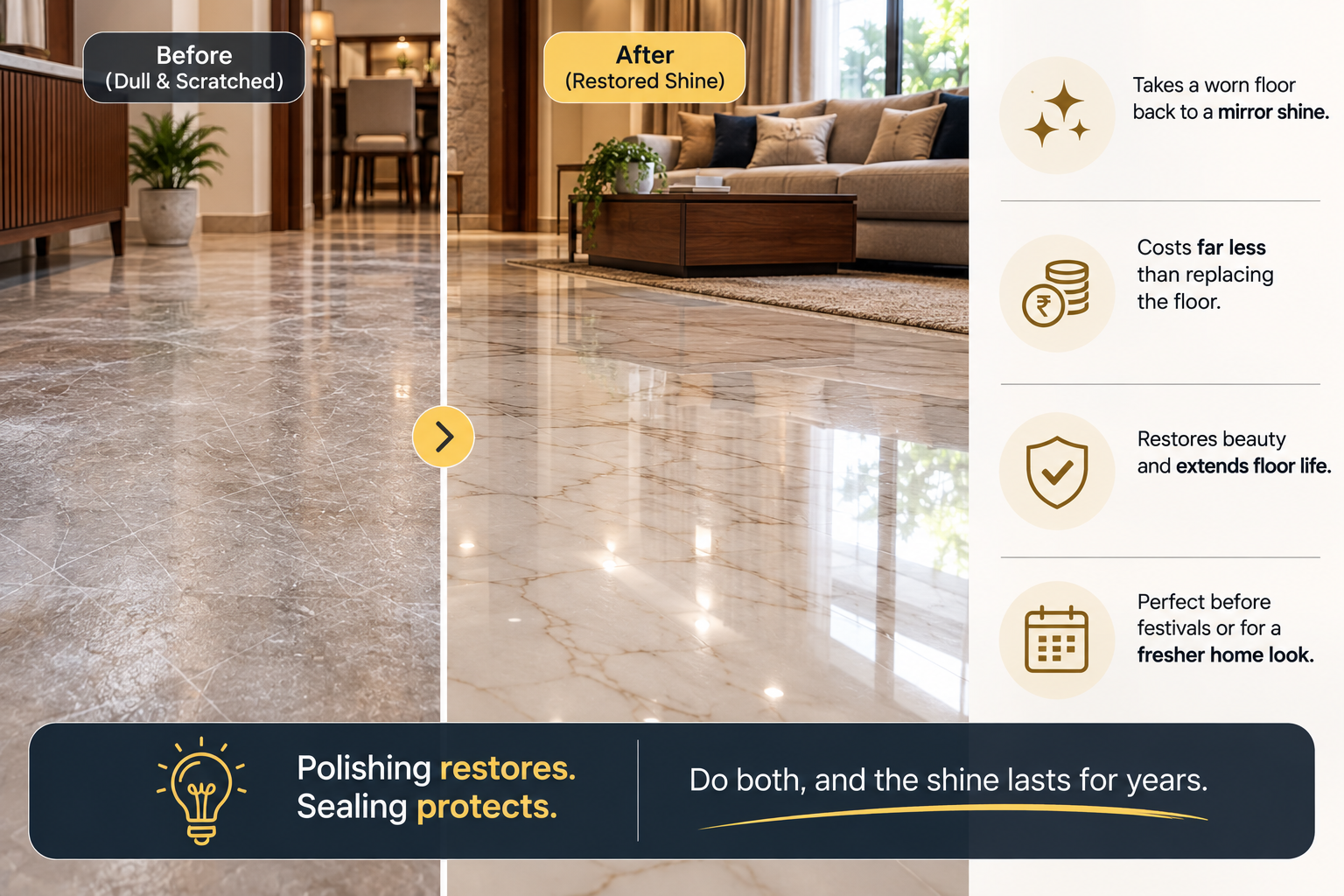
This guide covers what floor polishing actually costs in 2026 across marble, granite and other stone, the methods (and which suits your floor), the honest "polish vs replace" decision, and — the part most cost pages skip — how to make the shine last instead of fading in months. Whether you're prepping for Diwali guests or just tired of a lacklustre floor, you'll know what to book, what it should cost, and what to ask for.
The one idea to carry through: polishing restores; sealing protects. Do the first without the second and you'll be polishing again far too soon.
1. Quick Answer: What Floor Polishing Costs in 2026
Marble floor polishing runs ₹15–₹35 per sq ft for standard diamond polishing, ₹30–₹60 for premium finishes like mirror gloss and crystallization, and ₹40–₹120+ for Italian marble. Basic (non-marble) floor polishing can start as low as ₹5–₹30 per sq ft.
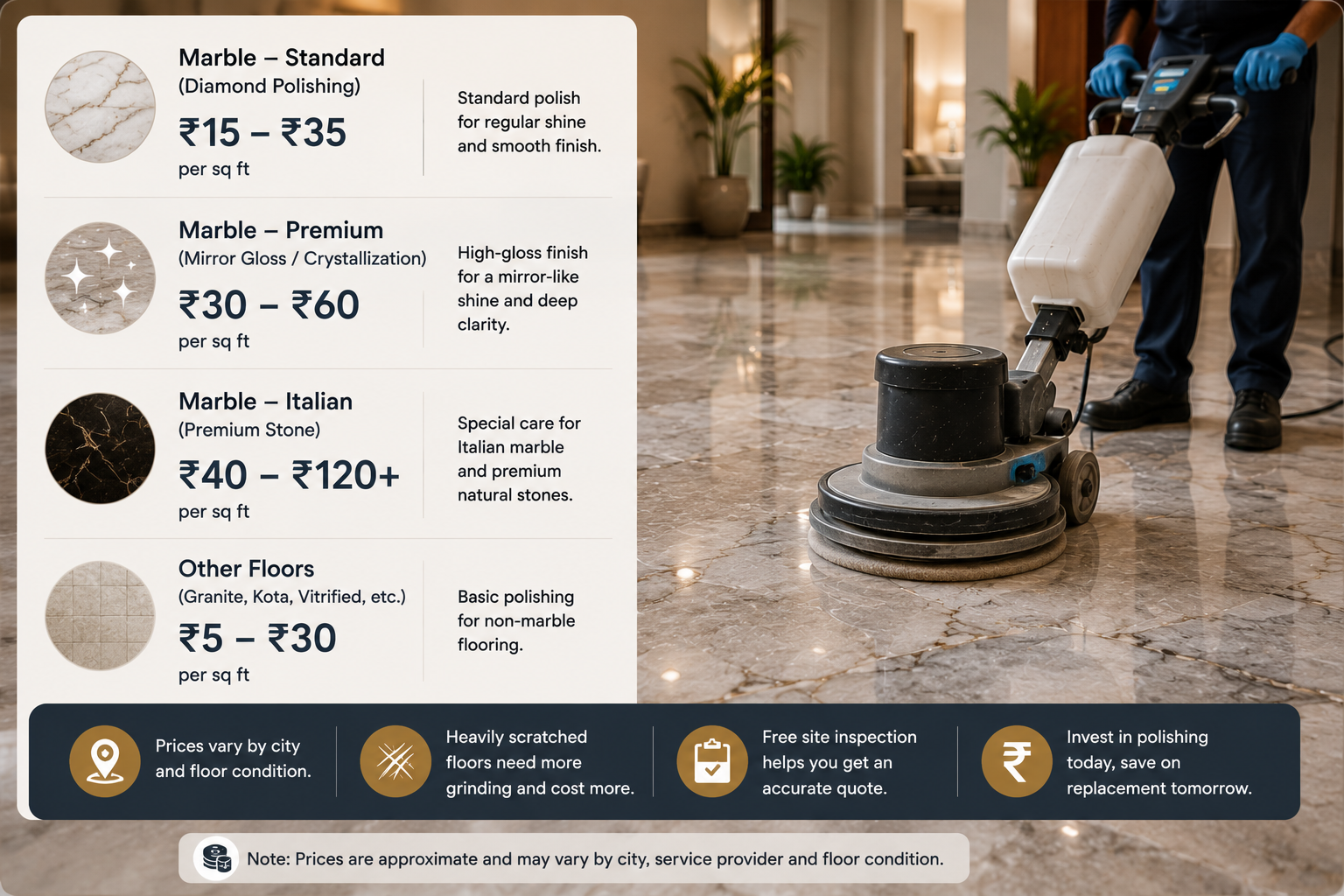
| Service | Cost/sq ft (2026) |
|---|---|
| Basic floor polishing | ₹5–₹30 |
| Diamond polishing (Indian marble) | ₹15–₹35 |
| Premium / mirror gloss / crystallization | ₹30–₹60 |
| Italian marble polishing | ₹40–₹120+ |
| Nano-coating / silicate sealing (add-on) | ₹10–₹15 |
| Granite polishing | ₹30+ |
Prices vary by city and, most of all, by floor condition — an old, heavily scratched floor needs more grinding and costs more than a light refresh. Most providers offer a free site inspection to quote accurately, which is worth taking.
2. Cost by Method and Stone Type
Two things set the price: the method (how much restoration the floor needs) and the stone (Italian marble is softer, finer and pricier to work than Indian marble or granite).
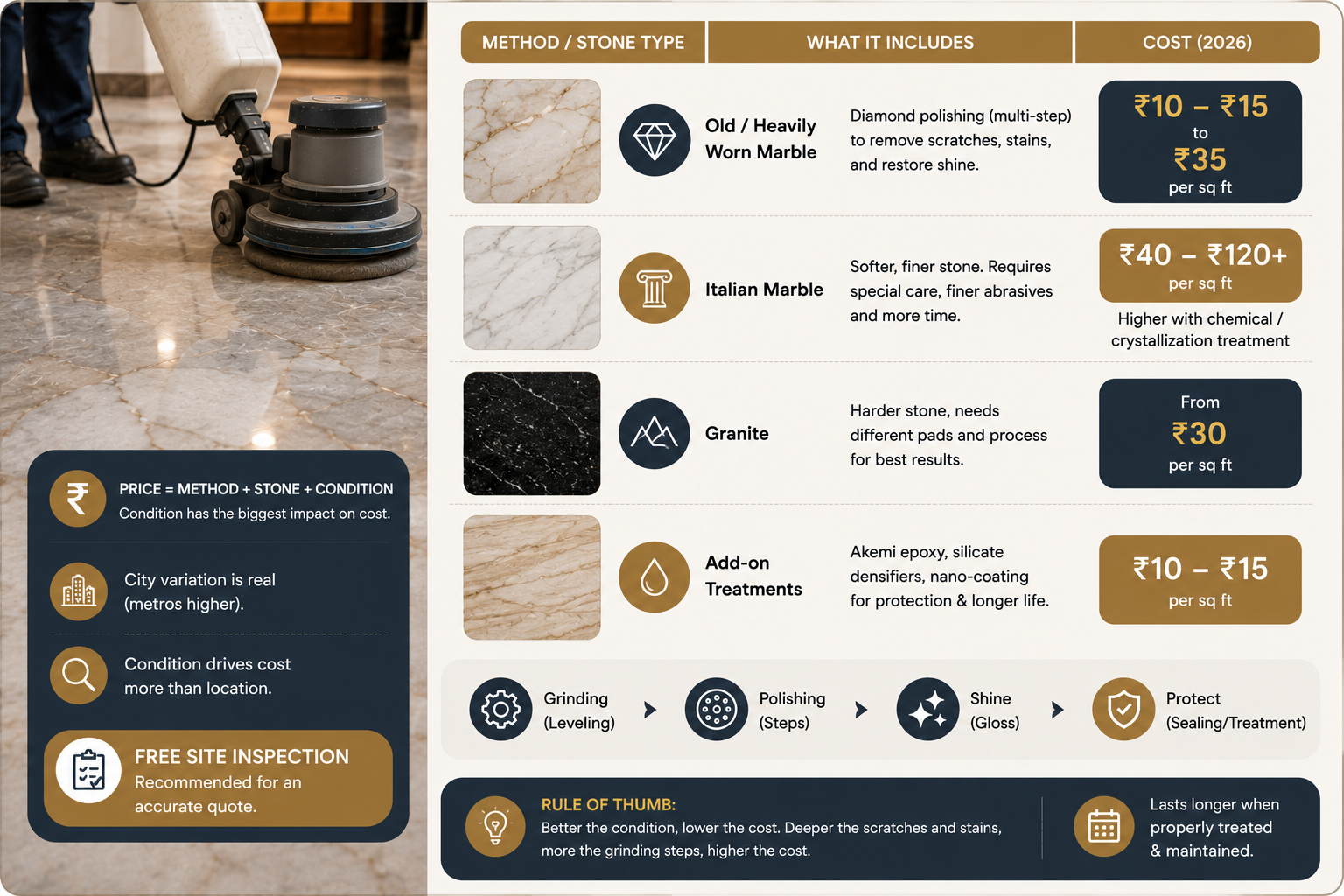
- Old/heavily worn marble: diamond polishing from as low as ₹10–₹15/sq ft for a basic refresh, up to ₹35 for a fuller restoration.
- Italian marble: ₹40–₹120+, higher with chemical/crystallization treatment.
- Granite: from ₹30/sq ft — harder stone, different pads.
- Add-on treatments (Akemi epoxy, silicate densifiers, nano-coating): ₹10–₹15/sq ft.
City variation is real (metros higher), but condition drives cost more than location.
3. The Polishing Process, Step by Step
Understanding the steps helps you tell a proper job from a quick buff. Full marble restoration runs:
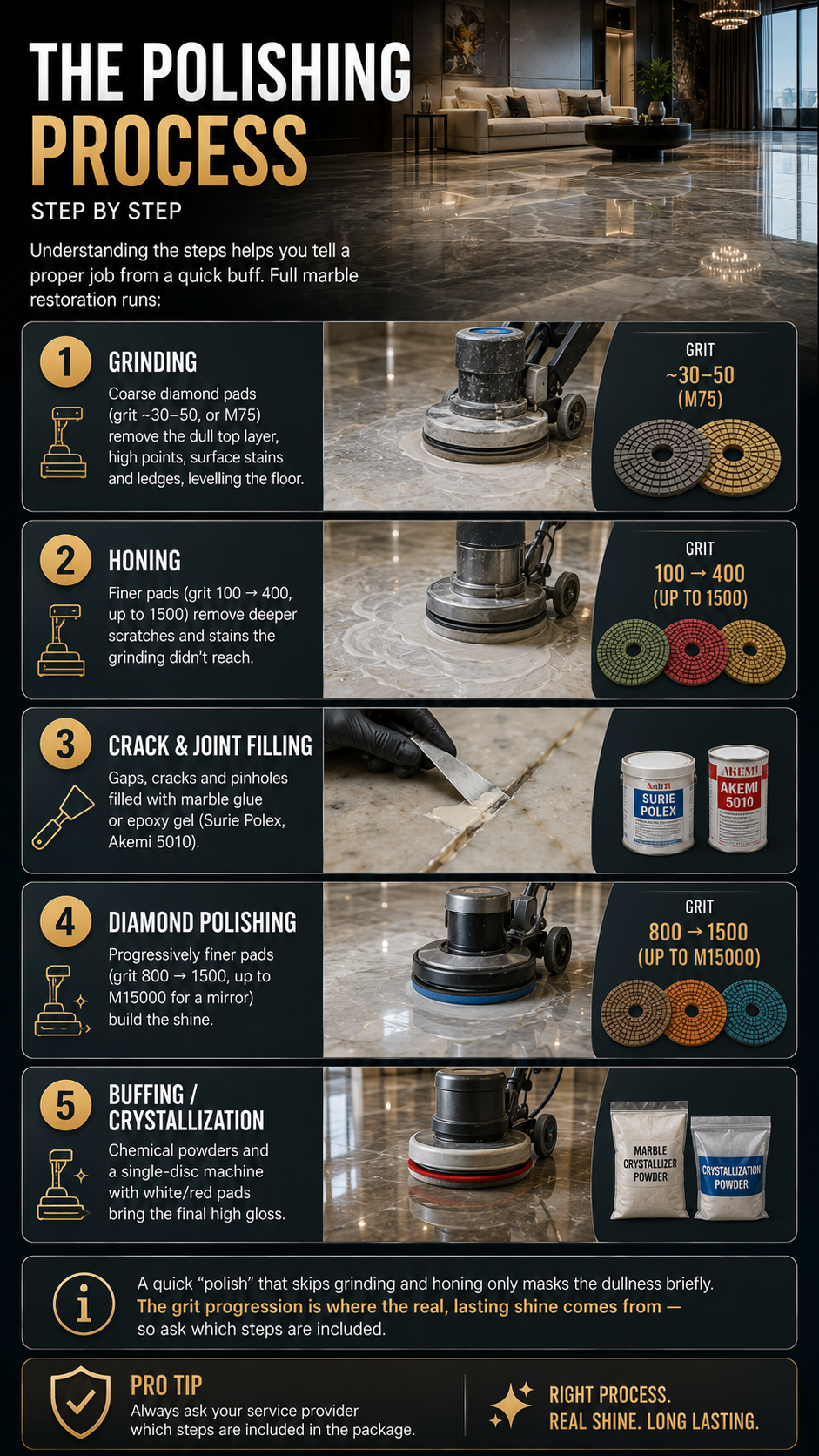
- Grinding — coarse diamond pads (grit ~30–50, or M75) remove the dull top layer, high points, surface stains and ledges, levelling the floor.
- Honing — finer pads (grit 100 → 400, up to 1500) remove deeper scratches and stains the grinding didn't reach.
- Crack & joint filling — gaps, cracks and pinholes filled with marble glue or epoxy gel (Surie Polex, Akemi 5010).
- Diamond polishing — progressively finer pads (grit 800 → 1500, up to M15000 for a mirror) build the shine.
- Buffing / crystallization — chemical powders and a single-disc machine with white/red pads bring the final high gloss.
A quick "polish" that skips grinding and honing only masks the dullness briefly. The grit progression is where the real, lasting shine comes from — so ask which steps are included.
4. The Methods Explained (And Which Fits Your Floor)
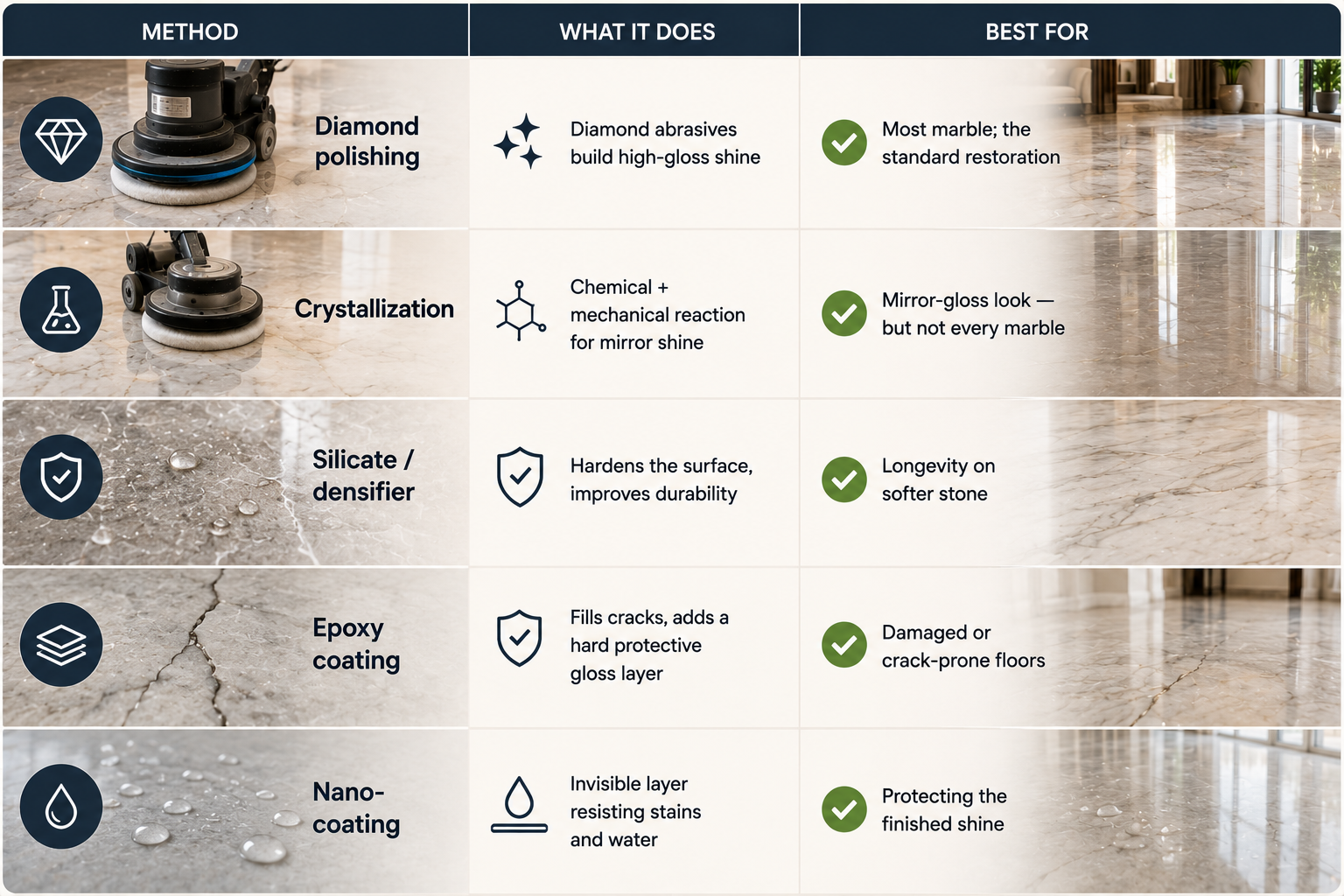
| Method | What it does | Best for |
|---|---|---|
| Diamond polishing | Diamond abrasives build high-gloss shine | Most marble; the standard restoration |
| Crystallization | Chemical + mechanical reaction for mirror shine | Mirror-gloss look — but not every marble |
| Silicate / densifier | Hardens the surface, improves durability | Longevity on softer stone |
| Epoxy coating | Fills cracks, adds a hard protective gloss layer | Damaged or crack-prone floors |
| Nano-coating | Invisible layer resisting stains and water | Protecting the finished shine |
Two things a good technician will tell you:
- Crystallization gives the most dramatic mirror gloss, but it's a chemical process that doesn't suit every marble — the wrong stone can be damaged. A method chosen after inspecting your specific floor beats a one-size "mirror polish" pitch.
- Diamond polishing is the safe, standard restoration for most Indian marble. Crystallization and Italian-marble treatment are the premium tiers.
5. Polish vs Replace: The Honest Decision
Homeowners often assume a dull, scratched floor needs replacing. It rarely does.
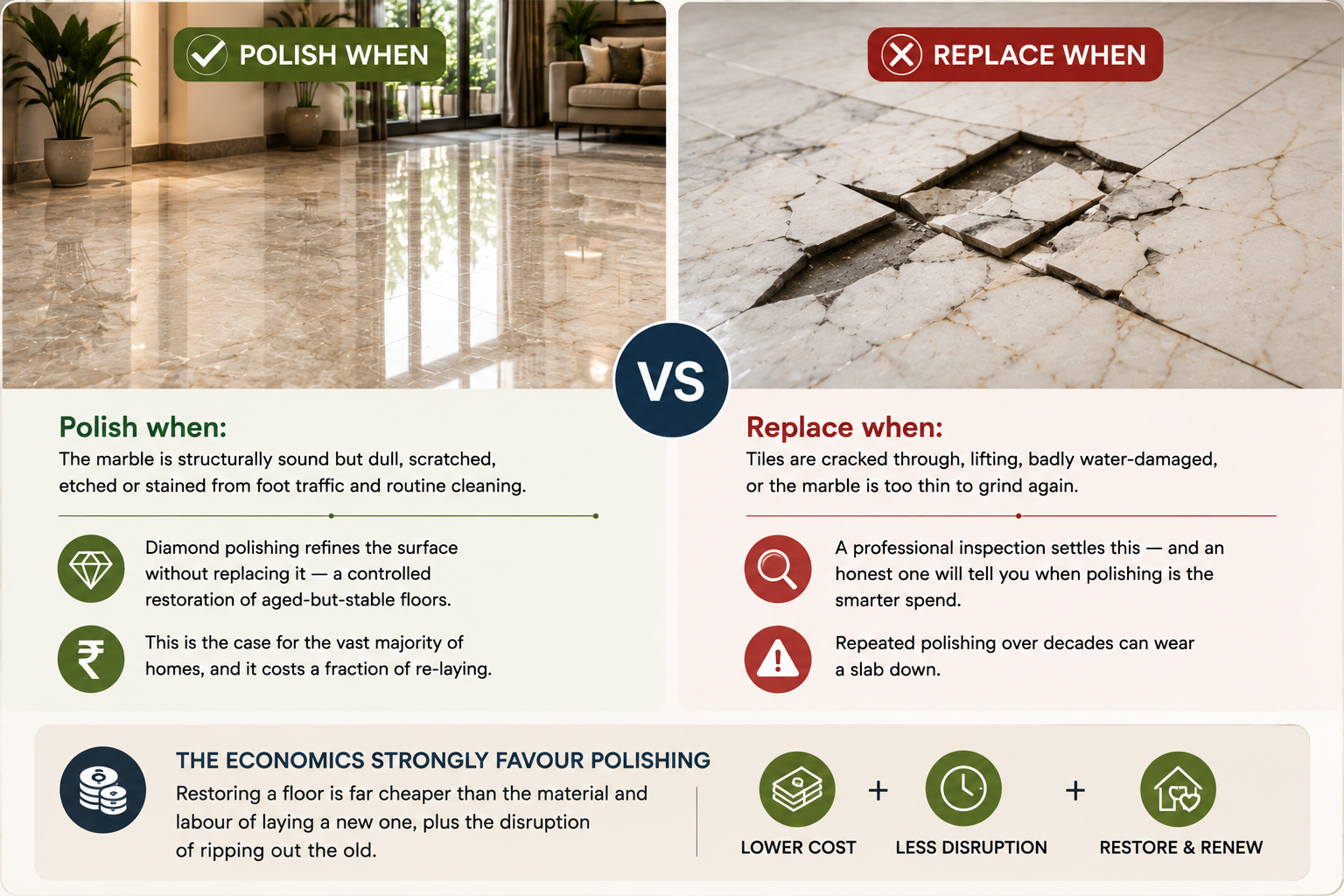
Polish when: the marble is structurally sound but dull, scratched, etched or stained from foot traffic and routine cleaning. Diamond polishing refines the surface without replacing it — a controlled restoration of aged-but-stable floors. This is the case for the vast majority of homes, and it costs a fraction of re-laying.
Replace when: tiles are cracked through, lifting, badly water-damaged, or the marble is too thin to grind again (repeated polishing over decades can wear a slab down). A professional inspection settles this — and an honest one will tell you when polishing is the smarter spend.
The economics strongly favour polishing: restoring a floor is far cheaper than the material and labour of laying a new one, plus the disruption of ripping out the old.
6. Making the Shine Last (Sealing & Nano-Coating)
This is the step that separates a shine that lasts years from one that fades in months — and it's the one budget jobs skip.
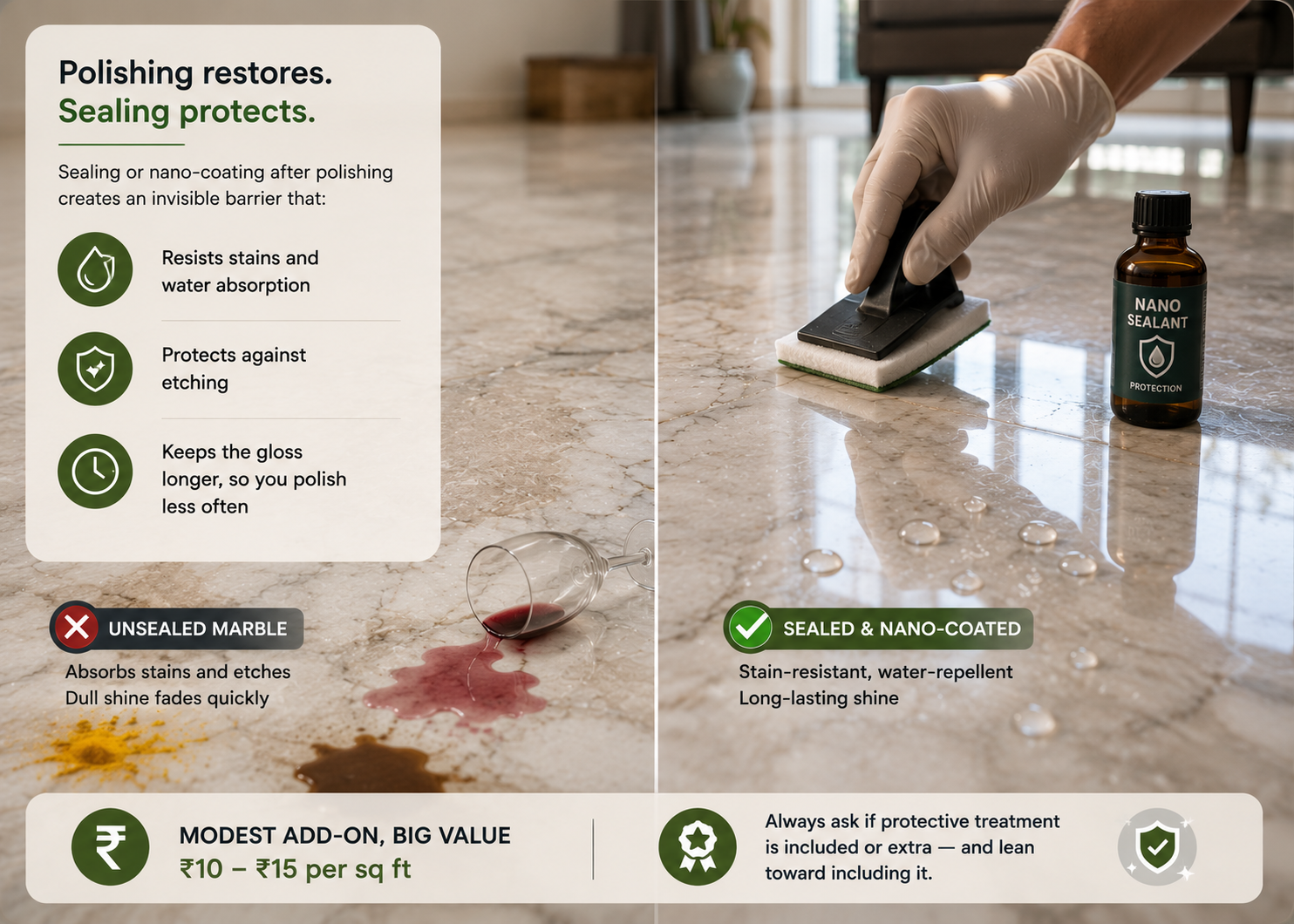
Polishing restores the surface, but bare polished marble is porous — it absorbs stains (turmeric, coffee, wine are notorious on Indian marble) and etches from anything acidic. Sealing or nano-coating after polishing creates an invisible barrier that:
- Resists stains and water absorption
- Protects against etching
- Keeps the gloss longer, so you polish less often
For a modest add-on (₹10–₹15/sq ft), it's one of the best-value decisions in the whole job. Always ask whether a protective treatment is included or extra — and lean toward including it.
7. Marble vs Granite vs Other Floors
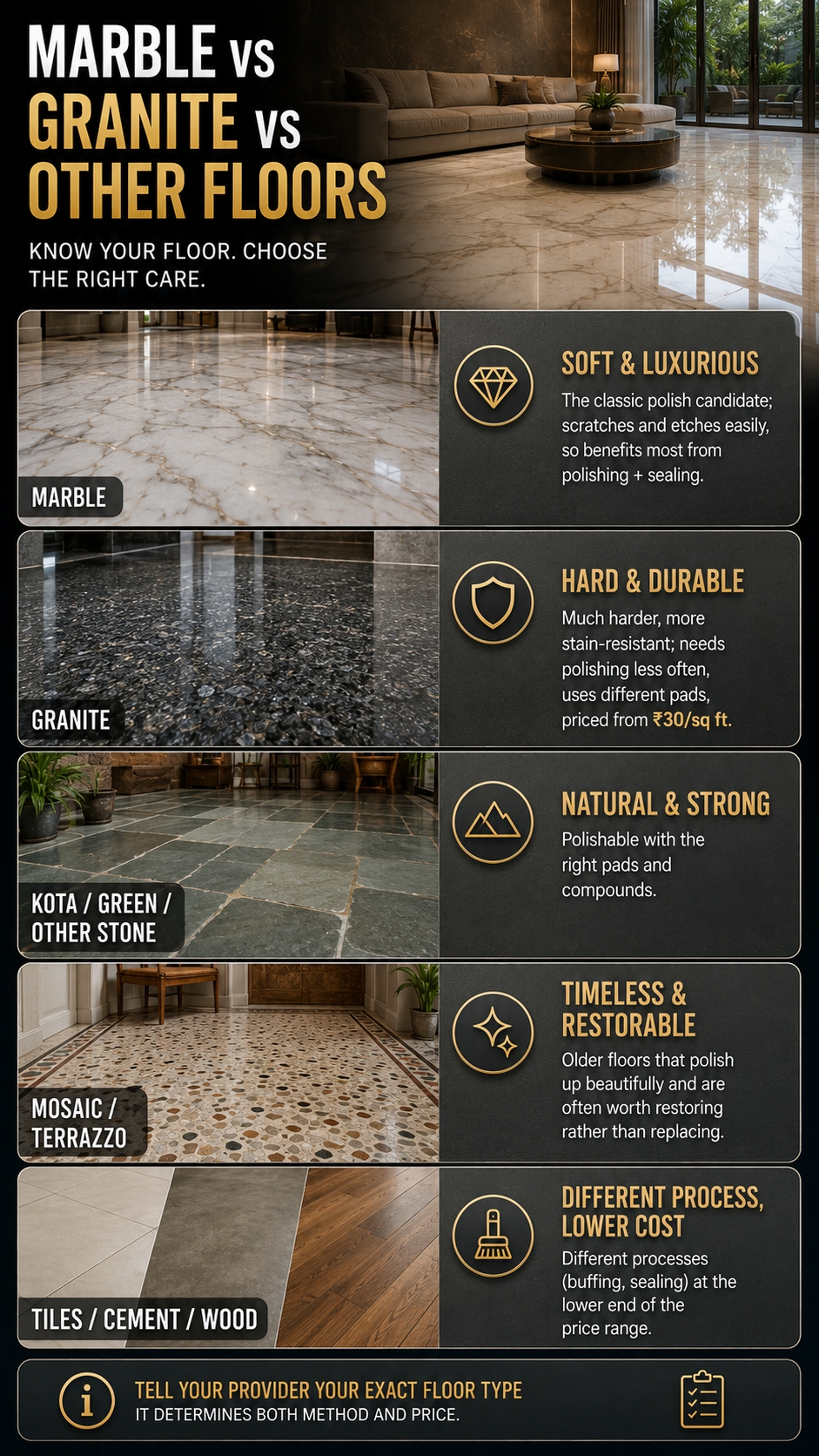
Tell the provider your exact floor type upfront — it determines both method and price.
8. How Often to Polish
- Most homes: every 2–5 years, depending on foot traffic.
- High-traffic areas (living room, entrance, corridors): sooner; low-traffic (bedrooms): later.
- Sealed/nano-coated floors: longer between polishes, because the protective layer preserves the shine.
Between polishes, protect the floor: use doormats, clean spills immediately (especially acidic ones), avoid harsh acidic cleaners on marble, and dust-mop regularly — grit is what scratches marble underfoot.
9. Festive Timing
Floor polishing is a classic pre-Diwali booking — a gleaming floor transforms how a home looks for guests and the festival. Two tips:
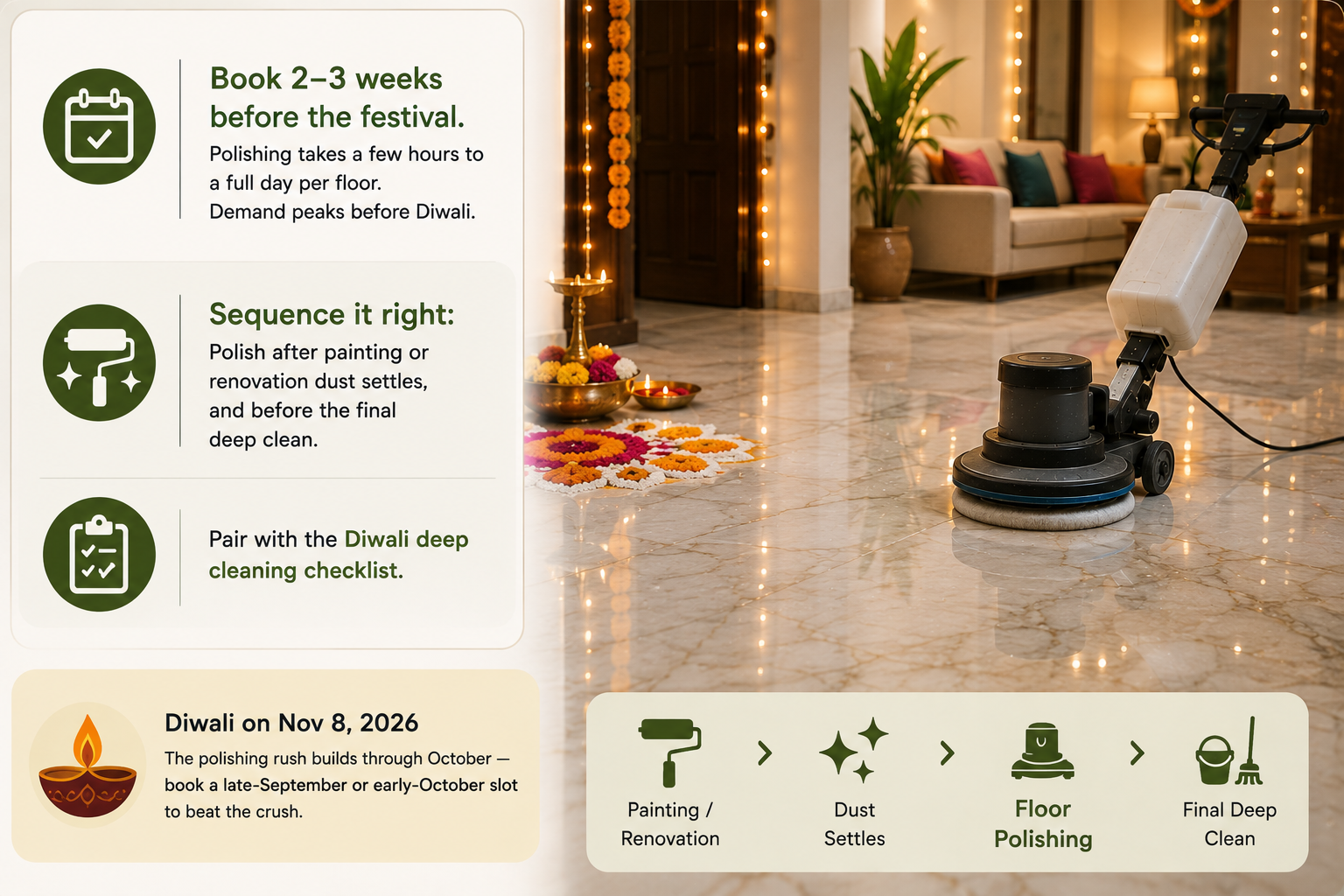
- Book 2–3 weeks before the festival. Polishing needs the area cleared and takes a few hours to a full day per floor, and demand peaks before Diwali.
- Sequence it right: polish after any painting or renovation dust settles, and before the final deep clean, so the floor is pristine for the celebration. Pair with the Diwali deep cleaning checklist.
With Diwali on Nov 8 in 2026, the polishing rush builds through October — booking a late-September or early-October slot beats the crush.
10. How to Hire and What to Ask
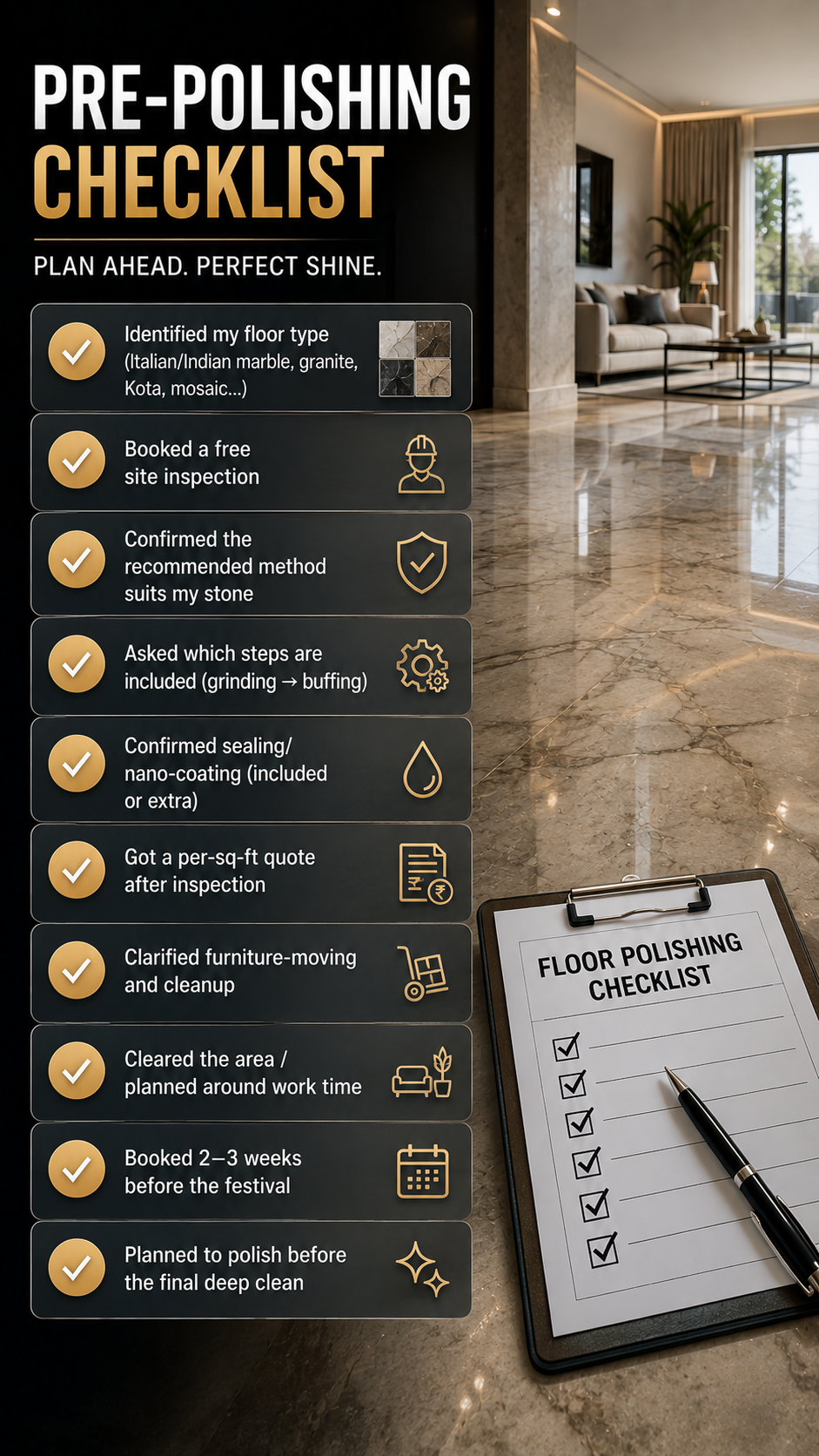
- Take the free site inspection — the right method depends on your stone and its condition; a phone quote can't assess that.
- Ask which steps are included — grinding, honing, crack-filling, polishing, buffing. A "polish" that skips grinding won't last.
- Confirm the method suits your stone — especially before agreeing to crystallization.
- Ask about sealing/nano-coating — included or extra, and lean toward including it.
- Get a per-sq-ft quote after inspection, and clarify whether furniture-moving and cleanup are included.
- Check reviews and experience with your specific stone (Italian marble especially needs skilled hands).
11. Getting It Done Through HomeTriangle
Floor polishing quality depends heavily on the technician's skill and the method matching your stone, which makes vetting important. HomeTriangle connects you with verified floor-polishing professionals who inspect before quoting, recommend the right method for your marble or granite, and carry genuine reviews.
Planning a festive refresh? Sequence polishing with a deep clean and, for a bigger renovation, loop in an interior designer so flooring is restored at the right stage.
Key Takeaways
- Marble polishing: diamond ₹15–₹35/sq ft, premium/crystallization ₹30–₹60, Italian ₹40–₹120+; sealing +₹10–₹15.
- Polishing restores dull, scratched floors without replacing them — far cheaper than re-laying.
- The real shine comes from the grinding → honing → diamond → buffing grit progression, not a quick buff.
- Crystallization gives mirror gloss but doesn't suit every marble — method should follow inspection.
- Seal or nano-coat after polishing — it's what makes the shine last.
- Polish every 2–5 years by traffic; sealed floors last longer.
- Book 2–3 weeks before Diwali; take the free site inspection.
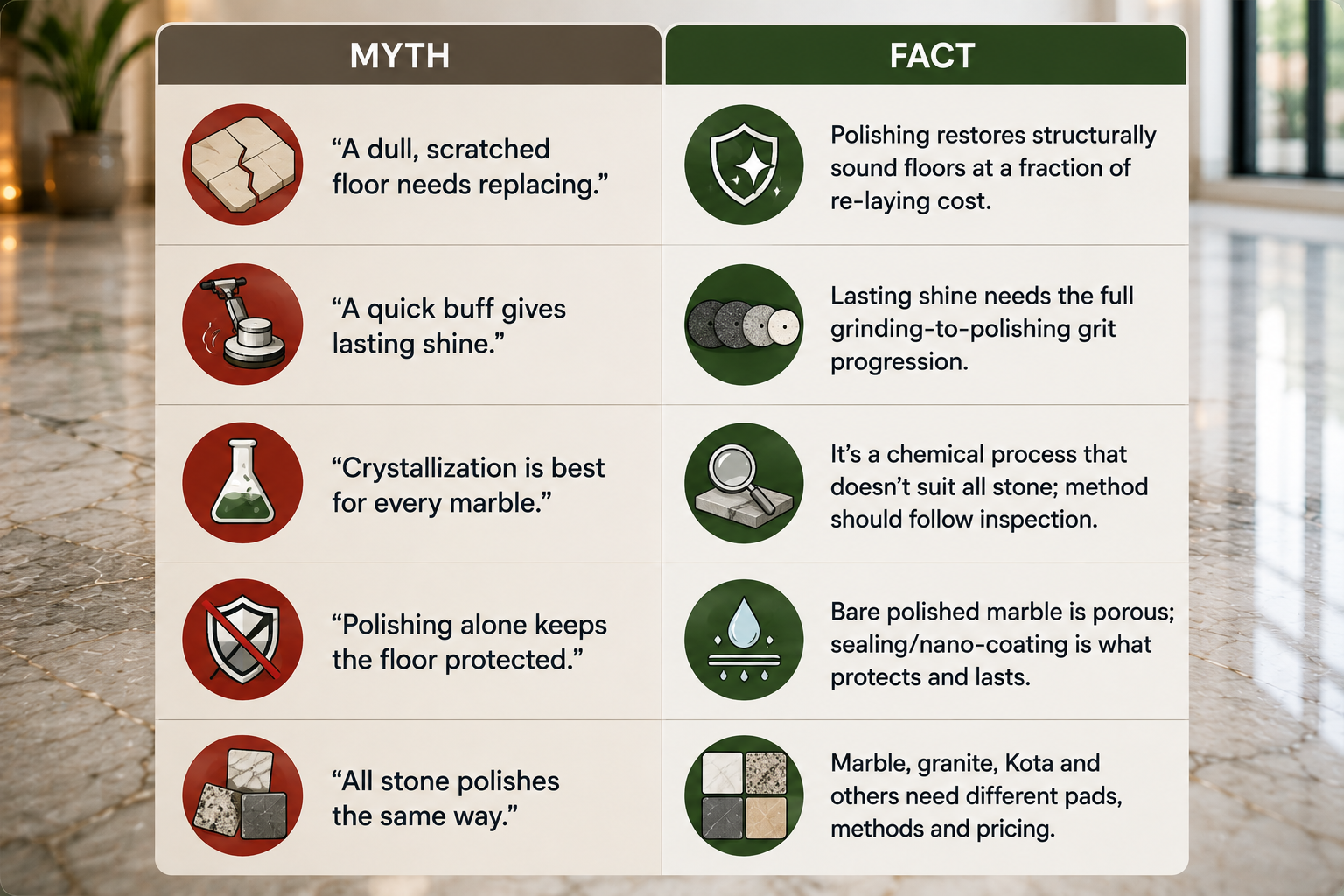
Myth Vs Fact
Common Mistakes
- Replacing a floor that only needed polishing.
- Accepting a "quick polish" that skips grinding and honing.
- Agreeing to crystallization without confirming it suits your marble.
- Skipping sealing/nano-coating, so the shine fades fast.
- Using acidic cleaners on marble between polishes (causes etching).
- Not clearing/planning around the few-hours-to-a-day work time.
- Booking last-minute before Diwali and missing slots.
Expert Tips
- Take the free site inspection and get the method matched to your stone.
- Always add sealing or nano-coating — best value for lasting shine.
- Ask which grit steps are included — the progression is the job.
- Use doormats and dust-mop to keep grit from scratching between polishes.
- Clean spills immediately, especially turmeric, coffee and anything acidic.
- Avoid acidic/harsh cleaners on marble; use pH-neutral stone cleaners.
- Book pre-Diwali early, and sequence polishing before the final deep clean.
Pre-polishing Checklist


Comments ()