
How to Prepare Your Home for a Pest-Free Vacation
Keep pests away while you travel. Learn essential pre-departure steps and travel habits to ensure you return to a clean, pest-free home.
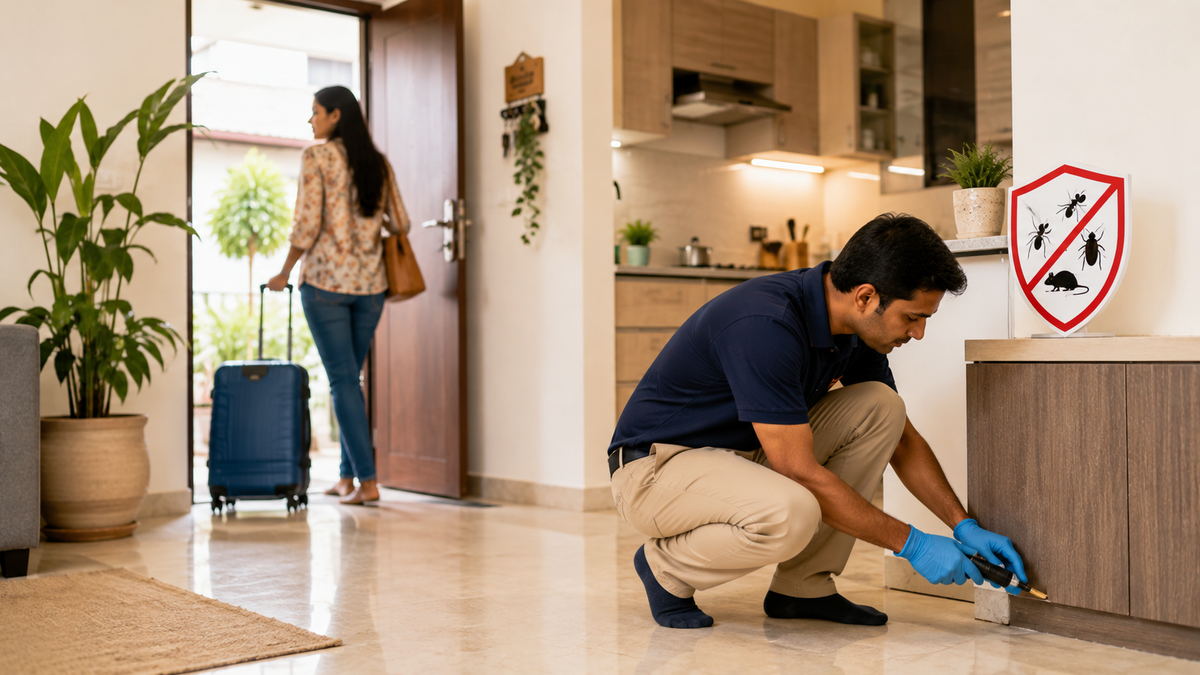
A vacation should end with rest, not a battle against ants marching across the kitchen counter or the unpleasant surprise of fruit flies hovering near the sink. Pests are opportunists. They seek food, moisture, and shelter, and an empty house left unattended for days offers exactly that. With a bit of planning before you lock the front door, you can significantly reduce the odds of coming home to an infestation. This guide walks through the practical steps homeowners should take before departure, along with travel habits that keep unwanted insects from hitching a ride back with you.
Clear Out Perishables Before You Lock Up
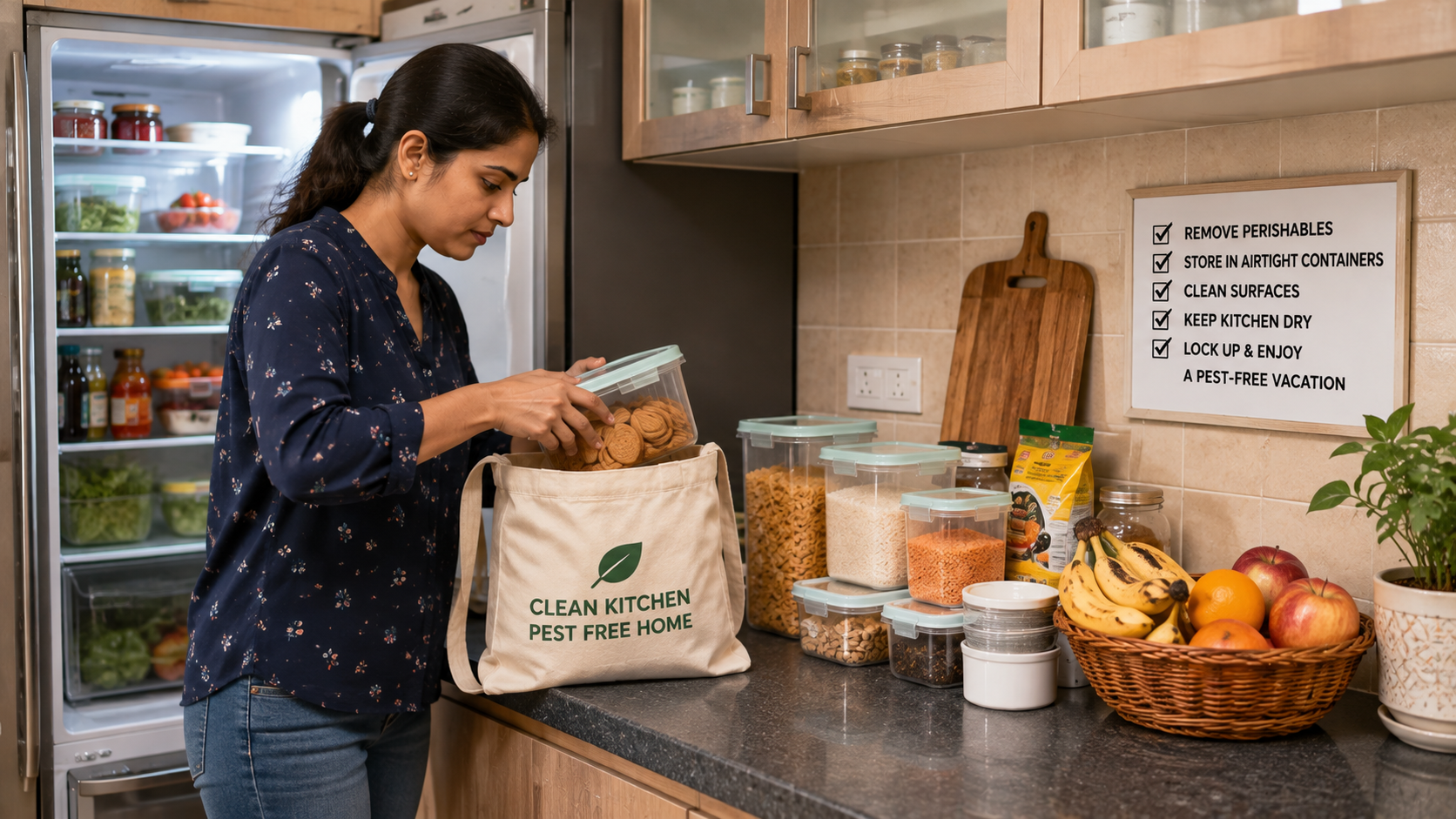
The kitchen is the first place pests investigate, and food left behind is often the reason they stick around. Before leaving, homeowners should remove anything that could spoil, including fruit on the counter, opened snacks, and leftovers in the refrigerator. Even a single overripe banana can attract fruit flies within days. Bread, cereal, and other loosely sealed items should be moved into airtight containers rather than left in their original packaging, since cardboard and thin plastic do little to stop determined insects.
This is also a good moment to think about one of the 11 tips for a pest free vacation that experienced homeowners swear by: treat your kitchen as though a guest with a very sensitive nose is arriving the day you return. If it would bother a person, it would attract a pest.
Take Out the Trash and Rinse the Bins
Garbage left sitting for a week or more is a magnet for cockroaches, ants, and rodents. Empty every indoor trash can, including smaller ones in bathrooms and home offices, and take the bags to an outdoor bin with a secure lid. Rinsing the inside of indoor cans with warm water helps remove food residue that can otherwise draw pests even from an empty container. Outdoor bins should be checked too, since overflowing or unsecured lids give rodents easy access to a steady food source.
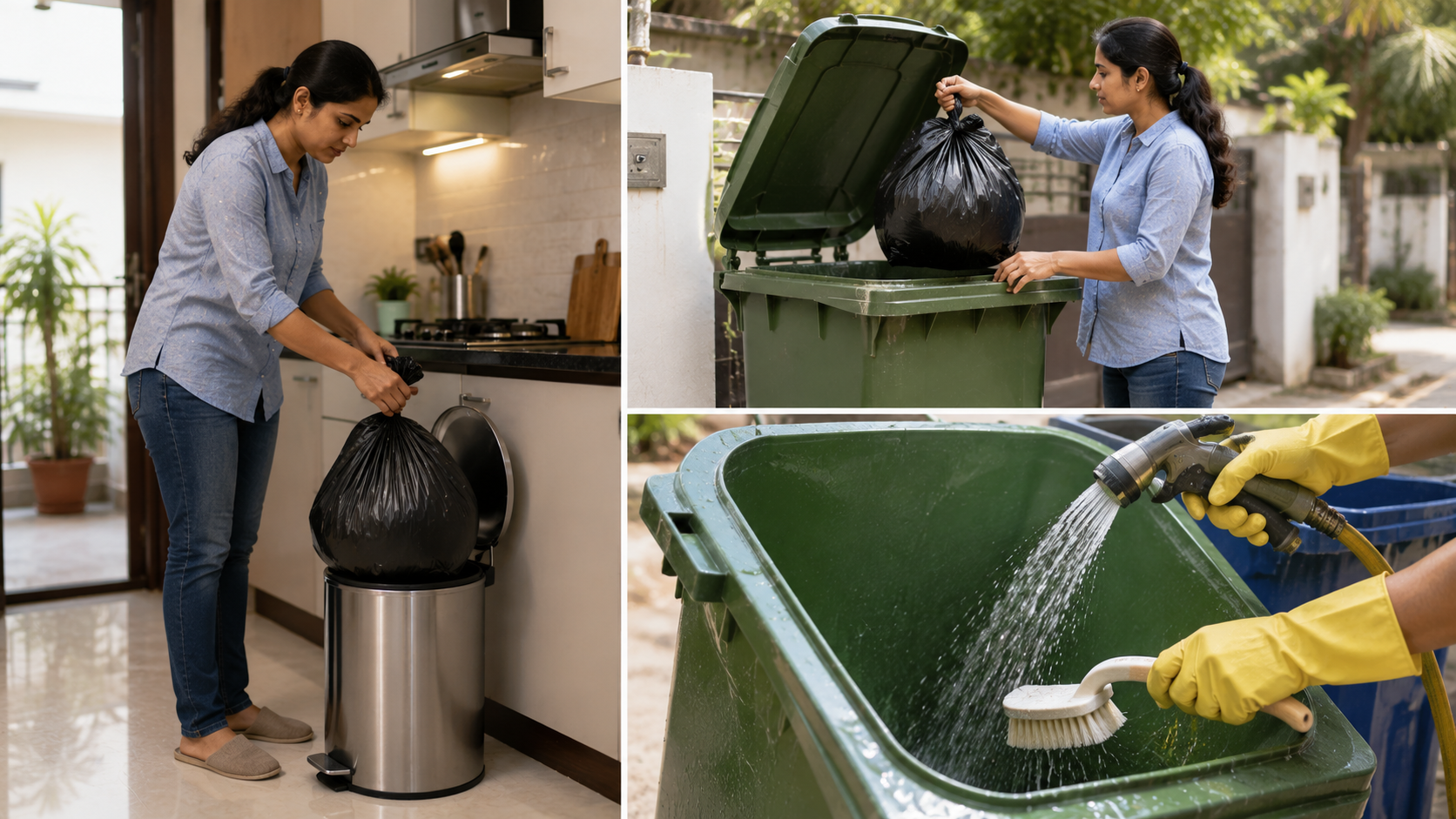
Homeowners often overlook recycling bins during this process. Sticky residue from cans and bottles can be just as appealing to insects as food waste, so a quick rinse before you leave is worth the extra minute.
Check Drains, Pipes, and Areas of Standing Water
Moisture is one of the most overlooked invitations for pests. Cockroaches in particular are drawn to damp environments, and according to pest control research from university extension programs, they can survive for weeks without food but only a short time without water. Before traveling, run water through infrequently used drains to keep the trap seals full, since dry drain traps can allow sewer gas and small insects to enter the home.
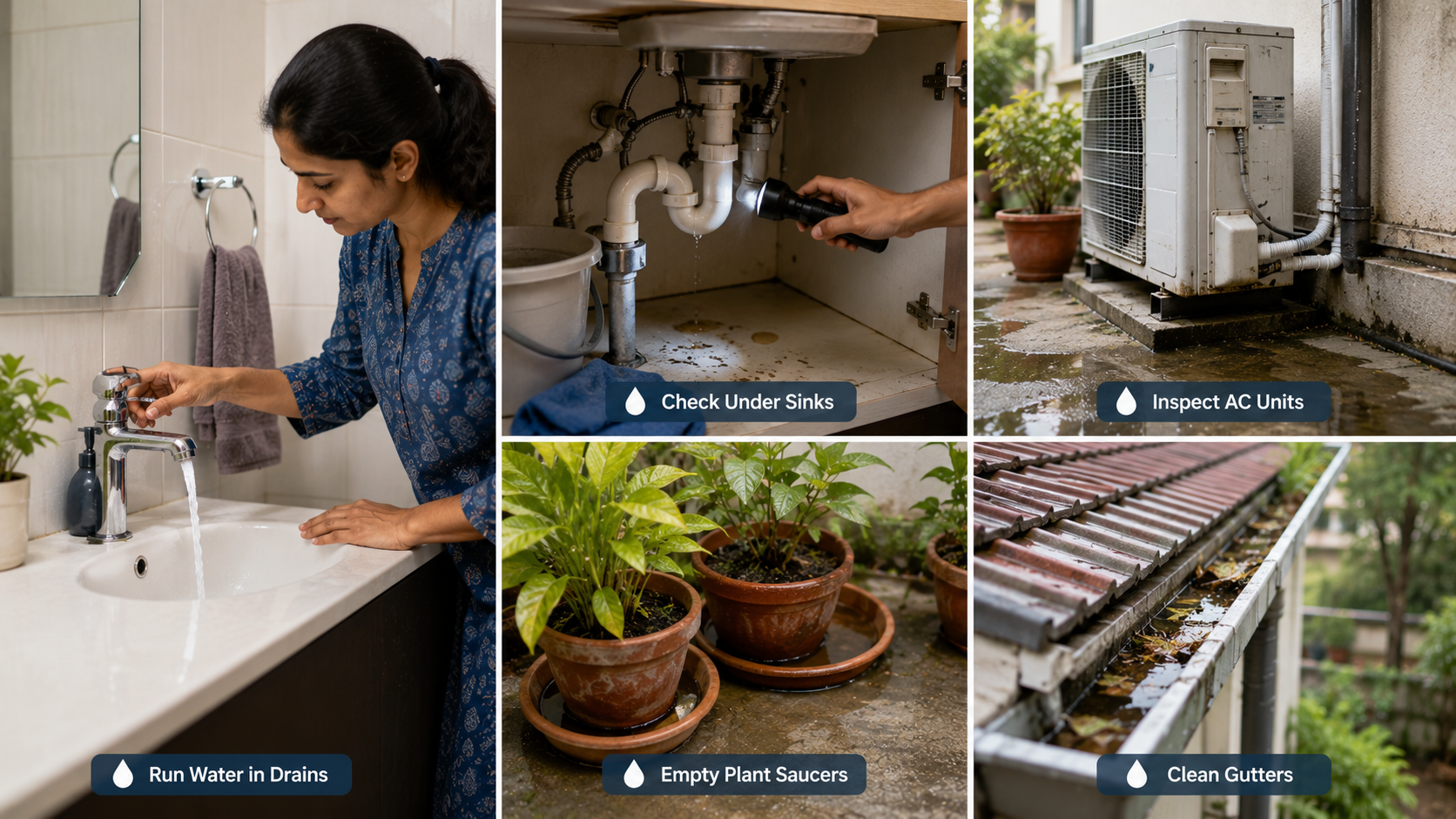
It is also worth inspecting the following areas for standing water:
- Under sinks, where slow leaks often go unnoticed
- Around air conditioning units, which can accumulate condensation
- Flower pots and saucers, which trap rainwater and attract mosquitoes
- Gutters, especially if they are clogged and holding water near the roofline
Addressing these spots takes only a few extra minutes but removes a major draw for insects while you are away.
Clean Pet Areas and Store Food Properly
Pet bowls, bedding, and litter boxes are frequently the reason ants and roaches appear near ground level. Even a small amount of leftover kibble can attract insects within a day or two, so bowls should be washed and dried before departure. If a pet sitter is checking in, ask them to clean up promptly after each visit rather than leaving food out between visits.
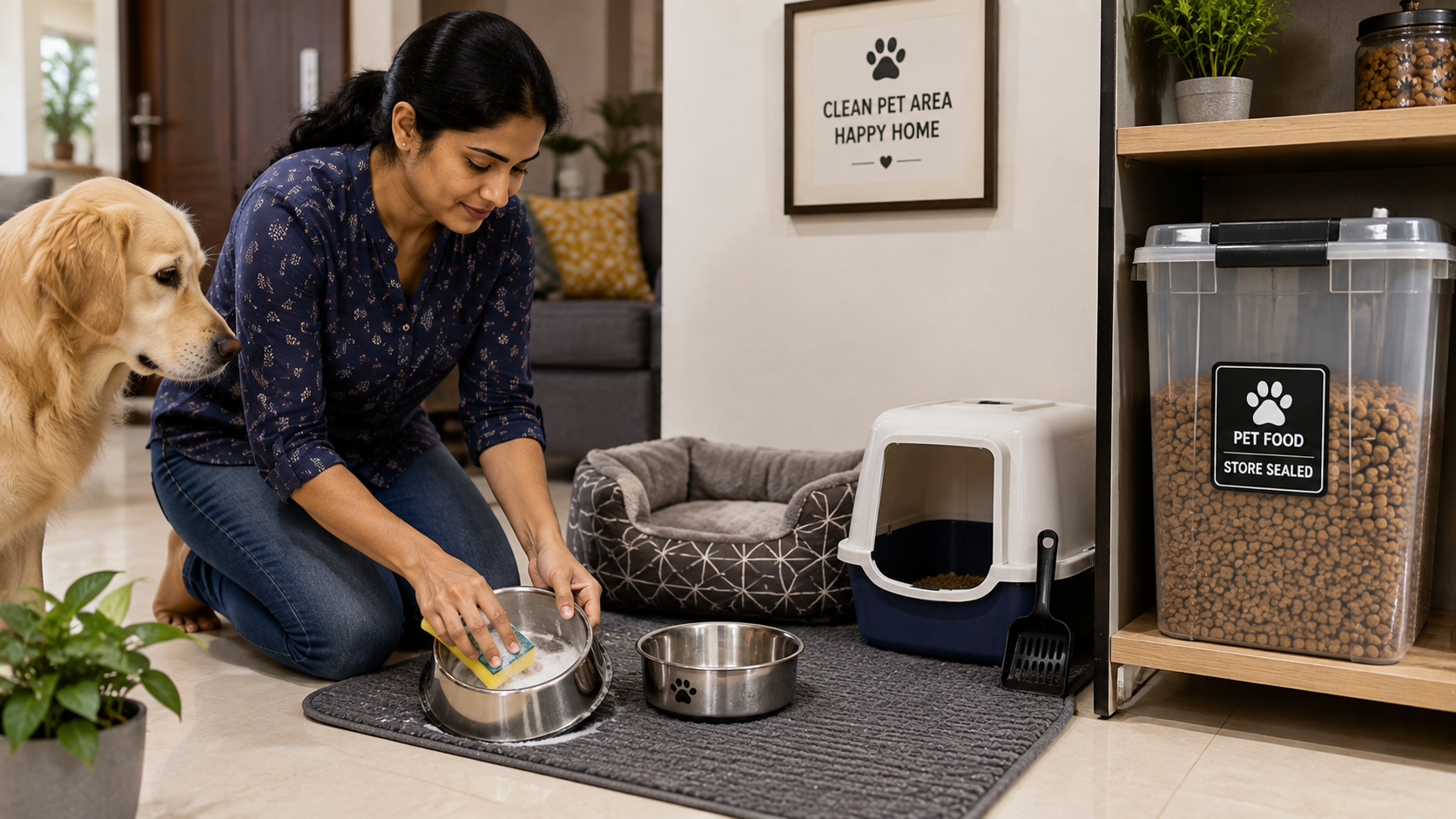
Pet food bags themselves deserve attention as well. Storing dry food in a sealed, hard-sided container rather than its original paper or plastic bag prevents pantry moths and rodents from chewing through packaging while no one is home to notice.
Seal Entry Points and Secure the Perimeter
Pests do not need much space to get inside. A gap as small as a quarter of an inch can allow mice to enter, and even smaller cracks are enough for ants and roaches. Before leaving, it helps to walk the exterior of the home and look for gaps around doors, windows, vents, and utility lines. Weatherstripping and door sweeps are inexpensive fixes that also improve energy efficiency, which is a useful bonus outside of pest prevention.
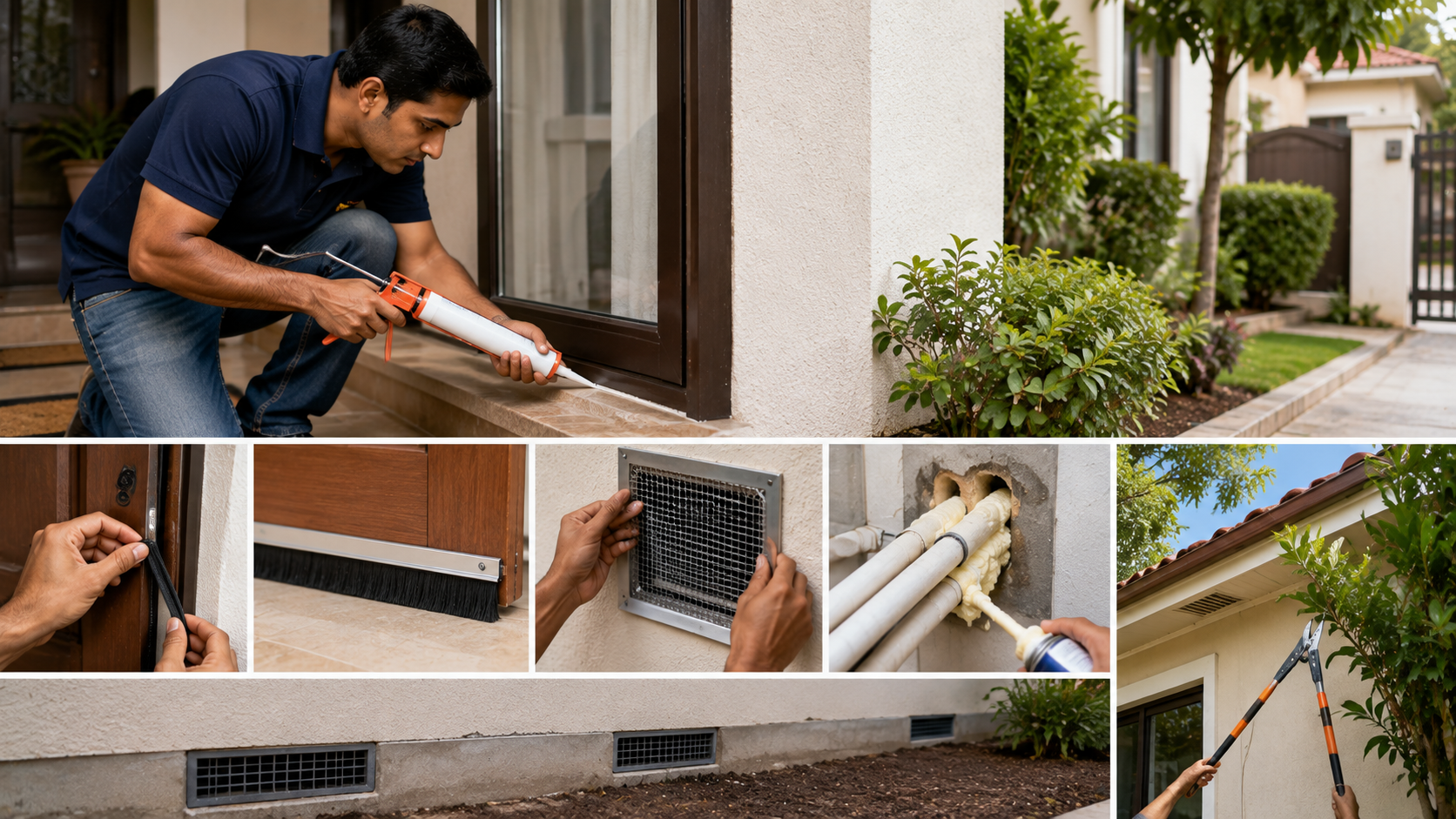
Trimming back tree branches or shrubs that touch the house is another practical step, since overhanging vegetation gives insects and rodents a direct bridge onto the roof or through attic vents.
Managing Pest Risks While You Travel
Home preparation is only part of the picture. Travel itself introduces its own pest concerns, particularly when it comes to hotel stays and luggage. Bed bugs are a well-documented travel risk, and entomologists note that these insects are excellent hitchhikers, often traveling in luggage seams, clothing folds, or backpack linings.
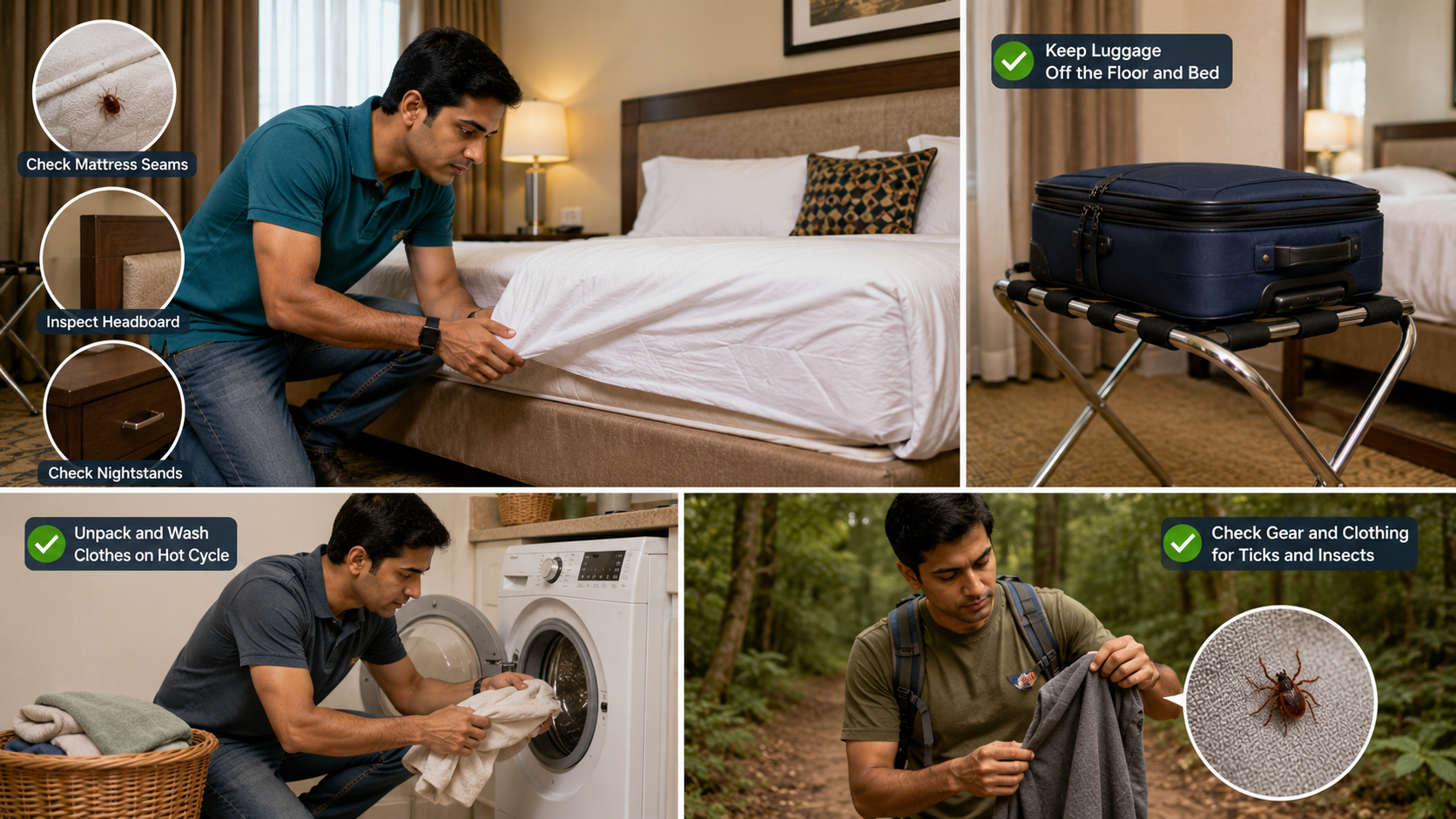
Before unpacking in a hotel room, it is worth briefly inspecting the mattress seams, headboard, and nightstand drawers for small reddish-brown insects or dark spotting, which can indicate bed bug activity. Keeping luggage on a rack rather than the floor or bed reduces the chance of picking up hitchhikers in the first place. Upon returning home, unpacking directly into a washing machine on a hot cycle, rather than placing clothes into drawers first, adds another layer of protection.
Travelers who camp or hike should also check gear and clothing for ticks and other insects before bringing bags back indoors, since outdoor pests can survive in fabric folds for longer than many people expect.
Final Analysis
Preventing pest problems while traveling comes down to removing what attracts them: food, water, clutter, and easy entry points. None of these steps require significant time or effort, yet together they make a meaningful difference in what you find when you walk back through the front door. A pest-conscious approach to both your home and your travel habits means fewer surprises and a much smoother transition back into everyday life after a trip.

Comments ()