
How Smart Route Planning Is Transforming Modern Pest Control Solutions for Your Home
Pest control is now driven by smart technology, route planning, data, and scheduling algorithms that improve response times, service quality, and costs.
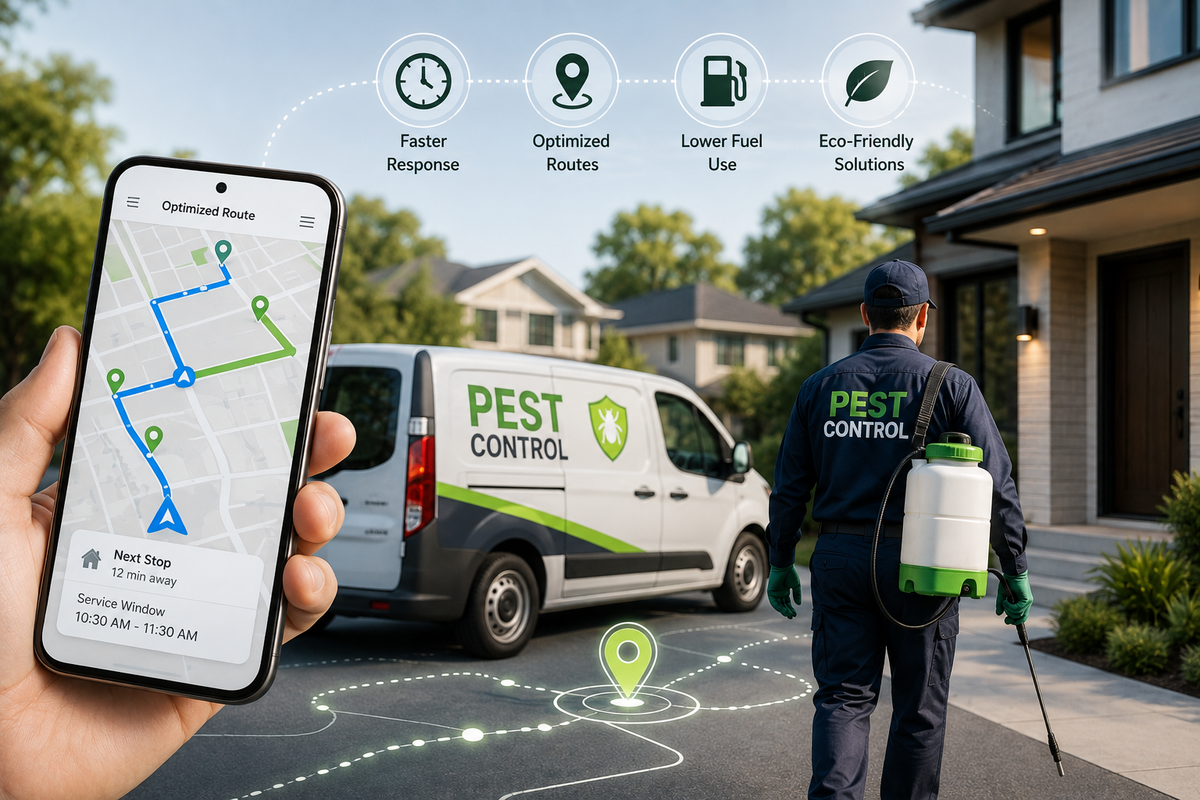
Pest control has quietly become one of the most technology-driven home services in the industry. What used to be a simple truck-and-technician operation now runs on data, scheduling algorithms, and mapping software that decides which house gets visited first and why. Homeowners rarely see this backend work, but it directly affects how fast a technician shows up, how thorough the visit is, and how much the service ends up costing. As pest issues like ants, termites, and rodents remain a constant concern for households, the logistics behind solving them have quietly leveled up. Even simple household nuisances, such as the kind covered in 10 solutions to get rid of sugar ants naturally, now intersect with a much more sophisticated service delivery model than most people realize.
Smart route planning is the piece of that puzzle worth understanding, because it explains why some pest control companies respond within hours while others take days. It also explains why bundling services, seasonal spikes, and neighborhood clustering all play a role in scheduling. For homeowners trying to make sense of quotes, wait times, and service quality, knowing how this technology works can help set realistic expectations and choose providers wisely.
What Is Smart Route Planning in Pest Control?
Smart route planning refers to the use of software that calculates the most efficient paths for technicians to travel between appointments throughout the day. Instead of manually assigning jobs based on guesswork or a paper map, dispatch systems now factor in traffic patterns, appointment windows, technician skill sets, and even the type of pest problem being addressed. A termite inspection, for instance, may require more time and specialized equipment than a routine ant treatment, so the software adjusts the schedule accordingly rather than treating every stop as identical.
These platforms pull from live data sources, including road conditions and historical service times, to predict how long each visit will actually take. That predictive layer is what separates modern pest control logistics from the old model of fixed morning and afternoon blocks. It also allows companies to slot in emergency calls, such as a sudden wasp nest or a rodent infestation, without completely upending the day's schedule for every other customer.
Key Benefits of Route Optimization for Homeowners
The most immediate benefit for homeowners is a tighter, more reliable appointment window. Rather than being told a technician will arrive sometime between eight in the morning and five in the evening, optimized routing allows companies to offer windows as narrow as one or two hours. This matters for people juggling work schedules, childcare, or simply wanting to avoid an entire day spent waiting around for a service call that may or may not show up on time.
Route optimization also improves the consistency of service quality, since technicians are not rushing between poorly sequenced appointments across town. When routes are planned efficiently, technicians spend less time in transit and more time actually addressing the pest problem at hand. This translates into more thorough inspections, better treatment application, and fewer callbacks for issues that were not fully resolved on the first visit.
How Smart Routing Improves Service Response Times
Response time is often the deciding factor when a pest problem escalates quickly, such as a wasp nest near a doorway or a sudden surge of ants after rain. Smart routing systems can identify the nearest available technician with the right equipment and reroute them in real time, cutting what used to be a next-day appointment down to same-day service. This kind of responsiveness is particularly valuable in dense urban areas where multiple service requests come in in a single afternoon.
Faster response also reduces the risk of a minor pest issue becoming a larger infestation. Termites and rodents, in particular, can cause significant damage in a matter of weeks if left unaddressed, so shaving even a day or two off the response window has real financial implications for homeowners. Companies that have invested in this technology tend to advertise their response times as a competitive advantage, and for good reason, since it is often the single biggest factor customers cite in reviews.
Cost Savings and Efficiency Gains for Pest Control Services
Behind the scenes, route optimization reduces fuel consumption, vehicle wear, and overtime labor costs, all of which factor into the price a homeowner ultimately pays. Companies that route their fleets efficiently can service more homes per day without adding additional trucks or staff, which keeps operational costs from ballooning even as demand increases. Those savings, at least in a competitive market, tend to get passed along to customers in the form of more stable pricing.
Efficiency also plays into safety, an area where small businesses of all types, including pest control providers, are increasingly investing in better systems. As detailed by the Federal Trade Commission, small businesses that adopt secure digital scheduling and routing tools also reduce their exposure to data breaches involving customer addresses and payment information, which is a growing concern as more service companies move to app-based booking.
Real-World Examples: Route Planning in Action
Consider a mid-sized pest control company operating across several neighborhoods in a growing metro area. Before adopting route optimization software, technicians often crisscrossed the city inefficiently, sometimes doubling back to areas they had already passed earlier in the day. After implementing smart routing, the same team was able to cluster appointments geographically, cutting drive time significantly and allowing the company to take on more same-week bookings without hiring additional staff.
Homeowners searching for reliable services on platforms like HomeTriangle's Hyderabad listings benefit from this shift indirectly, since providers using optimized scheduling tend to have better availability and more predictable pricing. This is especially noticeable during peak pest seasons, when demand spikes and companies without efficient routing systems struggle to keep up with the volume of service requests coming in.
Choosing a Pest Control Provider with Smart Technology
When evaluating pest control companies, homeowners should ask directly about scheduling technology and typical response times, since these questions reveal a lot about how a company operates behind the scenes. Providers who can offer specific appointment windows, real-time technician tracking, or same-day emergency service are generally further along in adopting these tools than those who still rely on flexible all-day windows. It is also worth asking how the company handles urgent requests, since that responsiveness often separates well-run operations from ones still catching up.
Price should not be the only factor considered, since a slightly higher quote from a company with efficient logistics can still save money in the long run through faster resolution and fewer follow-up visits. Reading reviews that mention punctuality and response speed can be just as telling as reviews about treatment effectiveness. A provider that consistently shows up on time and resolves issues in one visit is often running a tighter operational ship than competitors offering rock-bottom prices with vague scheduling promises.
Conclusion: Why Modern Route Planning Matters for Your Home
Smart route planning may seem like a purely operational detail, but its effects ripple all the way down to the homeowner's experience, from how quickly a technician arrives to how much the service ultimately costs. As pest control companies continue investing in these systems, the gap between well-optimized providers and traditional ones will likely widen further. For homeowners, understanding this shift offers a practical way to evaluate service quality beyond just price comparisons, helping ensure that pest problems get resolved quickly and efficiently rather than becoming prolonged household headaches.

Comments ()