
Curtain & Blind Cleaning in India (2026): The Right Method for Every Fabric & Type
Clean curtains and blinds the right way. Which fabrics machine-wash, which need dry cleaning, how to clean Venetian/roller/Roman blinds, cost, and how often.
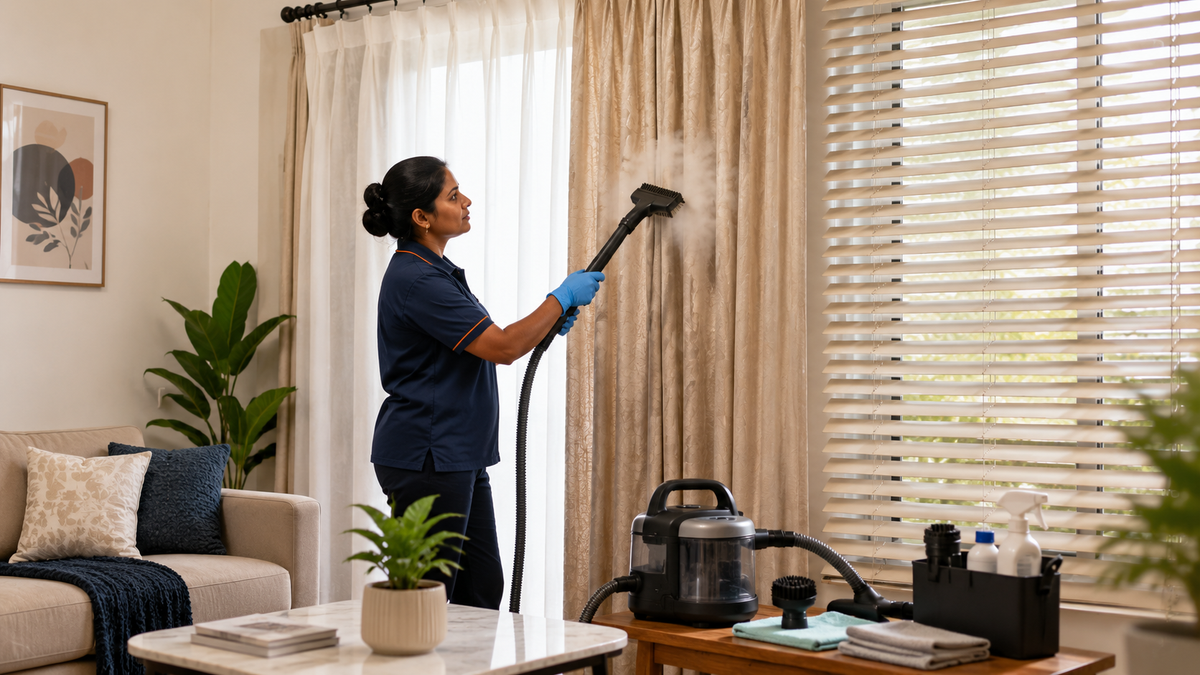
How you clean curtains and blinds depends entirely on the fabric and type. Cotton and polyester curtains can usually be machine-washed on a gentle cycle, but velvet, silk and heavy lined curtains need professional dry cleaning to avoid shrinkage and colour damage. Roman blinds generally can't be machine-washed because of sewn-in rods — they need vacuuming and dry cleaning. Venetian and vinyl blinds are wiped or their slats washed individually. Always check the care label first. Dust or vacuum curtains and blinds monthly, and deep clean every 2–4 months — more in dusty, polluted or humid Indian conditions.
Curtain and blind cleaning in India depends on matching the method to the fabric and type. Cotton and polyester curtains can usually be machine-washed on a gentle cycle and re-hung, making them low-maintenance; velvet, silk, lace and heavy lined or thermal curtains need professional dry cleaning or careful hand-washing to prevent shrinkage, colour bleed and texture damage. Roman blinds generally cannot be machine-washed because of sewn-in rods, so they need regular vacuuming along the fold lines (where Indian dust settles) plus professional dry cleaning for a deep refresh. Venetian, mini and wooden blinds need slat-by-slat wiping; vinyl vertical slats can be unclipped and washed individually; fabric vertical/roller blinds are spot-cleaned. Always check the care label and test a small hidden area first. Cleaning matters for health, not just looks — curtains and blinds trap dust, pet dander and allergens and fling them back into the air when moved, and Indian dust, pollution and humidity make buildup faster. Dust or vacuum monthly and deep clean every 2–4 months (quarterly for outdoor treatments).
WHY YOUR CURTAINS ARE DIRTIER THAN THEY LOOK
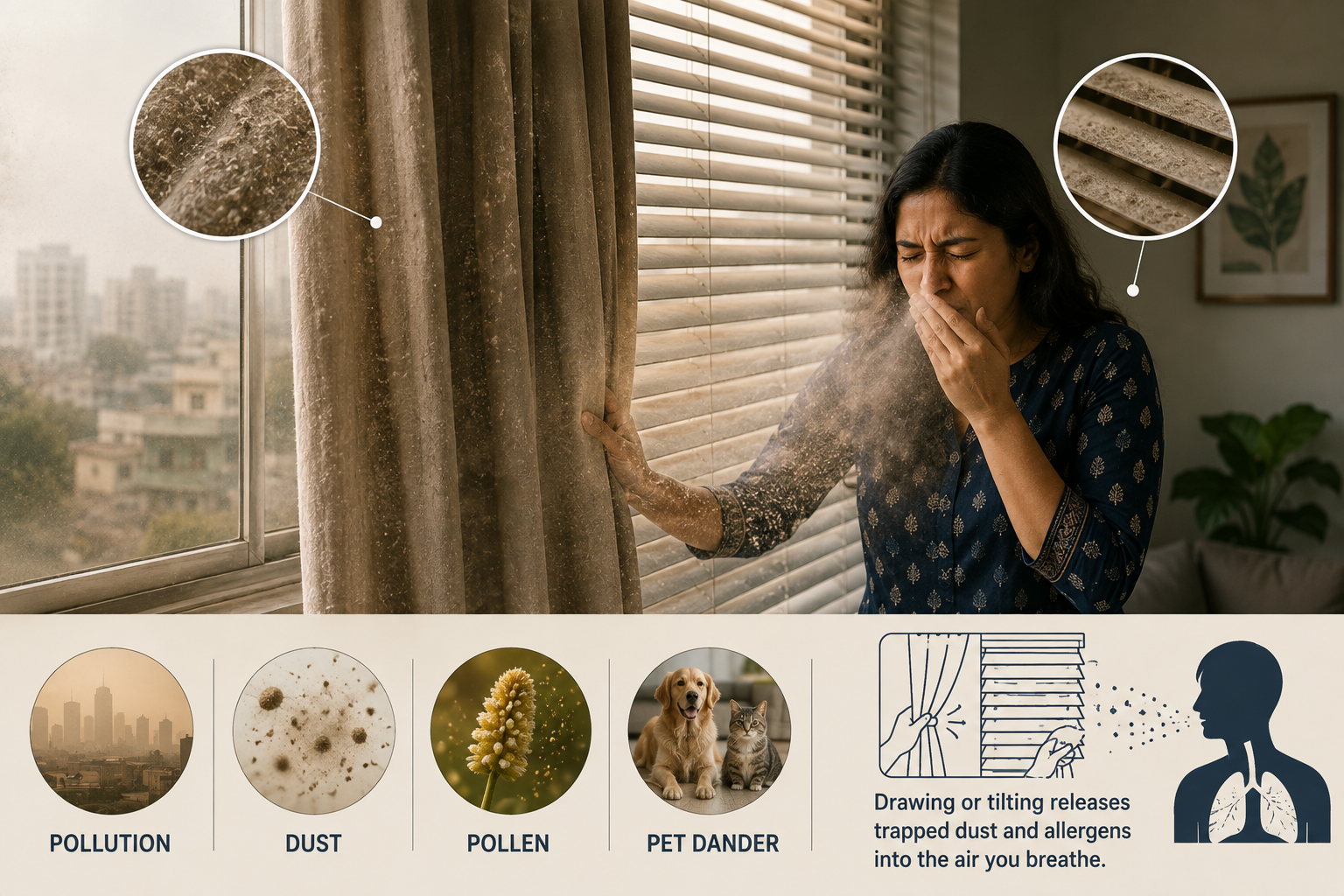
Curtains and blinds are the biggest fabric surfaces in most homes, sitting right at the window where dust, pollution and pollen enter. In Indian conditions — heavy dust, urban pollution, humidity — they become dust magnets faster than almost anything else in the house. And here's the health part people miss: every time you draw a curtain or tilt a blind, you fling trapped dust, pet dander and allergens back into the air you breathe.
So cleaning them isn't just cosmetic — it's about the air quality in the room. The catch is that curtains and blinds come in wildly different fabrics and mechanisms, and the wrong cleaning method ruins them — shrinking a curtain, bleeding colour, or warping a blind. This guide matches the right method to what you actually have.
THE GOLDEN RULE: CHECK THE CARE LABEL FIRST
Before any cleaning, check the care label, and when in doubt, test a small hidden area first. A colour that bleeds or a fabric that shrinks is far easier to catch on a corner than after you've washed the whole panel. This one habit prevents most cleaning disasters.
CURTAINS: WHICH TO WASH, WHICH TO DRY-CLEAN
Curtains split cleanly into two camps:
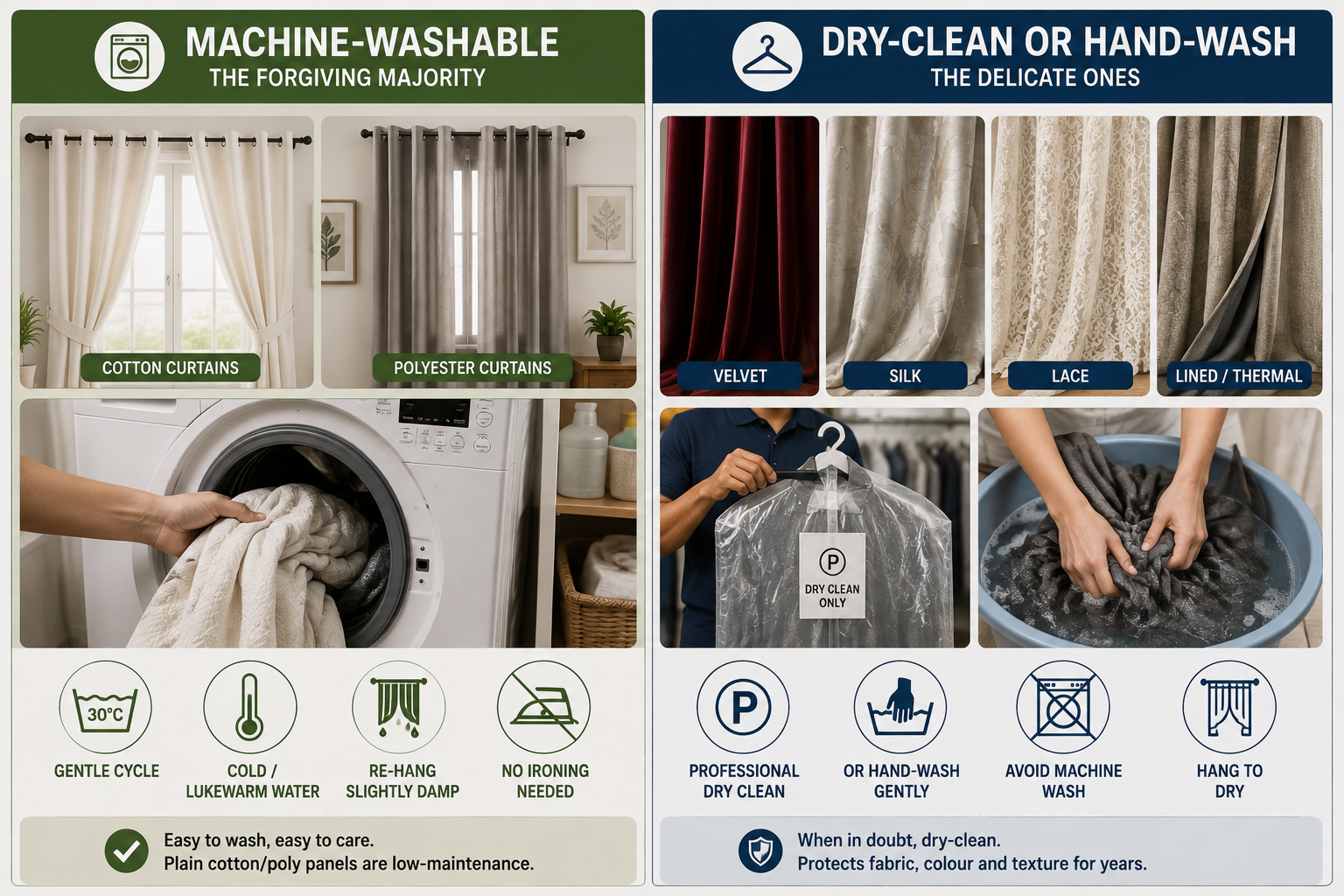
Machine-washable (the forgiving majority):
- Cotton and polyester curtains usually come off the track and go into the washing machine on a gentle cycle, cold/lukewarm water. Re-hang slightly damp so the weight pulls out creases — often no ironing needed. This is why plain cotton/poly panels are low-maintenance.
Dry-clean or hand-wash (the delicate ones):
- Velvet, silk, lace and heavy lined or thermal curtains need professional dry cleaning or very careful hand-washing. Machine-washing risks shrinkage, colour loss and crushed pile.
- Thermal/blackout curtains are best hand-washed gently in a sink/bathtub with warm water, then hung to dry — never machine-washed if the coating can crack.
When in doubt, dry-clean. For expensive or custom curtains, professional cleaning removes dust, stains and allergens without risking the fabric — worth it to preserve colour and texture over years.
BLINDS: METHOD BY TYPE
Blinds are trickier than curtains because of their mechanisms. Match the method:
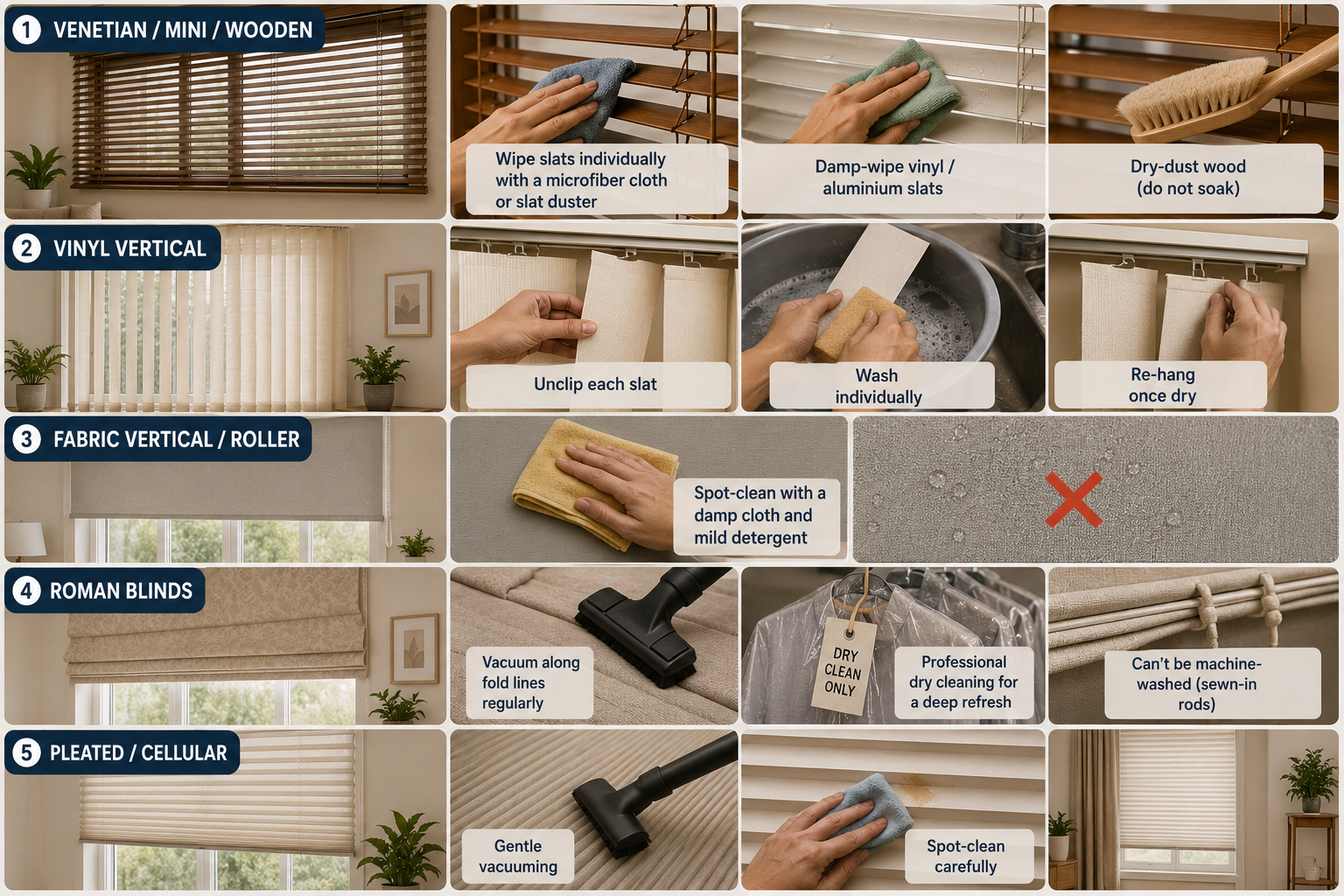
| Blind type | How to clean |
|---|---|
| Venetian / mini / wooden | Wipe slats individually with a microfiber cloth or slat duster; damp-wipe vinyl/aluminium; dry-dust wood (don't soak) |
| Vinyl vertical | Unclip each slat and wash individually, then re-hang |
| Fabric vertical / roller | Spot-clean with a damp cloth and mild detergent; don't soak |
| Roman blinds | Vacuum along fold lines; professional dry cleaning for a deep refresh — generally can't be machine-washed (sewn-in rods) |
| Pleated / cellular | Gentle vacuuming; spot-clean carefully |
The Roman-blind trap: they look like curtains but behave like blinds — the sewn-in rods mean you can't just wash them. Indian dust loves the fold lines, so vacuum those regularly and dry-clean for a proper refresh.
Venetian tip: built-up grime clogs the mechanism and wears the slat finish over time, so regular light dusting extends their life — not just their looks.
PROFESSIONAL CLEANING & COST
For delicate curtains, heavily soiled blinds, or a pre-festival deep refresh, professional cleaning is the safe choice. In India, curtains are typically priced per panel for dry cleaning (heavier lined/velvet panels cost more than light cotton), and blinds per unit by type and size — Venetian and Roman generally cost more than roller because of the slat-by-slat or dry-clean work involved.

Cost drivers: fabric/type, size, soil level, and method (hand wash, dry clean, steam, or ultrasonic for metal blinds). Get a per-panel/per-unit quote, and confirm delicate fabrics will be dry-cleaned, not washed.
Value tip: bundle curtain and blind cleaning into a festive deep-clean package — usually cheaper than booking separately. See the parent Home Deep Cleaning Guide.
HOW OFTEN TO CLEAN
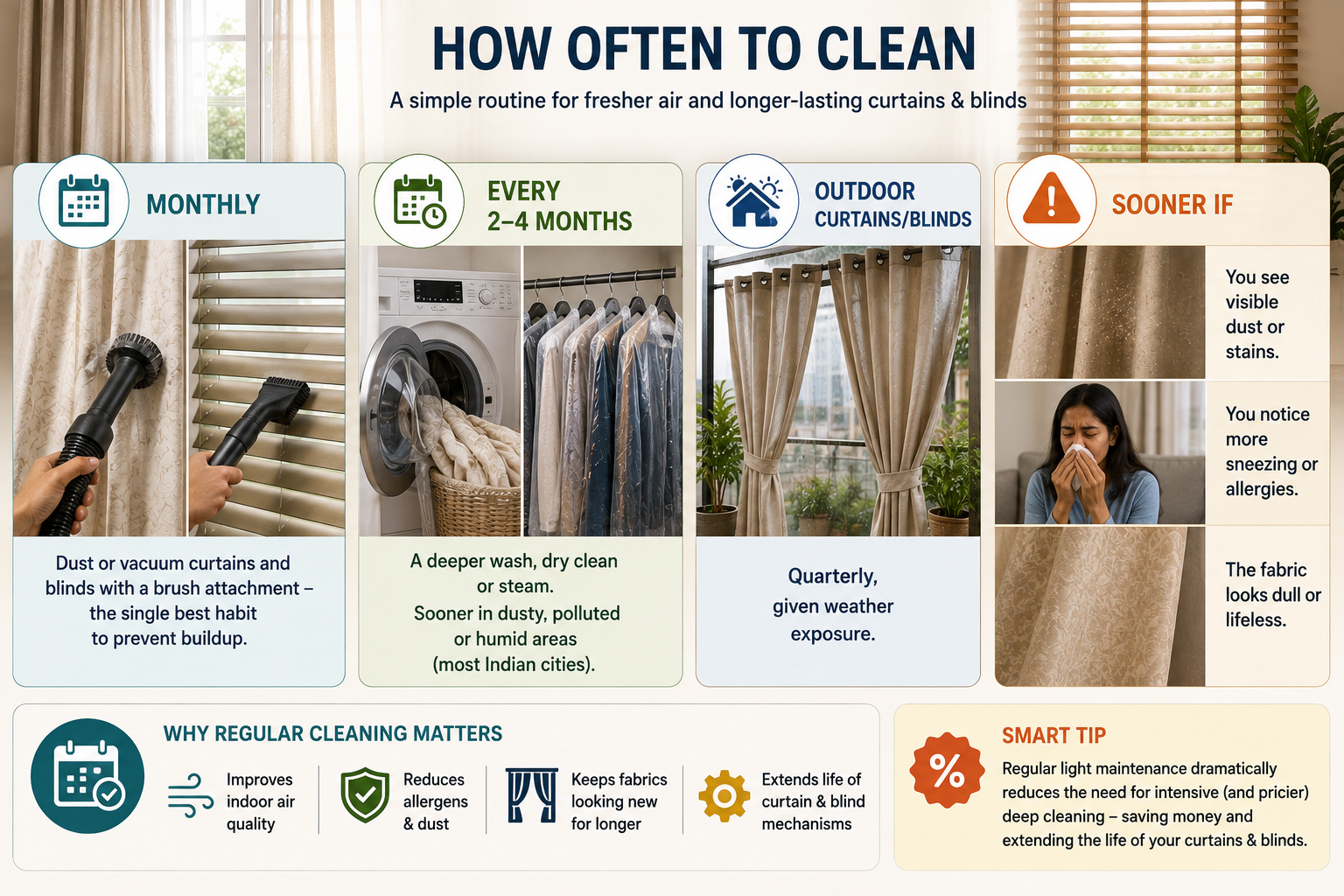
- Monthly: dust or vacuum curtains and blinds with a brush attachment — the single best habit to prevent buildup.
- Every 2–4 months: a deeper wash, dry clean or steam, sooner in dusty, polluted or humid areas (most Indian cities).
- Outdoor curtains/blinds: quarterly, given weather exposure.
- Sooner if: you see visible dust/stains, notice more sneezing/allergies, or the fabric looks dull.
Regular light maintenance dramatically reduces how often you need intensive (and pricier) deep cleaning — and extends the life of the fabric and mechanisms.
DIY vs PROFESSIONAL
Reasonable DIY: monthly dusting/vacuuming, machine-washing cotton/poly curtains, wiping Venetian slats, spot-cleaning roller blinds, unclipping and washing vinyl vertical slats.
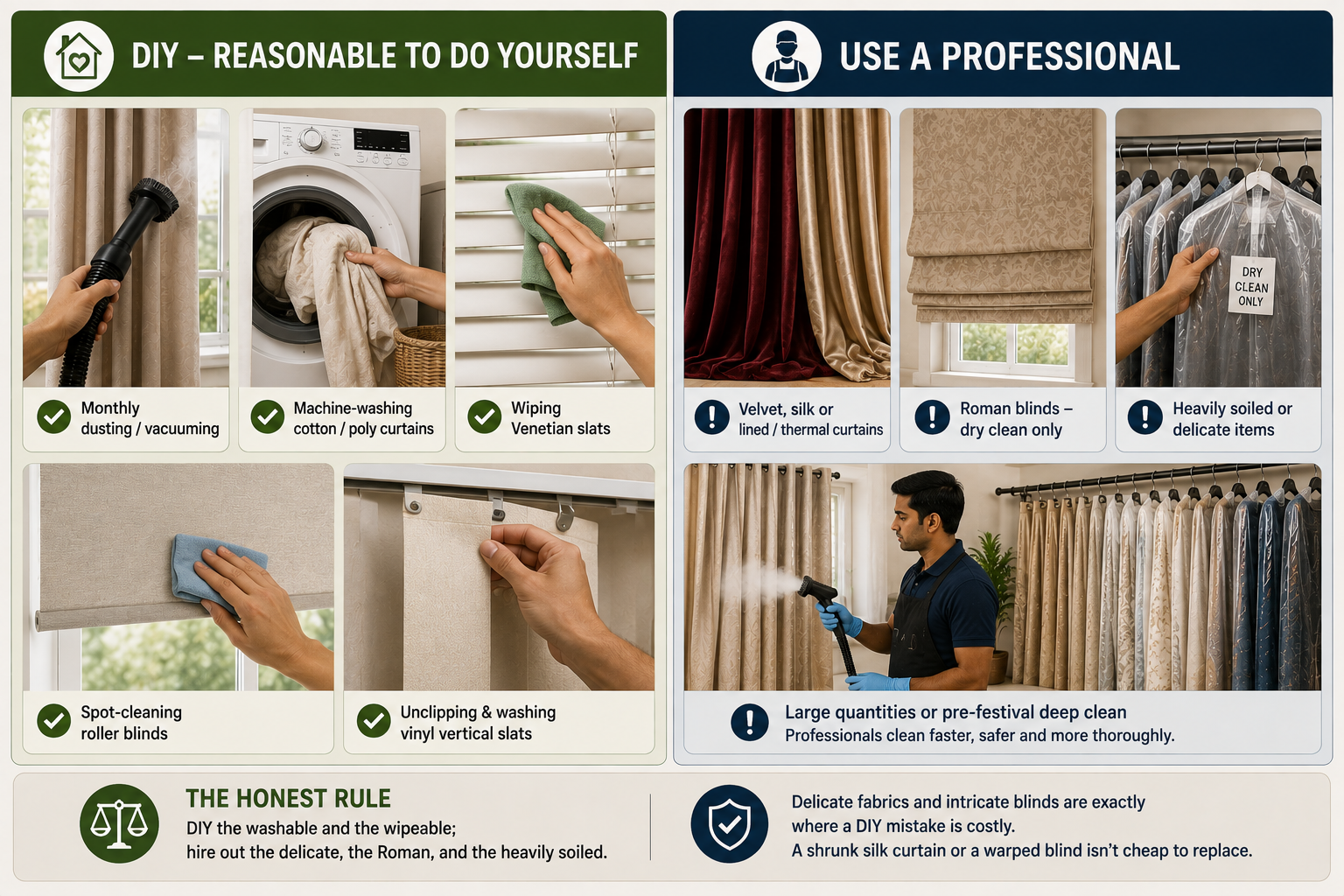
Use a professional for: velvet/silk/lined curtains, Roman blinds (dry clean), heavily soiled or delicate items, and large quantities before a festival. Delicate fabrics and intricate blinds are exactly where a DIY mistake is costly — a shrunk silk curtain or a warped blind isn't cheap to replace.
Honest rule: DIY the washable and the wipeable; hire out the delicate, the Roman, and the heavily soiled.
FESTIVE TIMING
Curtains and blinds frame every room your Diwali guests see, so they're a classic pre-festival refresh. Two tips:
- Machine-wash cotton/poly curtains yourself a week or two ahead (they dry and re-hang quickly).
- Send delicate curtains and Roman blinds for dry cleaning early — turnaround takes days, and you want them back and hung before guests arrive. Fold this into your Diwali deep cleaning plan.
KEY TAKEAWAYS
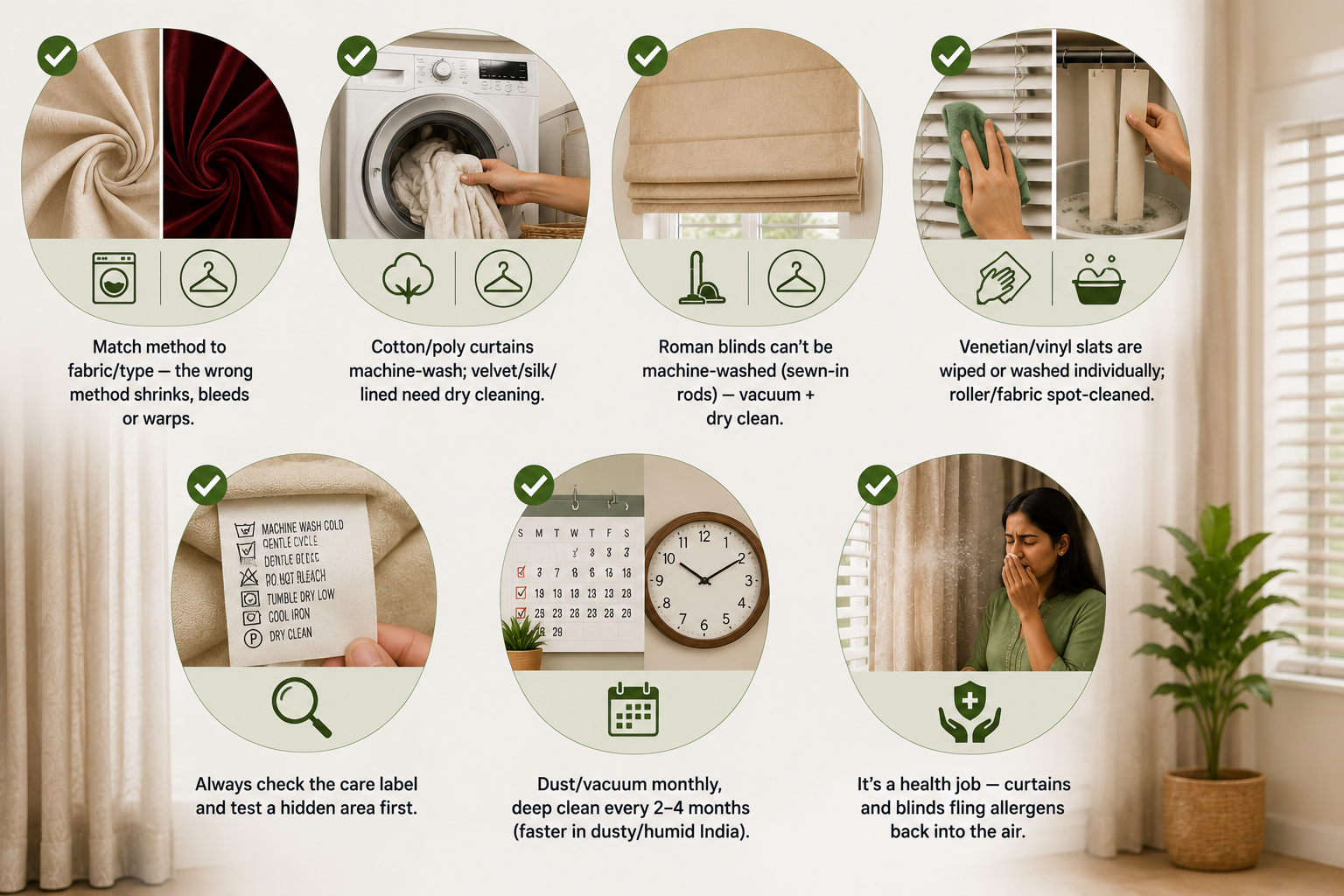
- Match method to fabric/type — the wrong method shrinks, bleeds or warps.
- Cotton/poly curtains machine-wash; velvet/silk/lined need dry cleaning.
- Roman blinds can't be machine-washed (sewn-in rods) — vacuum + dry clean.
- Venetian/vinyl slats are wiped or washed individually; roller/fabric spot-cleaned.
- Always check the care label and test a hidden area first.
- Dust/vacuum monthly, deep clean every 2–4 months (faster in dusty/humid India).
- It's a health job — curtains and blinds fling allergens back into the air.
MYTH vs FACT
| Myth | Fact |
|---|---|
| "All curtains can go in the washing machine." | Velvet, silk and lined curtains need dry cleaning; machine-washing damages them. |
| "Roman blinds wash like curtains." | Sewn-in rods mean they can't be machine-washed — vacuum and dry clean. |
| "Clean curtains are only about looks." | They trap allergens and release them into the air when moved — a health issue. |
| "Blinds don't need much cleaning." | Grime clogs mechanisms and wears slat finishes; regular dusting extends their life. |
| "I can skip the care label." | The label (and a hidden-area test) prevents shrinkage and colour-bleed disasters. |
COMMON MISTAKES
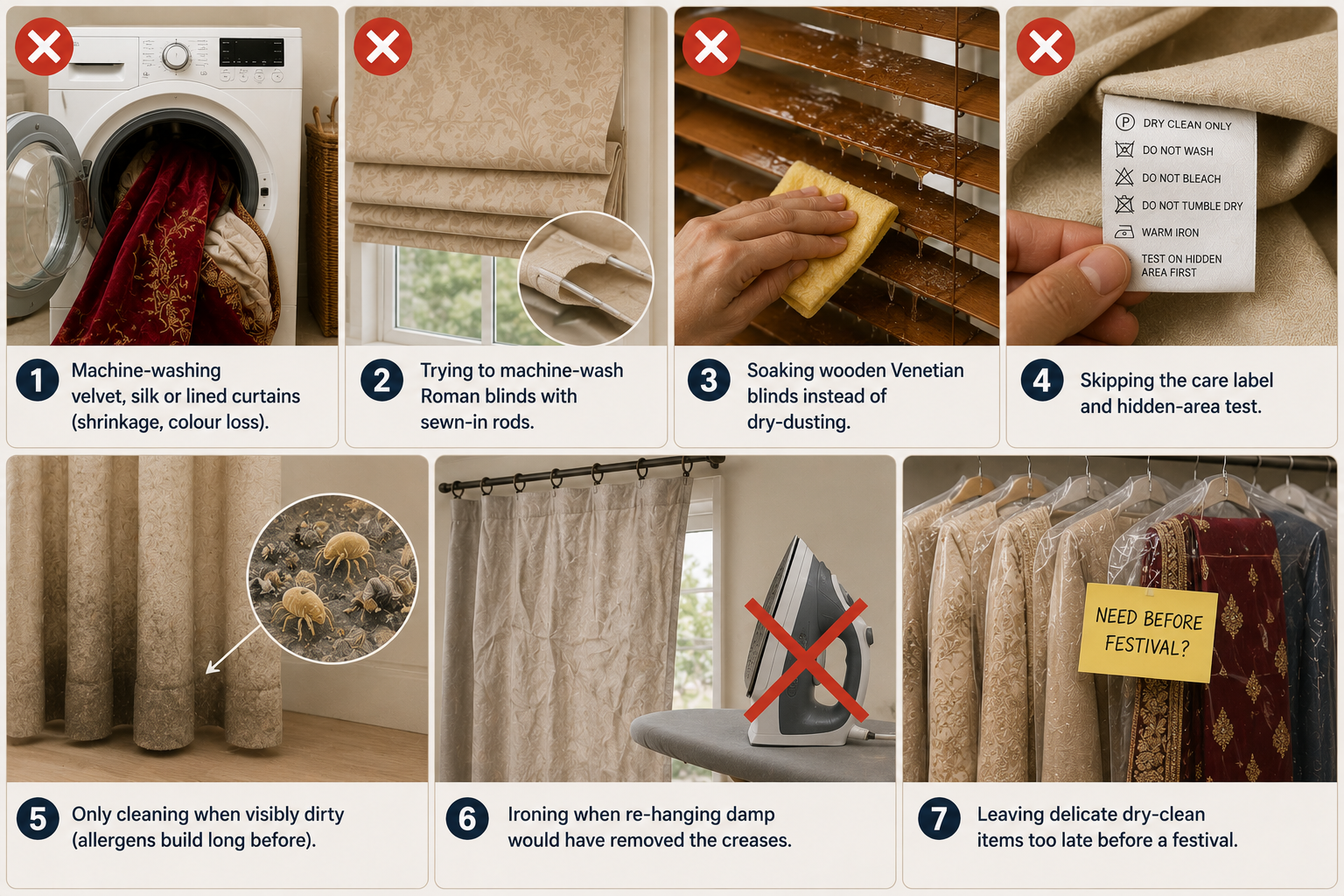
- Machine-washing velvet, silk or lined curtains (shrinkage, colour loss).
- Trying to machine-wash Roman blinds with sewn-in rods.
- Soaking wooden Venetian blinds instead of dry-dusting.
- Skipping the care label and hidden-area test.
- Only cleaning when visibly dirty (allergens build long before).
- Ironing when re-hanging damp would have removed the creases.
- Leaving delicate dry-clean items too late before a festival.

Comments ()