
Commercial Concrete Grinder: How to Choose the Right One
Select the right commercial concrete grinder for your project. Match machine size, power, head design, and abrasives to your exact floor prep needs.
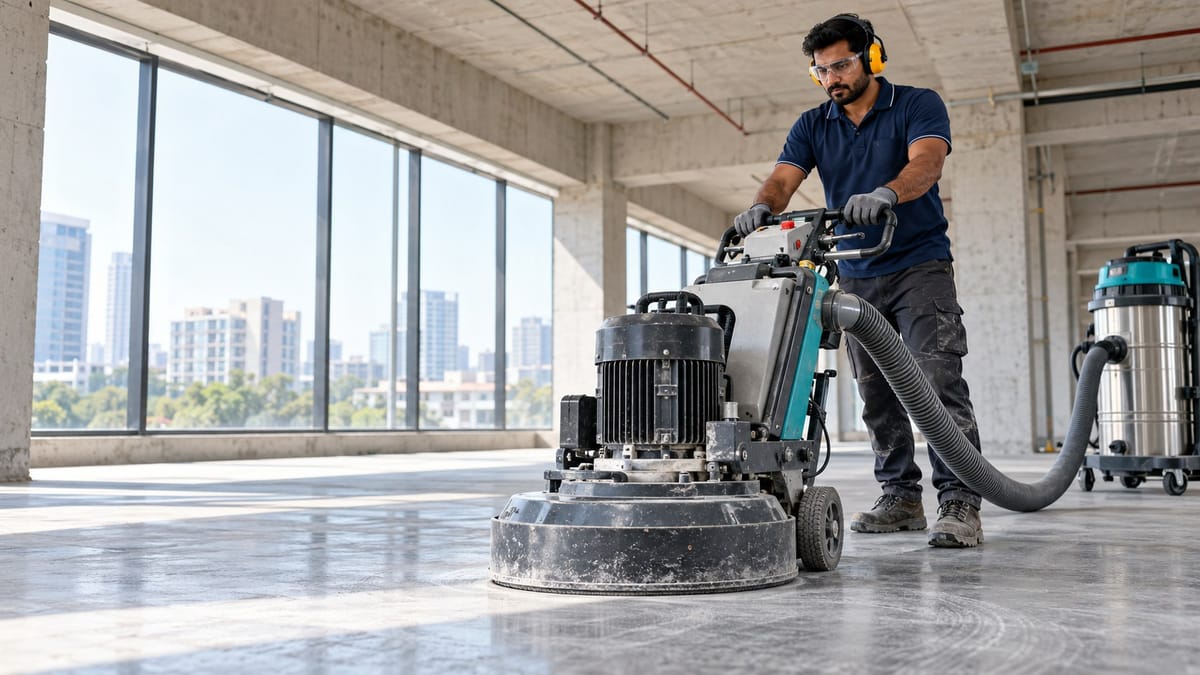
Choosing floor grinding equipment for professional work takes more thought than picking the largest machine available. The floor size, concrete hardness, coating thickness, access, power supply, and required finish all affect the decision. A machine that works well on one project can be awkward or inefficient on another. The goal is to match the equipment to the work before the job starts.
Surface preparation tasks such as removing coatings, smoothing uneven areas, exposing concrete, and preparing slabs for another finish can require a commercial concrete grinder. Different machines use different head designs, working widths, and abrasive systems. Understanding those differences helps you avoid choosing equipment that is either too small for the workload or unnecessarily difficult to handle.
Start With the Surface, Not the Machine
The first question should be what you're trying to remove or correct. Concrete may have paint, epoxy, adhesive, laitance, patching material, old sealer, or raised areas that need attention. The thickness and hardness of that material can change which grinder and tooling combination makes sense.
Also consider what needs to remain after grinding. Preparing a slab for a coating may require a specific surface profile, while polishing calls for a sequence of increasingly fine abrasives. Grinding is generally suited to controlled surface removal, while scarifying or other methods can be better when substantially more material must come off.
Match Machine Size to the Workload
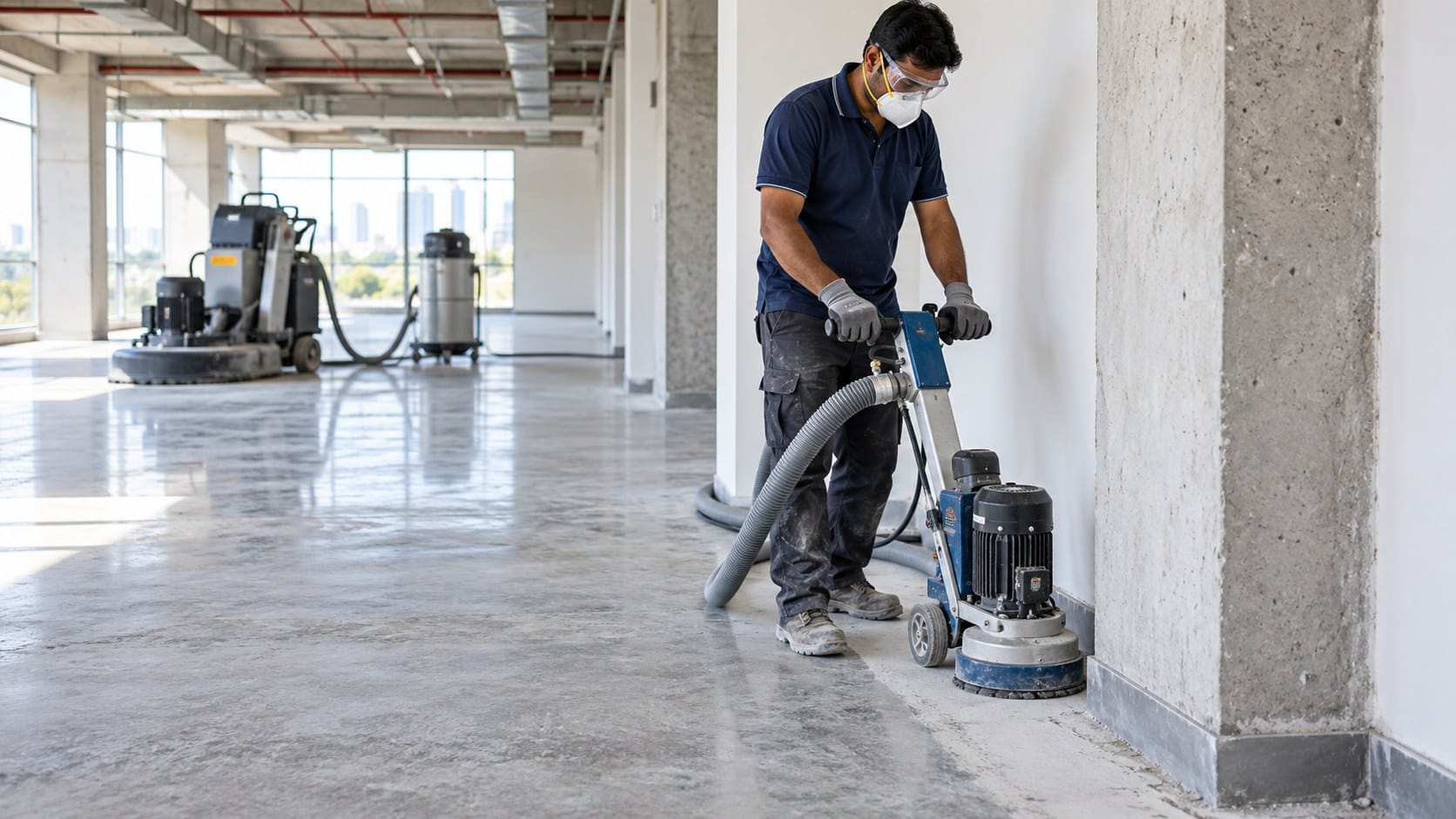
Machine size should reflect the floor area and the spaces where the equipment must operate. Larger walk behind grinders can cover open floors efficiently, while compact units are easier to maneuver around obstacles. A machine that is too large can create access problems, even if its grinding capacity looks attractive on paper.
For smaller rooms, edges, repair sections, and tight areas, a 7 inch concrete grinder can be a practical option. Its smaller grinding path makes it easier to position around walls and other obstacles. For broad commercial slabs, a larger walk behind or planetary system may provide better coverage and more consistent production.
Understand the Main Grinder Designs
Single disc machines are relatively straightforward and can work well for smaller preparation jobs. They are also useful when the operator needs to work close to edges or move through spaces with limited access. Their smaller footprint can be an advantage when transporting equipment between different areas.
Multi head and planetary machines use several grinding points to distribute contact across the floor. This design can provide more uniform coverage and is commonly used for larger preparation and polishing projects. The machine's head arrangement should be considered alongside its weight, tooling system, and intended application rather than as an isolated feature.
When a Smaller Grinder Makes Sense
A compact machine can be useful when the work changes from one small section to another. It can reach places that a larger floor grinder may not handle comfortably. It can also serve as a secondary machine for edges after the main floor has been prepared.
That doesn't mean a smaller grinder should automatically handle an entire commercial floor. A handheld or compact machine can require much more operator movement across a large area. If the project involves broad open sections, consider whether a walk behind design would make the process easier to manage.
Check the Power Available on Site
Electrical requirements can eliminate an otherwise suitable machine before the work even begins. Some equipment operates from common single phase supplies, while larger production machines may require different electrical arrangements. The available power should be confirmed before selecting equipment.
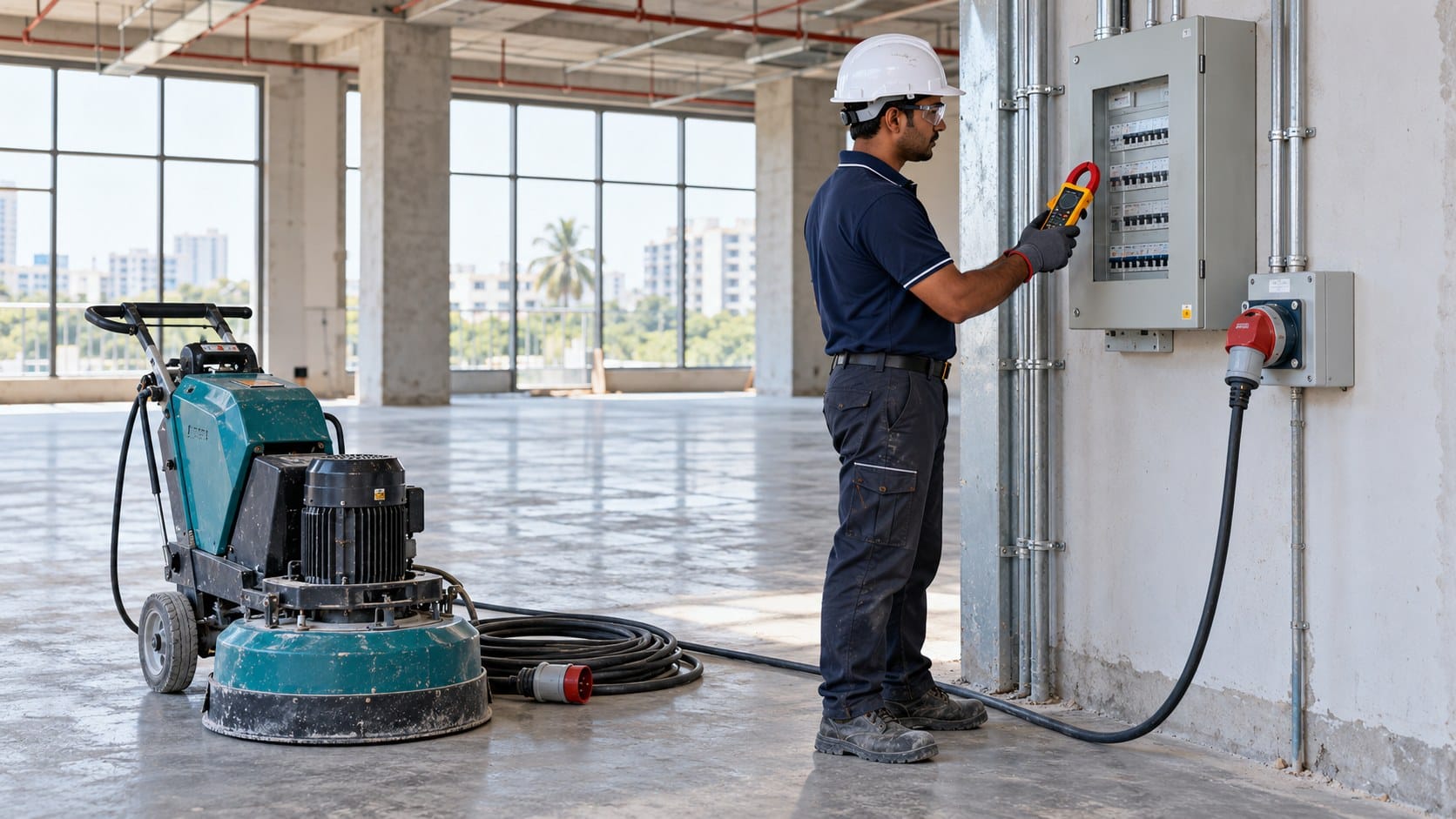
This is particularly important when moving between different job locations. A machine that works well in one building may not be practical in another if the required supply isn't available. Current grinder buying guidance also treats power source as a core selection factor alongside floor size and surface condition.
Weight Affects Grinding Pressure
Machine weight influences how firmly the abrasive stays against the concrete. Additional weight can help maintain contact with a hard surface, but it can also make the machine harder to transport and maneuver. The useful balance depends on the type of work.
Think about the full movement of the machine. Will it need to pass through narrow doors, move between floors, or be loaded into a vehicle? A heavier machine may provide stable contact on an open slab, while a lighter setup can be easier to position in smaller work areas.
Choose Tooling for the Concrete
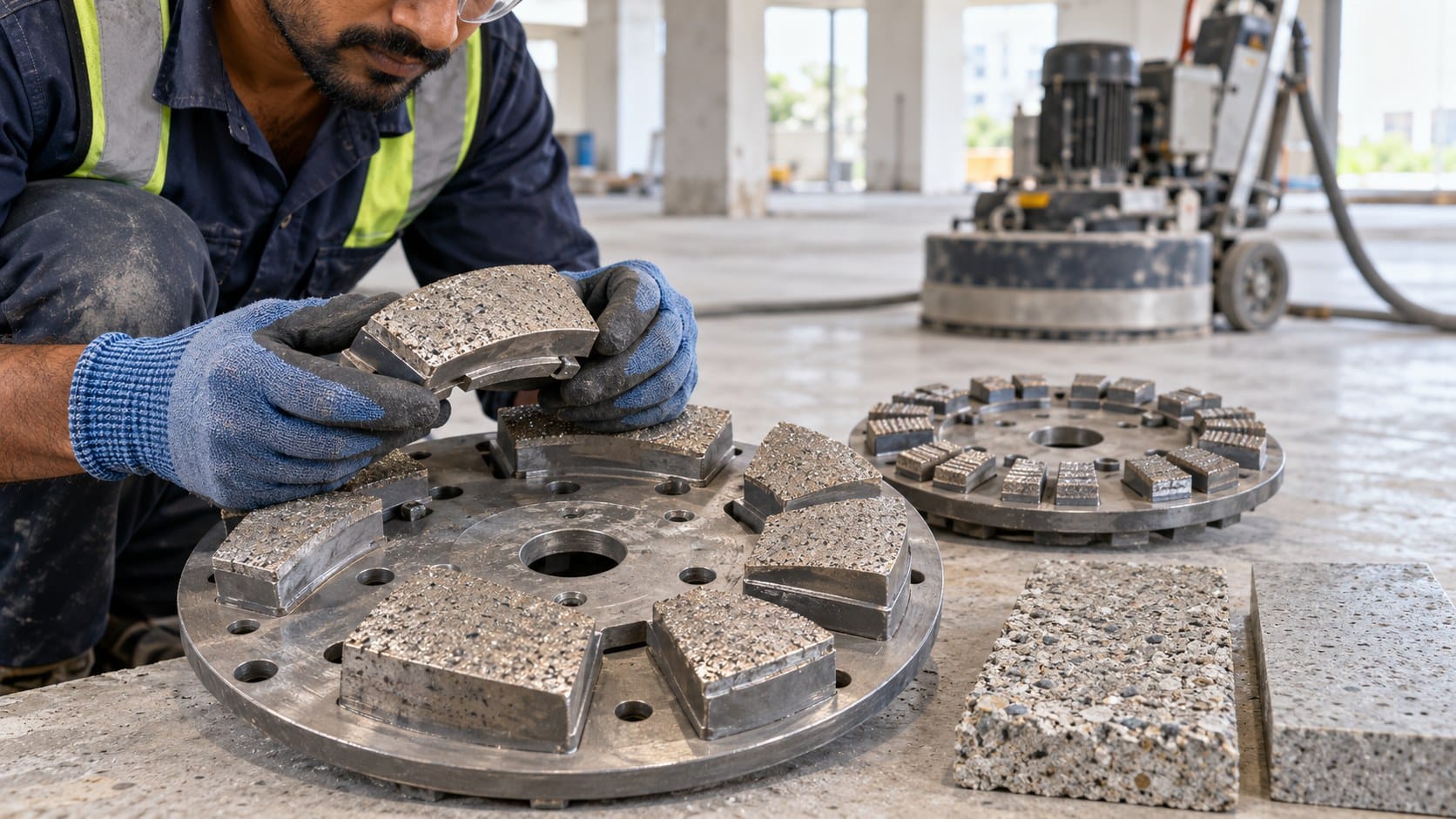
Diamond tooling is a major part of the grinding system. The machine provides the movement and pressure, but the abrasive determines how the surface is actually cut. Different segment shapes, bonds, and grit levels are designed for different conditions.
Concrete hardness is especially important. A diamond bond that wears too slowly may fail to expose fresh abrasive on hard concrete, while a softer bond can wear too quickly on a softer surface. Good tooling selection therefore depends on the slab and the task rather than simply choosing the most aggressive option.
Use Coarse Abrasives for Initial Removal
Coarser diamond tooling is commonly used during the early grinding stages when surface material needs to be removed. Finer abrasives are used later when the goal is to reduce scratches and refine the surface. The exact progression depends on whether you're preparing for a coating or moving toward a polished finish.
Skipping suitable abrasive stages can leave deeper scratches that need additional work. For that reason, decide the target finish before buying the tooling. A preparation grind and a polished floor are different processes, even though both may use the same basic grinding machine.
Don't Ignore Dust Collection
Concrete grinding produces fine dust, so dust control needs to be planned as part of the equipment setup. A suitable shroud and extraction system can capture material close to the grinding point. Dry grinding without appropriate collection can spread fine particles through the workspace.
A commercial concrete grinder should therefore be evaluated together with its dust management setup. Check the connection, hose arrangement, filtration, and extractor capacity rather than assuming any vacuum will work. Industry guidance also recommends treating dust extraction as part of the grinding system rather than as an optional add on.
Keep Extraction Close to the Source
The closer dust is captured to where grinding occurs, the easier it is to control. A properly fitted shroud helps create a contained area around the grinding head. The extractor then removes the collected material through the hose.
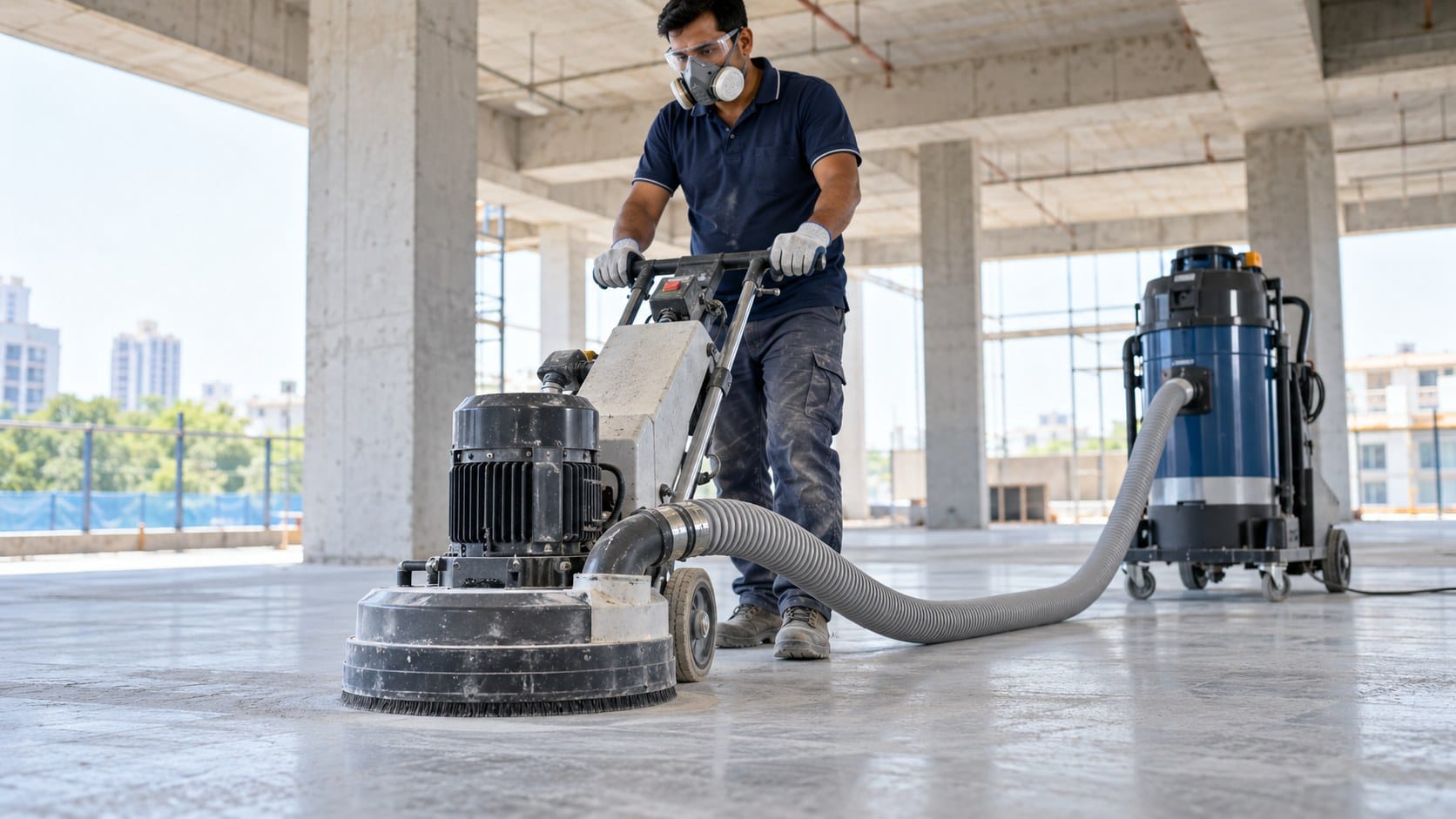
Hose restrictions can reduce airflow, so the complete setup should be checked before operation. Filters also need attention because fine concrete dust can load filtration systems quickly. Keeping the extraction system clean and properly connected helps maintain its intended performance.
Know When to Use a Scarifier
Grinding isn't designed for every surface removal task. A scarifier uses cutting wheels or cutters to remove material more aggressively and can be useful for heavier coatings, uneven surfaces, or deeper profiling. The resulting surface is generally rougher than one produced by grinding.
Choosing between the two depends on the amount of material that needs to be removed and the surface profile required afterward. If only controlled surface preparation is needed, grinding may be more suitable. If substantial material removal is required, a scarifier can reduce the amount of work placed on the grinder.
Plan for Edges and Corners
Large floor grinders work best across open areas. Walls, columns, steps, corners, and other obstacles can leave sections that the main machine cannot reach. These areas need to be considered before the project begins.
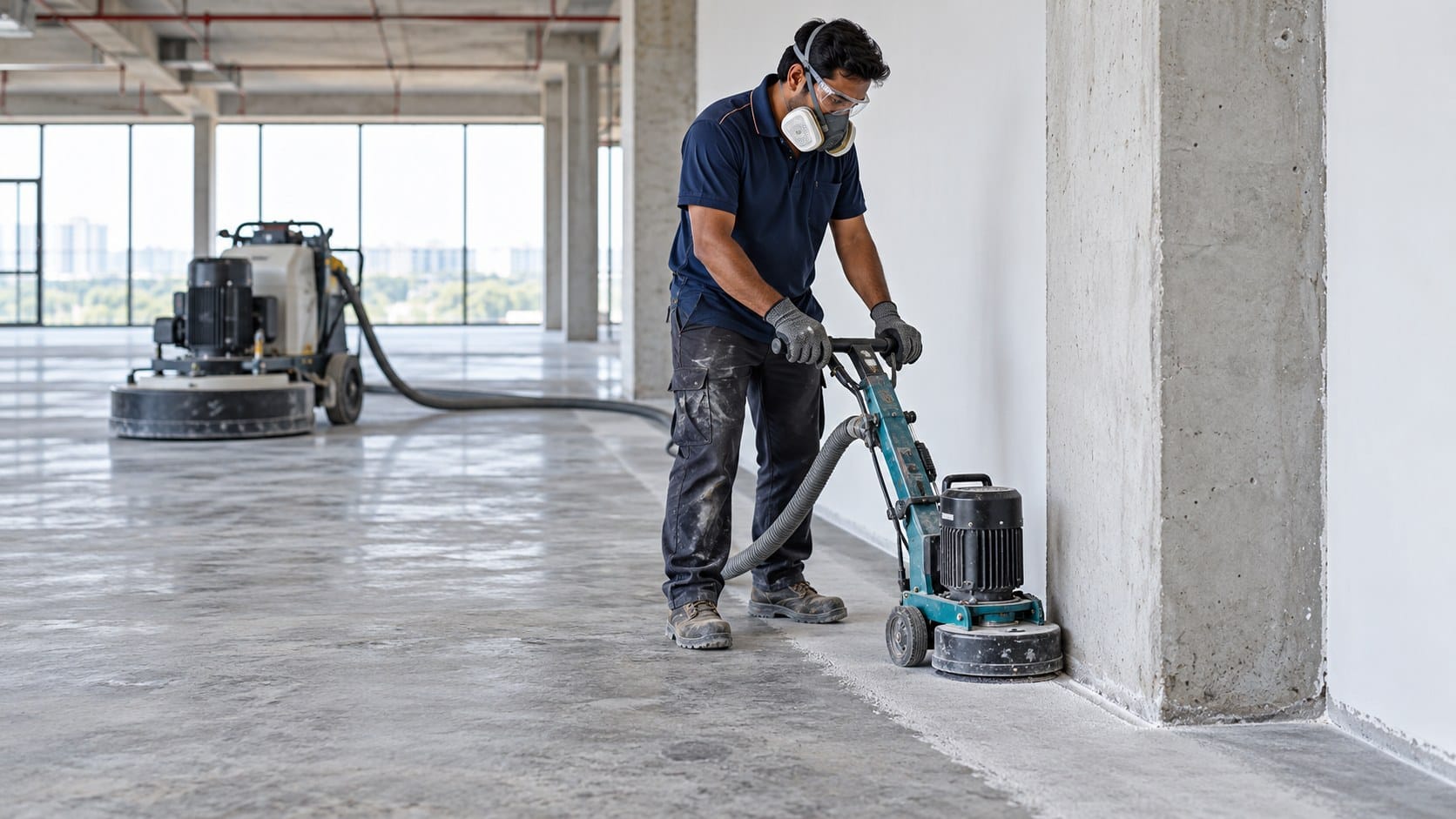
A smaller grinder can complement the main floor machine for this work. A 7 inch concrete grinder can be easier to position near edges and confined sections. Planning the edge work early helps prevent a finished floor from having visibly different preparation around the perimeter.
Control the Grinding Pattern
Even equipment can produce uneven results if the operator doesn't maintain a consistent path. Work across the floor in organized passes and overlap each pass enough to avoid untreated strips. Avoid holding the grinding head in one location for too long.
Check the surface as you work. Look for areas that are cutting faster, sections where coatings remain, or places where the abrasive isn't contacting evenly. A short inspection after several passes can reveal problems before they spread across the whole floor.
Don't Force the Grinder
Heavy pressure isn't always the answer when material removal slows down. Excessive force can increase wear and make the machine more difficult to control. It may also prevent the abrasive from working as intended.
If the machine isn't cutting effectively, examine the tooling and surface first. The concrete may be too hard for the selected bond, or the abrasive may be worn or clogged. Adjusting the tooling can be more useful than simply pushing the machine harder.
Know the Difference Between Grinding and Polishing
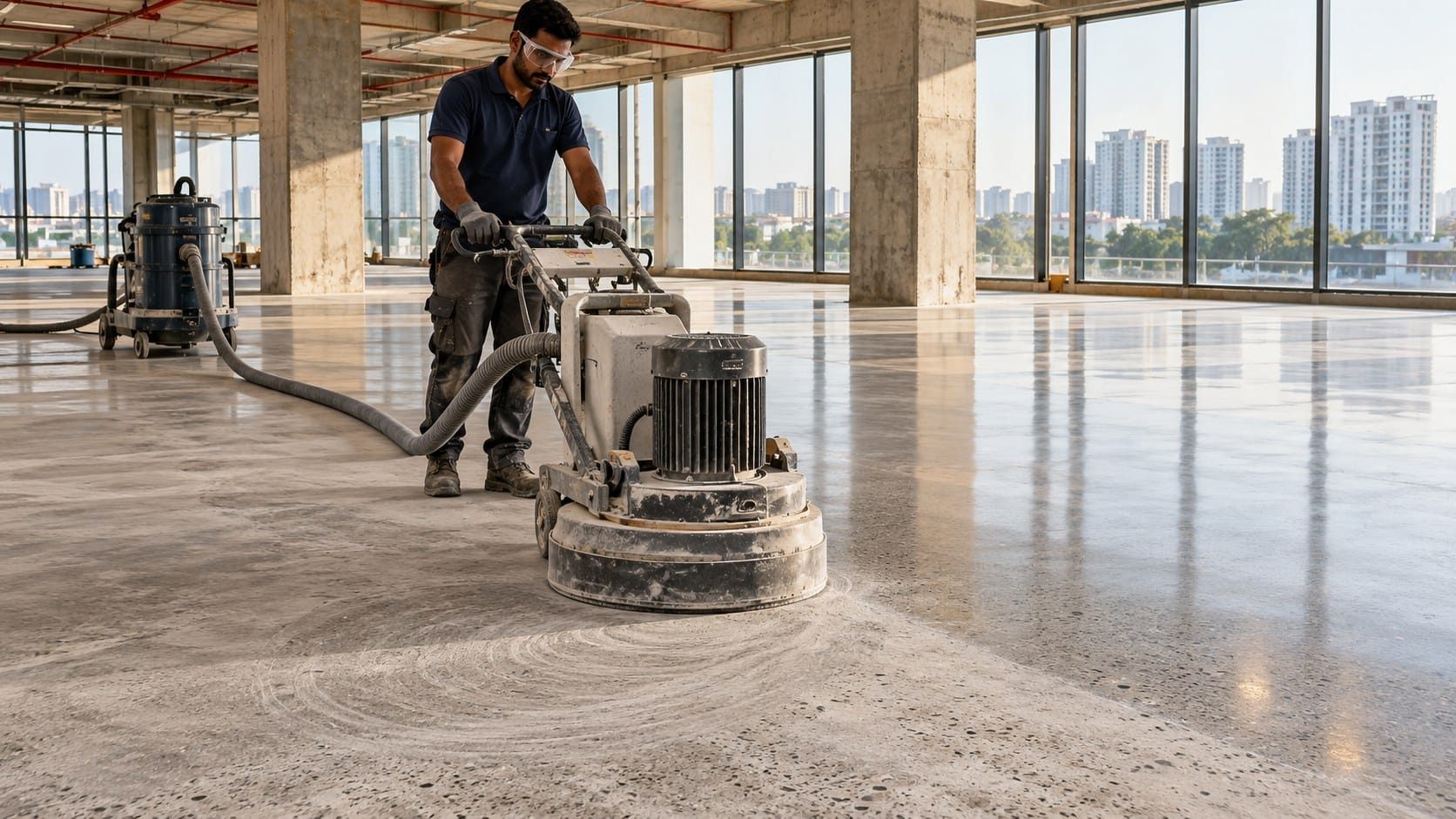
Grinding and polishing can use related equipment, but their objectives are different. Grinding removes material and establishes the basic surface condition. Polishing continues with finer abrasives to reduce scratches and develop a smoother appearance.
A commercial floor may require both stages. The initial grind can remove coatings and correct surface issues, while later steps refine the exposed concrete. If polishing is the final goal, the grinder needs to support the appropriate tooling sequence.
Check the Machine Before Every Job
Inspect the grinding head, abrasive attachments, guards, wheels, handles, electrical connections, and extraction connection before starting. Look for damaged components or unusual wear. Tooling should be securely mounted and suitable for the material being treated.
Also inspect the floor itself. Remove loose debris and identify metal, fasteners, protruding objects, or damaged sections that could affect the grinding process. A quick site inspection can prevent damage to both the machine and the surface.
Test Before Covering the Whole Floor
A test section gives you useful information without committing the entire job to one setup. Grind a small area and inspect the surface closely. Check whether the coating is being removed, whether the concrete profile is suitable, and whether the dust collection is working as expected.
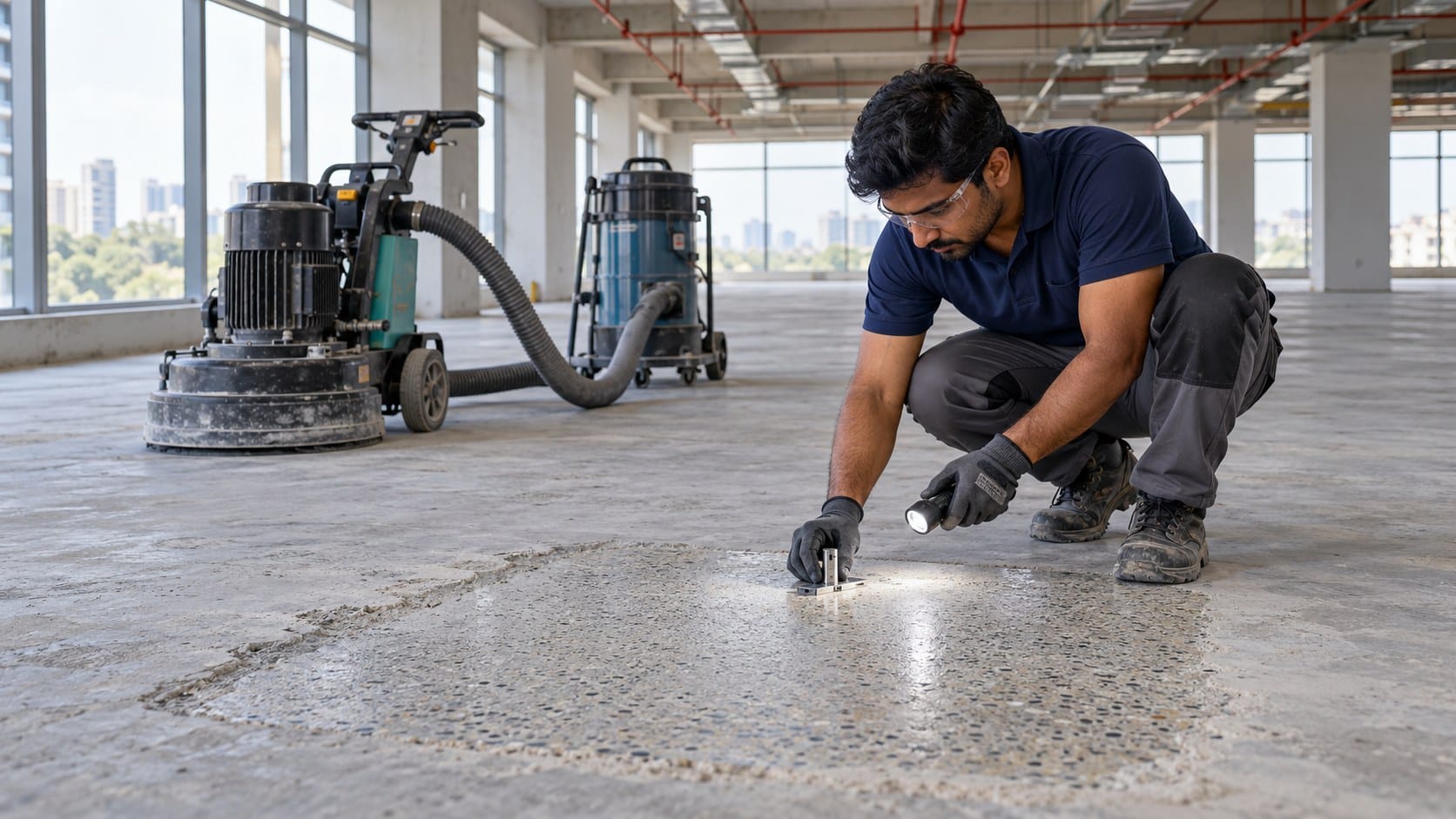
Use the test to decide whether the machine and tooling need adjustment. If the abrasive is too aggressive, move to a more suitable option. If the removal rate is poor, investigate the tooling, bond, surface hardness, or machine setup.
Build a Complete Grinding System
The machine is only one part of the equipment decision. You may also need diamond tooling, an extraction system, shrouds, hoses, edge equipment, replacement abrasives, and suitable protective equipment. These parts should work together rather than being selected independently.
When comparing equipment, consider how easily the entire setup can be transported, connected, operated, and maintained. A machine with suitable specifications isn't useful if the required tooling or extraction arrangement doesn't fit the job. A complete system is easier to plan than assembling unrelated components at the last minute.
How to Choose for Repeated Commercial Work
If grinding is part of regular professional work, think beyond a single project. Consider the typical floor sizes, surface materials, access conditions, power supplies, and finishes you encounter most often. This helps identify which machine class will cover the largest share of your work.
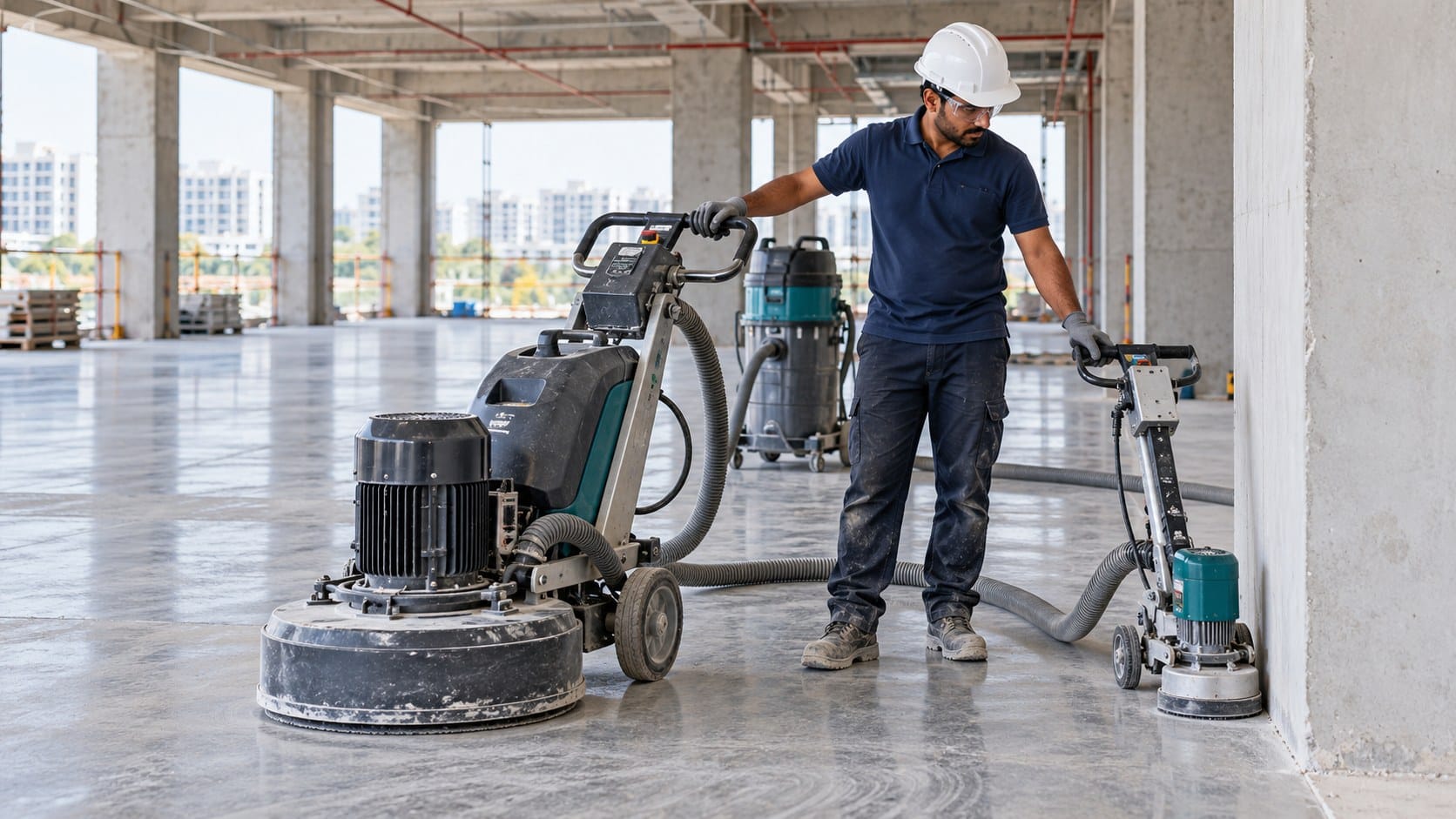
A larger grinder may make sense for frequent open floor preparation, while a smaller unit can remain useful for edges and smaller sections. Some contractors may need both types because no single machine handles every part of a commercial floor equally well. The right combination depends on the jobs you actually perform.
A Practical Selection Checklist
Before choosing equipment, write down the answers to a few questions. What material needs to be removed? How large is the floor? What finish or profile is required afterward? What power is available, and how will dust be collected?
Then compare machine width, grinding head design, weight, speed, tooling compatibility, controls, and access requirements. Check whether the equipment can reach edges and whether additional tooling is available for different surface conditions. This approach keeps the decision focused on useful features instead of specifications that have little connection to the job.
Closing Statement
The best commercial concrete grinder isn't necessarily the largest, fastest, or heaviest option. It should fit the surface, workload, access, tooling, power supply, and required finish. Dust control and operator handling also deserve attention because they affect how practical the equipment is during real work.
For smaller preparation areas and edge work, a 7 inch concrete grinder can offer useful maneuverability. For larger open floors, a walk behind or multi head system may be more appropriate. Start with the job requirements, test the setup on a small section, and choose the equipment that gives you the control and surface result you actually need.
FAQs
What should I consider when choosing a commercial concrete grinder?
Consider floor size, surface condition, machine size, grinding head, power supply, tooling compatibility, dust collection, and the required finish.
Is a 7 inch concrete grinder suitable for commercial work?
It can be useful for smaller areas, edges, corners, and detail work. Larger open floors may be better suited to wider walk behind equipment.
What diamond tooling is used for concrete grinding?
Diamond segments are commonly used, with bond hardness, grit, and segment design selected according to the concrete and the intended task.
When should I use a scarifier instead of a grinder?
A scarifier is generally more suitable when deeper or more aggressive surface removal is needed. Grinding is better suited to controlled surface preparation and refinement.
Does a commercial grinder need dust extraction?
Dry concrete grinding produces fine dust, so an appropriate dust collection setup is an important part of the grinding system. The extractor should match the machine and tooling arrangement.


Comments ()