
Cockroach & Ant Control in India (Monsoon 2026): What Works, What Doesn't & What It Costs
Get rid of cockroaches and ants this monsoon. Species-specific methods, gel vs spray, honest DIY steps, 2026 costs, and the quote red flags to avoid.

A one-time cockroach gel-baiting treatment for a 2–3 BHK in India costs ₹1,200–₹2,800 in metros and ₹900–₹1,800 in tier-2 cities in 2026; an annual contract (3–4 visits) runs ₹2,500–₹6,000. What actually works is gel bait plus sanitation, not spraying — and you should never spray near bait, because spray repels roaches from it. German cockroaches (small, fast, indoor) need gel plus monitoring; American/Oriental (large, from drains) respond to perimeter spray. Fogging alone fails because it doesn't kill egg cases.
Cockroach control cost in India (2026) depends on species and method: gel-baiting for a 2–3 BHK is ₹1,200–₹2,800 in metros, ₹900–₹1,800 in tier-2 cities; AMCs ₹2,500–₹6,000. Species matters — German cockroaches (small, indoor) need gel plus monitoring because populations rebuild from egg cases within 4 weeks, so one spray without follow-up fails; American and Oriental cockroaches enter from drains and respond to perimeter spray. The proven approach combines gel bait, a growth regulator and relentless sanitation. Key rules: don't spray near bait (spray repels roaches from it), seal drain and pipe gaps, and ignore ultrasonic repellers, which fail independent tests. For ants, erase scent trails and seal entry points. Home remedies hold light problems; heavy infestations need a professional with species ID and a written follow-up warranty.
Monsoon Is Why They're Suddenly Everywhere
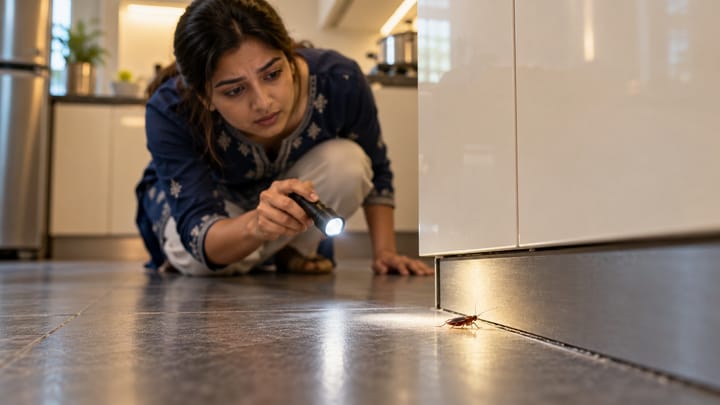
If cockroaches and ants seem to invade the moment the rains start, that's not your imagination. Monsoon drives them indoors: humidity and warmth suit cockroaches, waterlogged drains push American cockroaches up into ground-floor bathrooms at night, and rain disrupts ant colonies outside, sending them foraging into kitchens. This is peak season for both — and the best time to act is before a bad infestation takes hold.
The good news: a light problem is very manageable at home if you do the right things. The trap is doing the wrong things confidently — and a lot of popular advice is wrong.
What It Costs In 2026
| Service | Metro | Tier-2 |
|---|---|---|
| One-time gel-baiting (2–3 BHK) | ₹1,200–₹2,800 | ₹900–₹1,800 |
| Monsoon package (roach gel + ant + fly) | ₹1,500–₹3,000 | — |
| Annual contract (3–4 visits) | ₹2,500–₹6,000 | — |
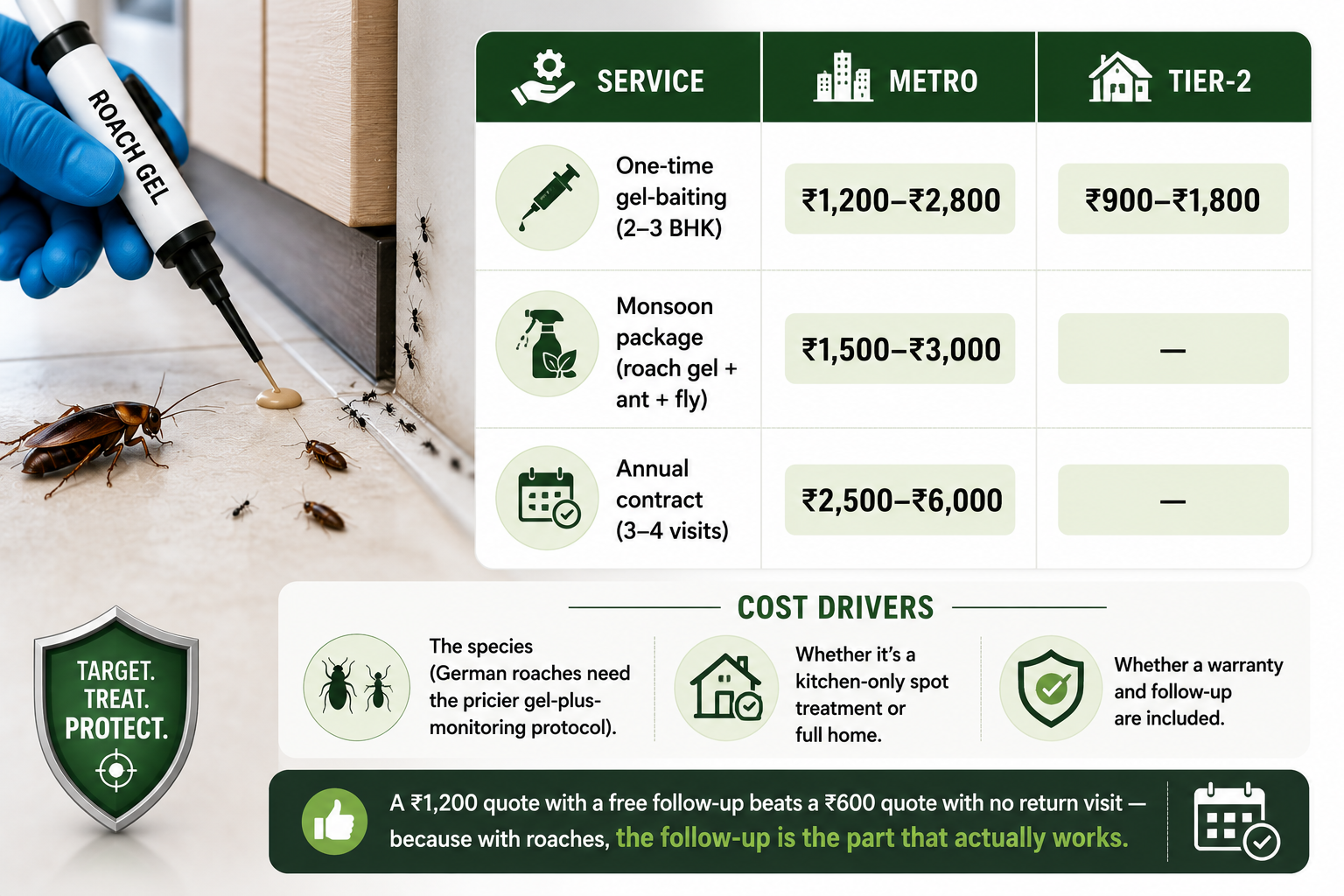
Cost drivers: the species (German needs the pricier gel-plus-monitoring protocol), whether it's a kitchen-only spot treatment or full home, and whether a warranty and follow-up are included. A ₹1,200 quote with a free follow-up beats a ₹600 quote with no return visit — because with roaches, the follow-up is the part that actually works.
Species Matters (This Is What Pros Know)
Treating every roach the same is why treatments fail. The three common Indian species need different approaches:
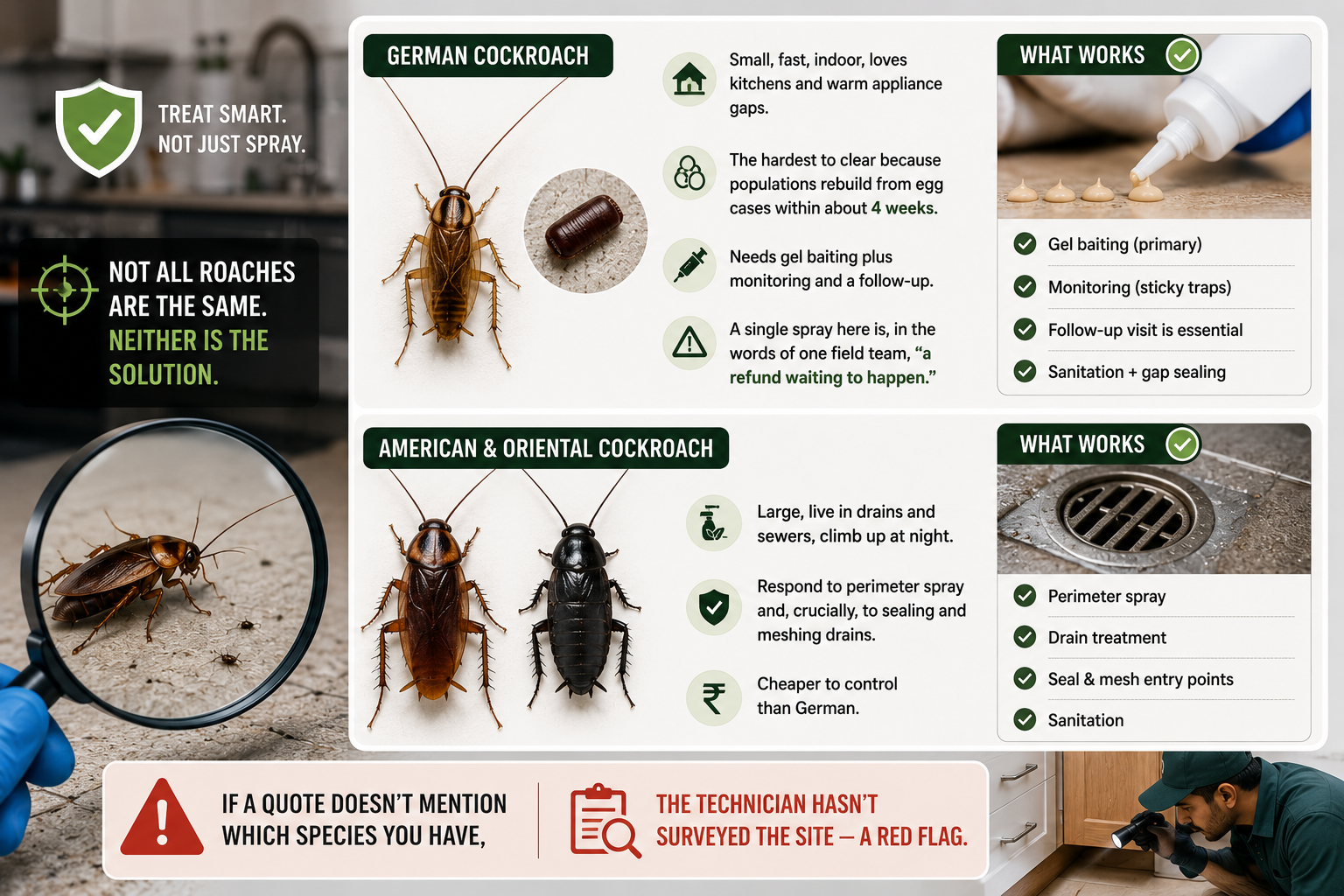
German cockroach — small, fast, indoor, loves kitchens and warm appliance gaps. The hardest to clear because populations rebuild from egg cases within about 4 weeks. Needs gel baiting plus monitoring and a follow-up. A single spray here is, in the words of one field team, "a refund waiting to happen."
American & Oriental cockroach — large, live in drains and sewers, climb up at night. Respond to perimeter spray and, crucially, to sealing and meshing drains. Cheaper to control than German.
If a quote doesn't mention which species you have, the technician hasn't surveyed the site — a red flag.
What Actually Works
The proven combination is gel bait + growth regulator + relentless sanitation — it kills the roaches you see and the eggs you don't. Here's the honest hierarchy:
Works well:
- Gel bait placed in cracks, hinges, behind appliances, away from food surfaces. Roaches eat it, return to harbourage, and it spreads through the population.
- Growth regulators that stop reproduction.
- Sanitation — removing food and water sources so bait is the most attractive food available.
- Sealing entry points — gaps around pipes, drainage outlets, wall bases; steel wool or sealant.
- Drain mesh / one-way flaps on floor drains, especially ground-floor bathrooms, to block American cockroaches from the sewer.
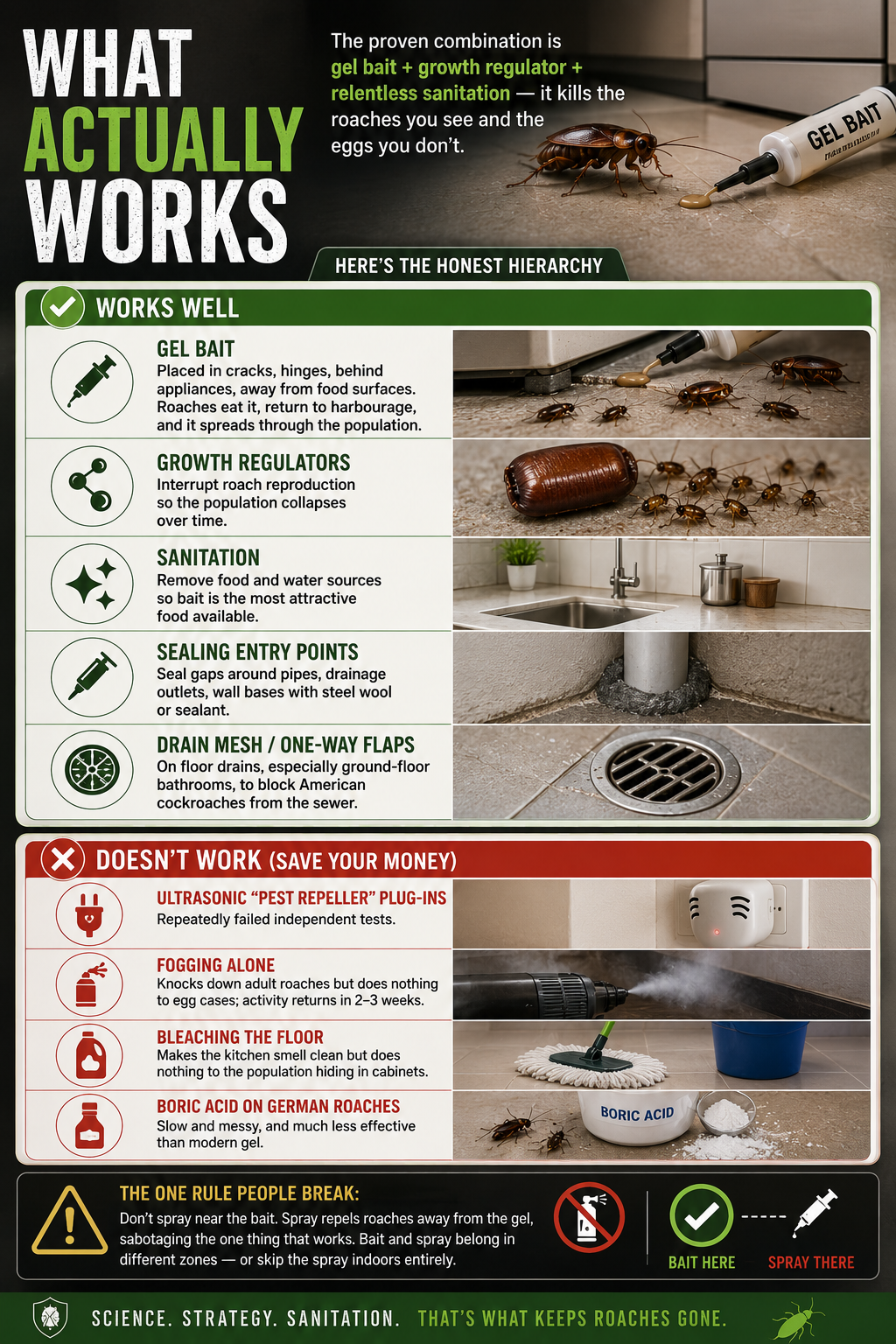
Doesn't work (save your money):
- Ultrasonic "pest repeller" plug-ins — repeatedly failed independent tests.
- Fogging alone — knocks down adult roaches but does nothing to egg cases; activity returns in 2–3 weeks.
- Bleaching the floor — makes the kitchen smell clean but does nothing to the population hiding in cabinets.
- Boric acid on German roaches — slow and messy, and much less effective than modern gel.
The one rule people break: don't spray near the bait. Spray repels roaches away from the gel, sabotaging the one thing that works. Bait and spray belong in different zones — or skip the spray indoors entirely.
A Honest DIY Plan (For Light Problems)
For a few stray roaches or an early ant trail, DIY can hold the line over 2–4 weeks if you're thorough. The goal is to break the breeding cycle, not just kill what you see:
- Week 1: deep clean, dry all wet areas, seal food in airtight jars, fix leaks.
- Week 2: apply gel bait in hidden spots (cabinet corners, behind the stove, under the sink). Stop spraying anywhere near the bait.
- Ongoing: seal gaps around pipes and drains; mesh floor drains; wipe counters each evening.
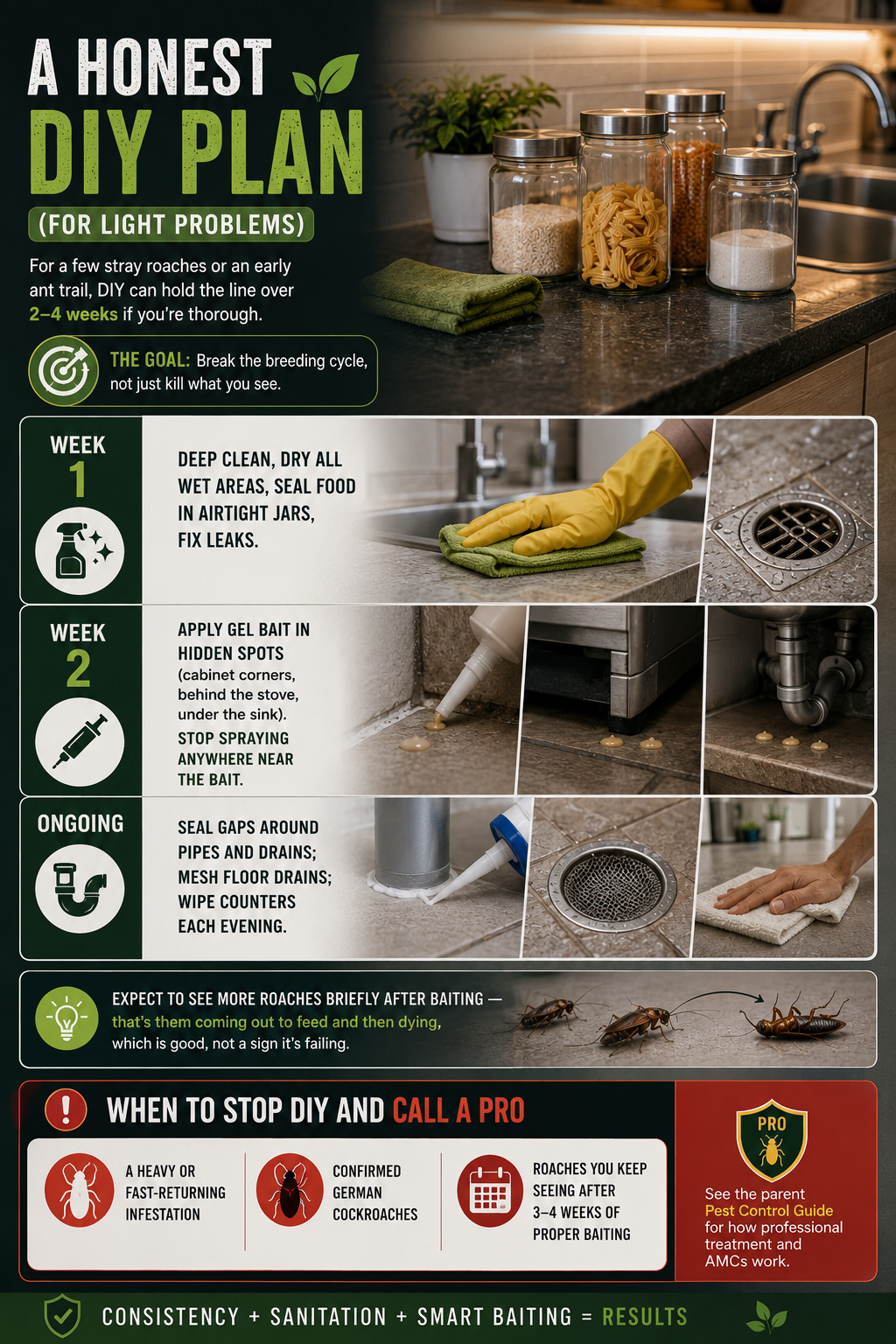
Expect to see more roaches briefly after baiting — that's them coming out to feed and then dying, which is good, not a sign it's failing.
When to stop DIY and call a pro: a heavy or fast-returning infestation, confirmed German cockroaches, or roaches you keep seeing after 3–4 weeks of proper baiting. See the parent Pest Control Guide for how professional treatment and AMCs work.
Ants: A Shorter Battle
Ants are usually easier. They follow chemical scent trails to food, so the fix is breaking the trail and the attraction:
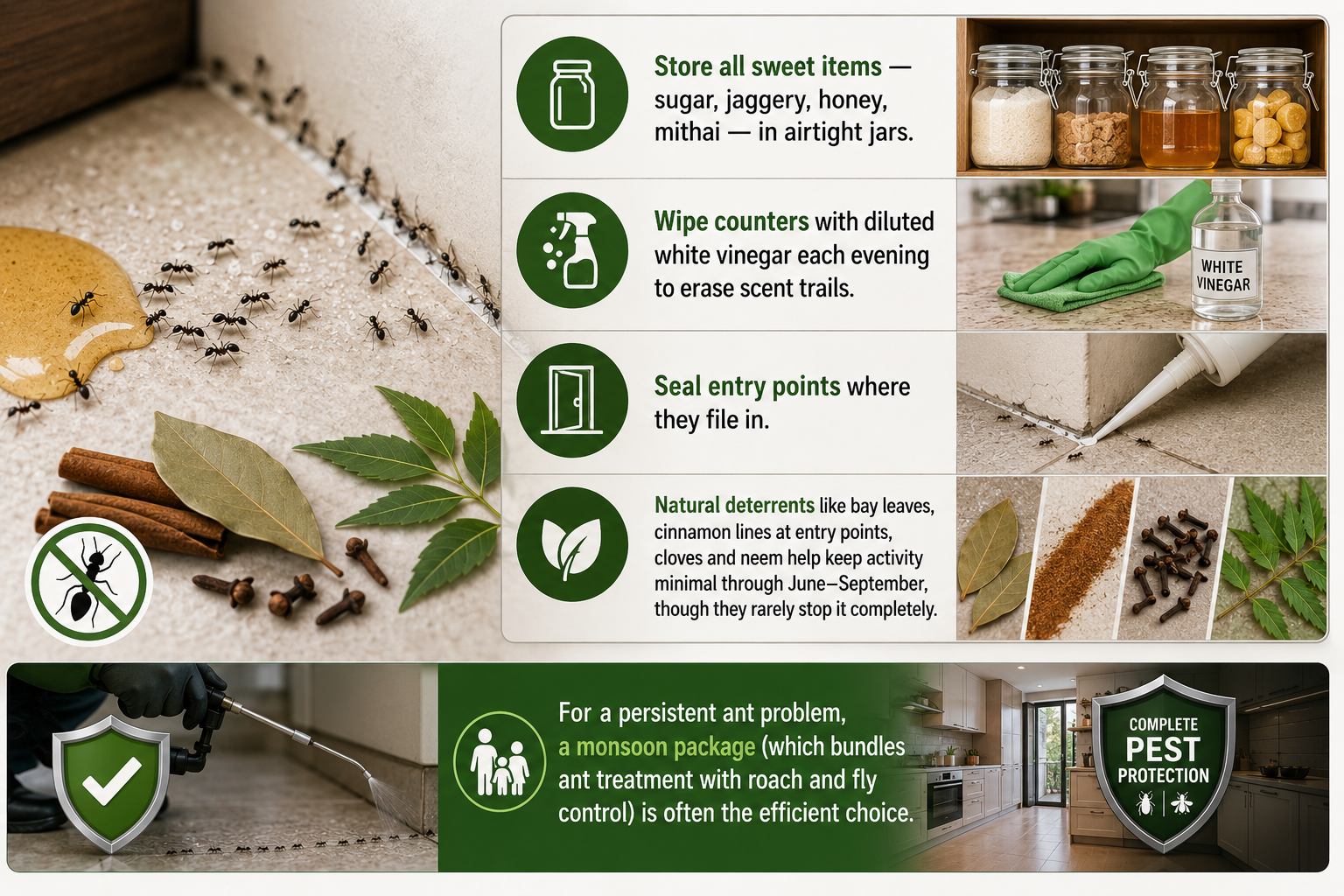
- Store all sweet items — sugar, jaggery, honey, mithai — in airtight jars.
- Wipe counters with diluted white vinegar each evening to erase scent trails.
- Seal entry points where they file in.
- Natural deterrents like bay leaves, cinnamon lines at entry points, cloves and neem help keep activity minimal through June–September, though they rarely stop it completely.
For a persistent ant problem, a monsoon package (which bundles ant treatment with roach and fly control) is often the efficient choice.
Kitchen Safety Note
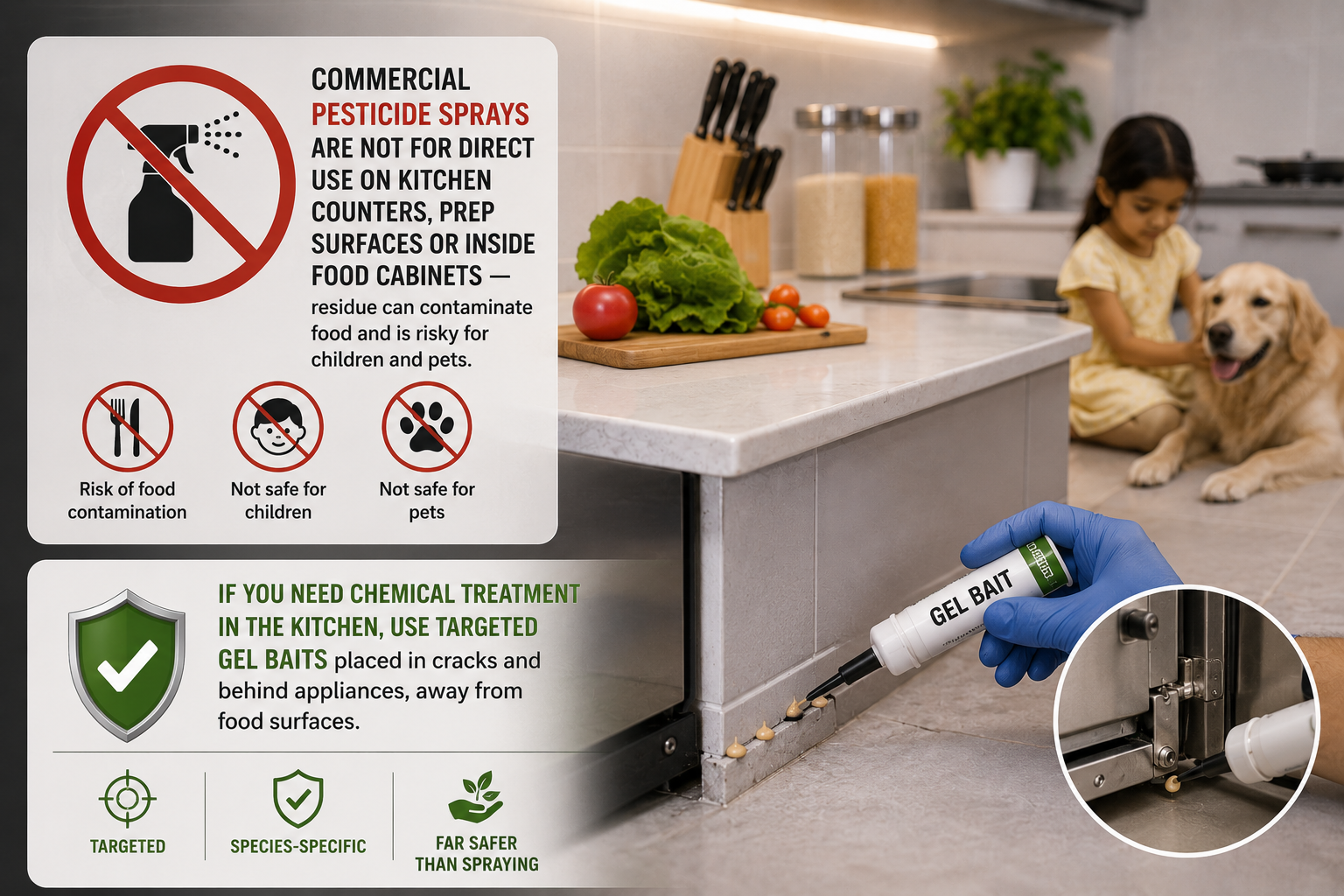
Commercial pesticide sprays are not for direct use on kitchen counters, prep surfaces or inside food cabinets — residue can contaminate food and is risky for children and pets. If you need chemical treatment in the kitchen, use targeted gel baits placed in cracks and behind appliances, away from food surfaces. They're species-specific and far safer than spraying where you cook.
How To Vet A Quote
A legitimate cockroach quote (₹1,500–₹2,500 metro) should include: a site survey, species identification, gel bait in kitchen/utility/bathroom harbourage zones, residual spray on entry points, and a written warranty. Red flags:
- Under ₹500 "fogging only" — fails on egg cases; activity returns in weeks.
- No species ID mentioned — the technician hasn't surveyed.
- No written warranty — the defensible norm for German cockroach gel baiting is 4–6 months with one free re-application. Verbal promises are unenforceable.
Key Takeaways
- Gel-baiting 2–3 BHK: ₹1,200–₹2,800 metro, ₹900–₹1,800 tier-2; AMC ₹2,500–₹6,000.
- Species matters — German needs gel + monitoring + follow-up; American/Oriental respond to perimeter spray and drain sealing.
- What works: gel bait + growth regulator + sanitation + sealing.
- Don't spray near bait — spray repels roaches from it.
- Skip ultrasonic repellers, fogging-only, and bleach — they don't reduce the population.
- Mesh floor drains to block monsoon roaches from the sewer.
- Vet quotes for species ID + written warranty; DIY holds light problems only.
Myth Vs Fact
| Myth | Fact |
|---|---|
| "Spraying is the best way to kill roaches." | Gel bait plus sanitation works; spraying near bait repels roaches and sabotages it. |
| "Ultrasonic repellers keep pests away." | They've repeatedly failed independent tests — a waste of money. |
| "Fogging clears an infestation." | It kills adults but not egg cases; activity returns in 2–3 weeks. |
| "Seeing more roaches after baiting means it failed." | The opposite — they emerge to feed on bait and die. It's working. |
| "All cockroaches are treated the same." | German, American and Oriental need different methods; species ID matters. |
| "A cleaner-smelling floor means fewer roaches." | Bleach doesn't touch the population hiding in cabinets. |
Common Mistakes
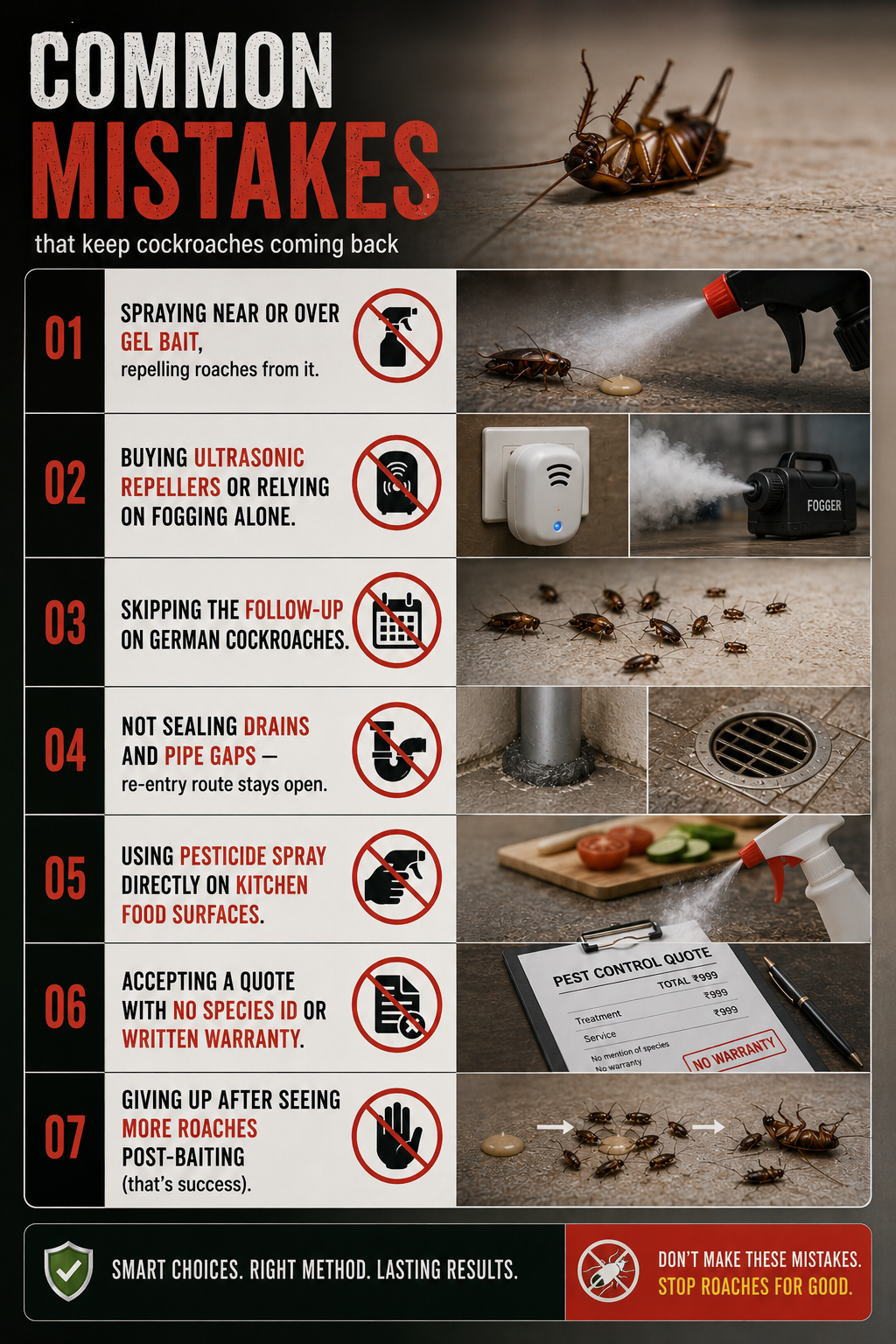
- Spraying near or over gel bait, repelling roaches from it.
- Buying ultrasonic repellers or relying on fogging alone.
- Skipping the follow-up on German cockroaches.
- Not sealing drains and pipe gaps — re-entry route stays open.
- Using pesticide spray directly on kitchen food surfaces.
- Accepting a quote with no species ID or written warranty.
- Giving up after seeing more roaches post-baiting (that's success).

Comments ()