
Wood Grain vs. Modern Aluminium: How to Choose the Right Garage Door Material
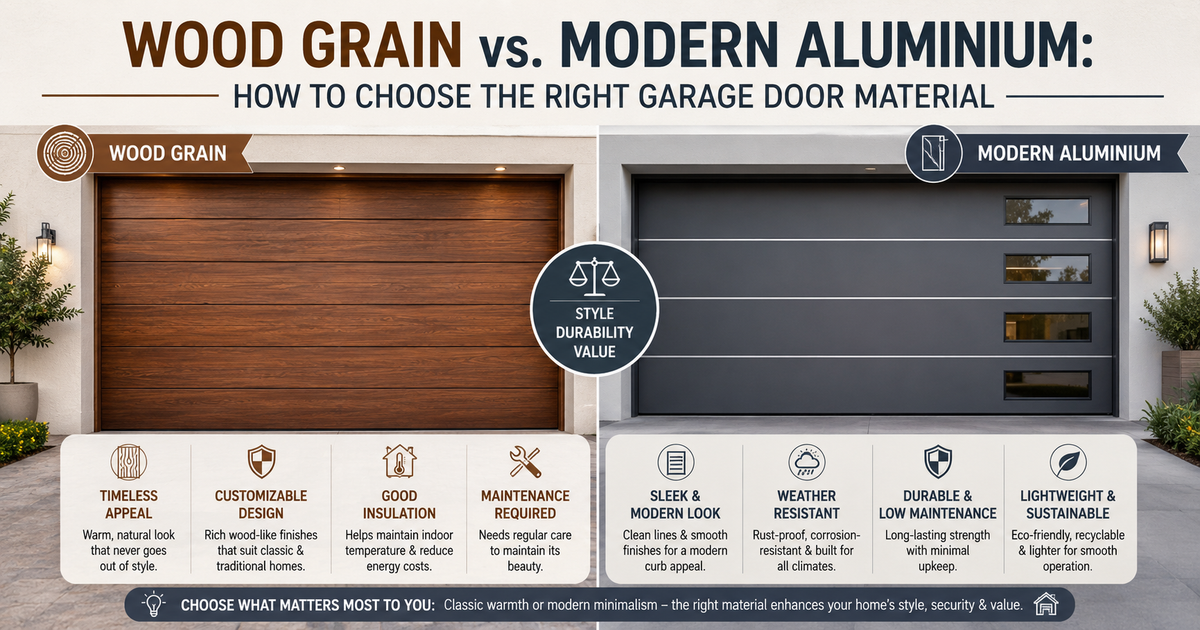
The garage door does more than offer a convenient entry and exit point on your property. It’s the backbone of your home’s comfort, security, aesthetics, energy efficiency, and longevity. That makes garage door materials important considerations to improve curb appeal, improve property worth, and lower energy costs while keeping your home secure. The question is: how do you select the ideal exterior door material for your home in India?
The global garage door market, which is expected to reach $12.84 billion in 2034 from $8.56 billion in 2026, according to Fortune Business Insights, offers diverse material options. There’s steel, wood, vinyl, and aluminum. But the biggest decision you’ll face to make your dream garage a reality is choosing between wood grain and modern aluminum doors. This post highlights the unique features of these materials to help you make informed choices.
Design Aesthetics and Customization
Want to achieve a warm, classic look with extra depth and character? Wood grain doors are the ideal option for your garage. You can invest in natural timber like teak, Indian rosewood, and cedar to maintain the rich, natural beauty of wood texture and excellent insulation against extreme sun experienced in India, for instance. Plus, wooden garage doors can be painted or stained to get a tone that blends with your home’s architecture, be it traditional, farmhouse, or contemporary. Faux wood doors, like pre-laminated or galvanized composite and steel doors with wood grains such as walnut, mahogany, and dark oak digitally printed on them, are great alternatives. These options enhance curb appeal with the same sense of elegance genuine wood offers while providing excellent defense against heavy rains and termites.
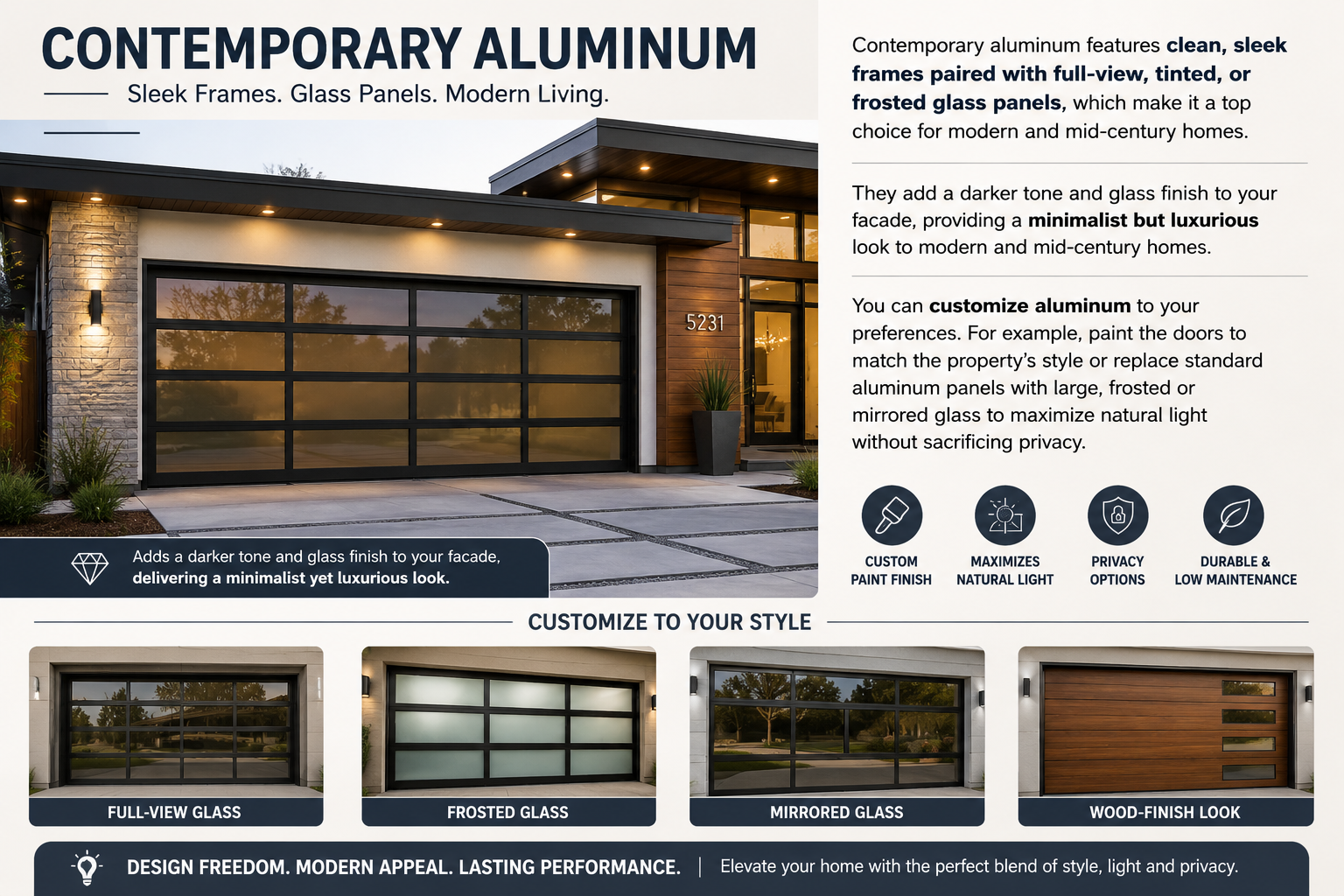
Contemporary aluminum features clean, sleek frames paired with full-view, tinted, or frosted glass panels, which make it a top choice for modern and mid-century homes. They add a darker tone and glass finish to your facade, providing a minimalist but luxurious look to modern and mid-century homes. You can customize aluminum to your preferences. For example, paint the doors to match the property’s style or replace standard aluminum panels with large, frosted or mirrored glass to maximize natural light without sacrificing privacy. You could also have your favorite wood-finish applied to the aluminum doors by an expert.
Cost
Too often, homeowners focus on the initial buying price when comparing the cost of garage doors. They forget about the extra expenses linked to maintenance requirements and installation. Note: the cost of garage door installations varies based on style, insulation, and size. The labor cost for installing a wood garage door, for instance, ranges between 3,000 and 10,000 rupees because the heavyweight demands higher tension springs and specialized carpentry skills.
For modern aluminum door installation, you’ll spend 45,000 to 60,000 rupees. This cost covers the hardware and labor services. Since aluminum models, including those with wood grain finish, are lighter than actual wood, they require less labor and time to install, however, costs can rise significantly if you opt for doors featuring glass panels.
Maintenance Requirements
While wood is durable and less susceptible to dents it requires more maintenance, including regular staining and painting to prevent warping, moisture damage, and cracking. In rainy and humid climates, garage doors made of natural wood will expand, crack, or rot if not treated properly. Aluminum wins when it comes to low maintenance materials for garage doors.
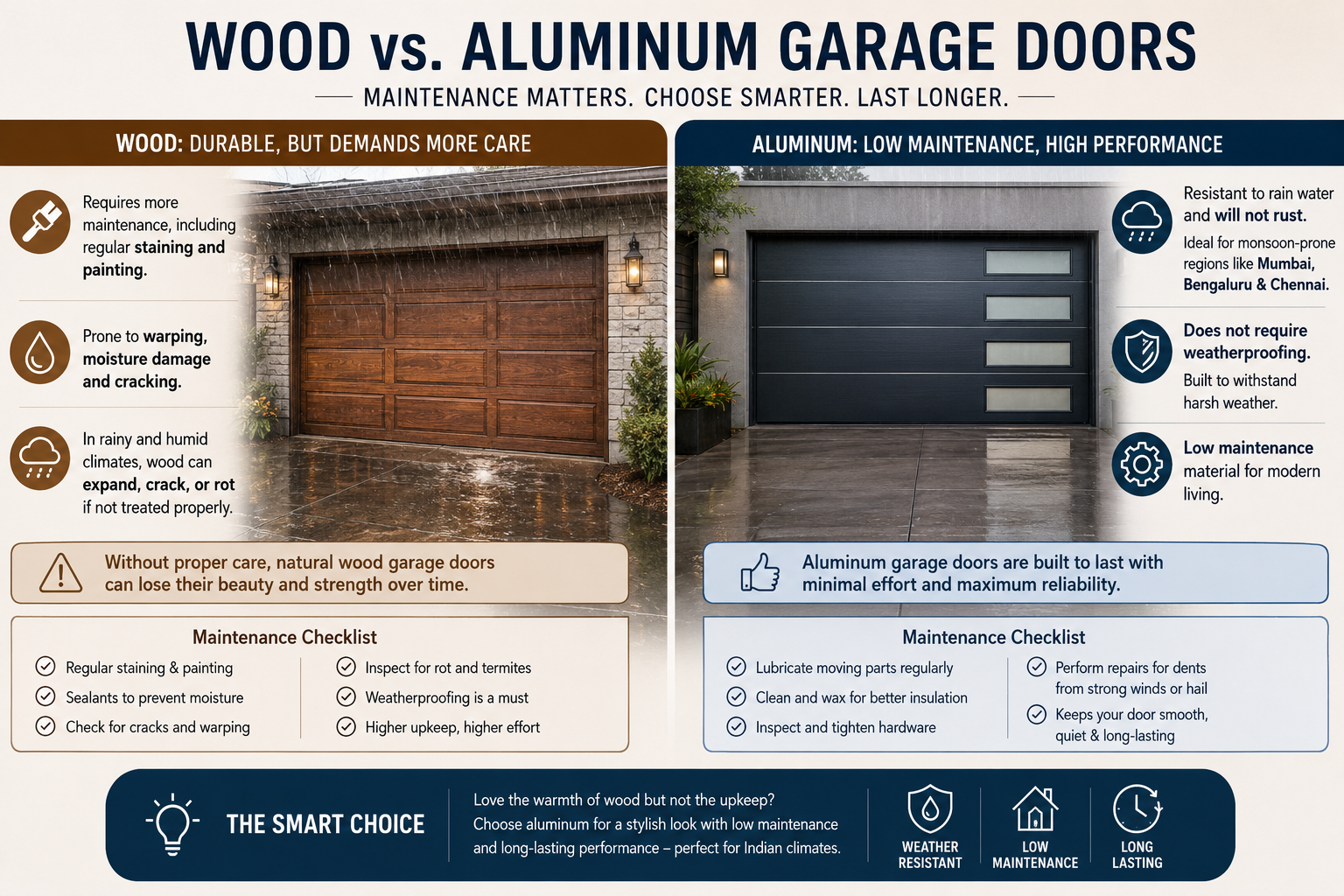
In monsoon-prone regions like India’s Mumbai, Bengaluru, and Chennai, for example, a contemporary aluminum door will not rust because it’s resistant to rain water. So, you don’t need to weatherproof your aluminium door. This doesn’t mean maintenance isn’t required. You’ll need to lubricate your doors regularly to ensure moving parts function well. Clean and wax the doors to improve insulation and perform frequent repairs to fix dents caused by strong winds and hail.
Material Weight
Weight affects the installation process and overall performance of a garage door. So, when reviewing types of garage doors, whether it’s an aluminum side sectional door or a wood-textured bi-folding door, consider the heaviness. Wood grain doors, especially those made with natural timber, are heavier, meaning the installation process will be complex. For better performance, purchase high-quality wood doors, as they come with firm springs, hinges, and a motorized opener that carries the door’s weight during operations (the lifting and closing or rolling of the door).
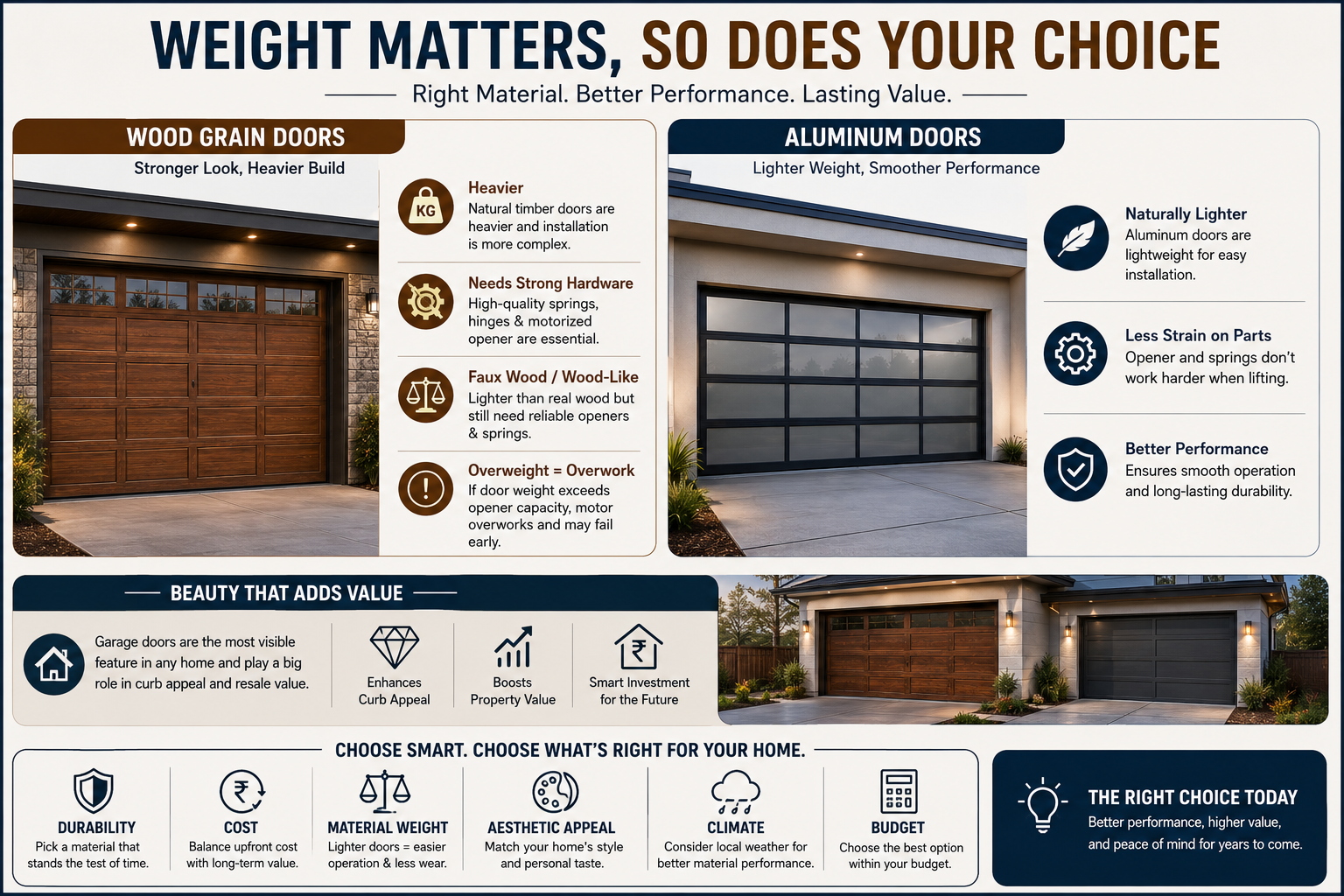
While faux wood or wood-like steel and composite are lighter than real timber, they require reliable openers and springs. If your faux wood door’s weight exceeds the opener’s capacity, the door will be poorly balanced and the motor will overwork, causing premature performance failure. Aluminum is naturally lighter than wood, which means its door components (opener and springs) won’t work harder when lifting.
Garage doors are the most visible feature in any home. So, it’s crucial to select door materials that are captivating and boost the property’s resale value. Like most homeowners, you’ll be stuck between choosing wood grain and contemporary aluminum. Your final decision will be determined by durability, cost, material weight, and aesthetic appeal. Ensure you compare the characteristics of each material and weigh in your home’s climate and architectural design, and budget.
Comments ()