
Termite Control in India (2026): Cost, Methods, Warranty & How to Vet a Quote
Termite treatment cost in India 2026 by home size, the four methods compared, pre vs post-construction, warranty norms, and the quote red flags that cost you.
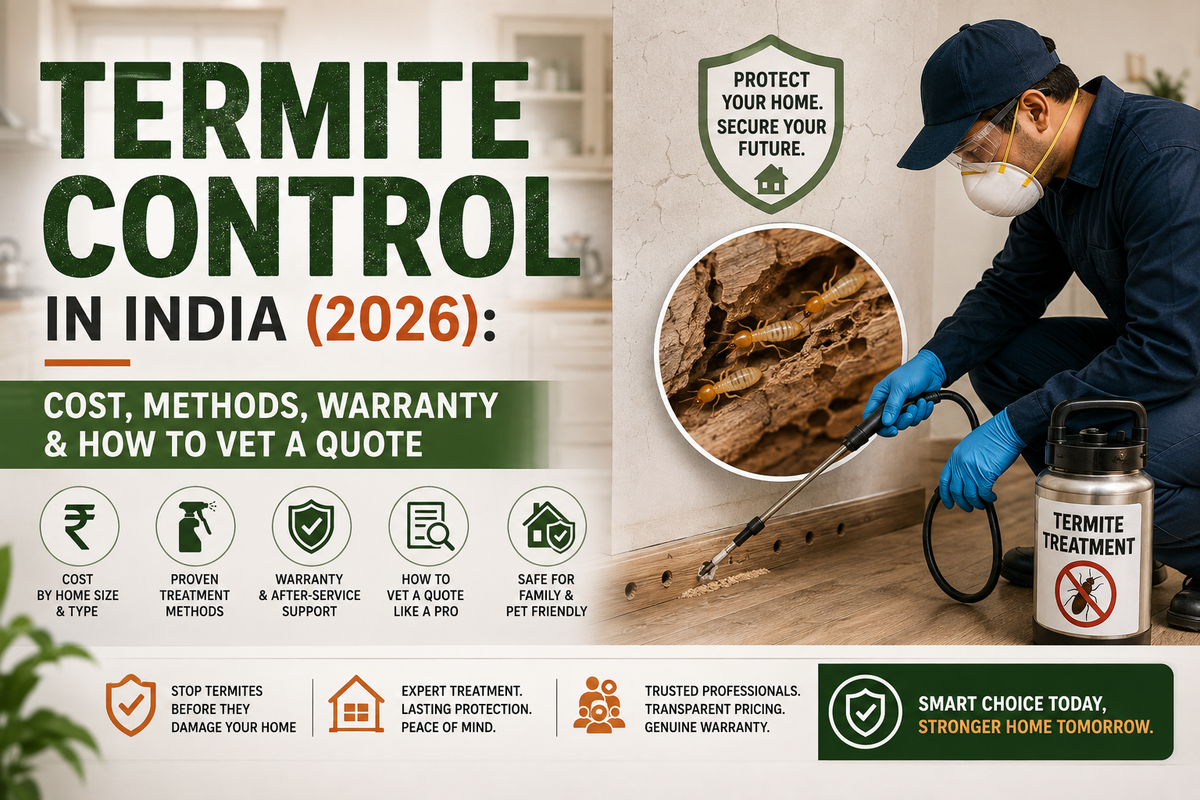
Post-construction termite treatment in India costs roughly ₹1,500–₹5,000 for a 1 BHK, ₹3,500–₹8,000 for a 2 BHK, and ₹5,500–₹15,000 for a 3 BHK in 2026, using the standard drill-fill-seal method. Pre-construction soil treatment is cheaper and lasts longer (8–10 years vs 5–8). The critical warning: gel-only treatment cannot reach a subterranean colony, so a cheap "gel termite" quote for an active mud-tube infestation will fail within weeks. Always get the method, chemical name and warranty in writing.
Termite control in India is priced by home size, chemical, city, and whether it's preventive or corrective. Post-construction drill-fill-seal — drilling at wall-floor junctions, injecting termiticide, and sealing — is the standard method for existing homes and the one most people need. Pre-construction soil treatment is cheaper and lasts 8–10 years; post-construction lasts 5–8. The four methods are drill-fill-seal (standard barrier), perimeter trench (preventive), baiting (colony elimination over 3–6 months), and gel (spot treatment only). Key red flag: gel or surface spray cannot reach the underground colony, so it's never a standalone fix for structural infestation. A legitimate quote names the method, the exact chemical and concentration, the area, the warranty, and follow-up schedule — quotes for the same home vary 30–50% between companies.
Why Termites Are Different
Most pests are a nuisance. Termites are a structural threat — they eat through the wood in your doors, frames, furniture and roof timbers silently, often for months, before you notice. By the time you see mud tubes on a wall or hollow-sounding skirting, a colony has been at work.
That changes the economics. With cockroaches, skipping treatment costs you comfort. With termites, skipping treatment costs you the structure — which is why "how much does it cost" is the wrong first question. The right one is "how do I make sure it actually works?"
What It Costs In 2026
Termite treatment has no standard rate card — quotes for the same home in the same city routinely vary 30–50% between companies. Here are planning benchmarks for standard post-construction drill-fill-seal:
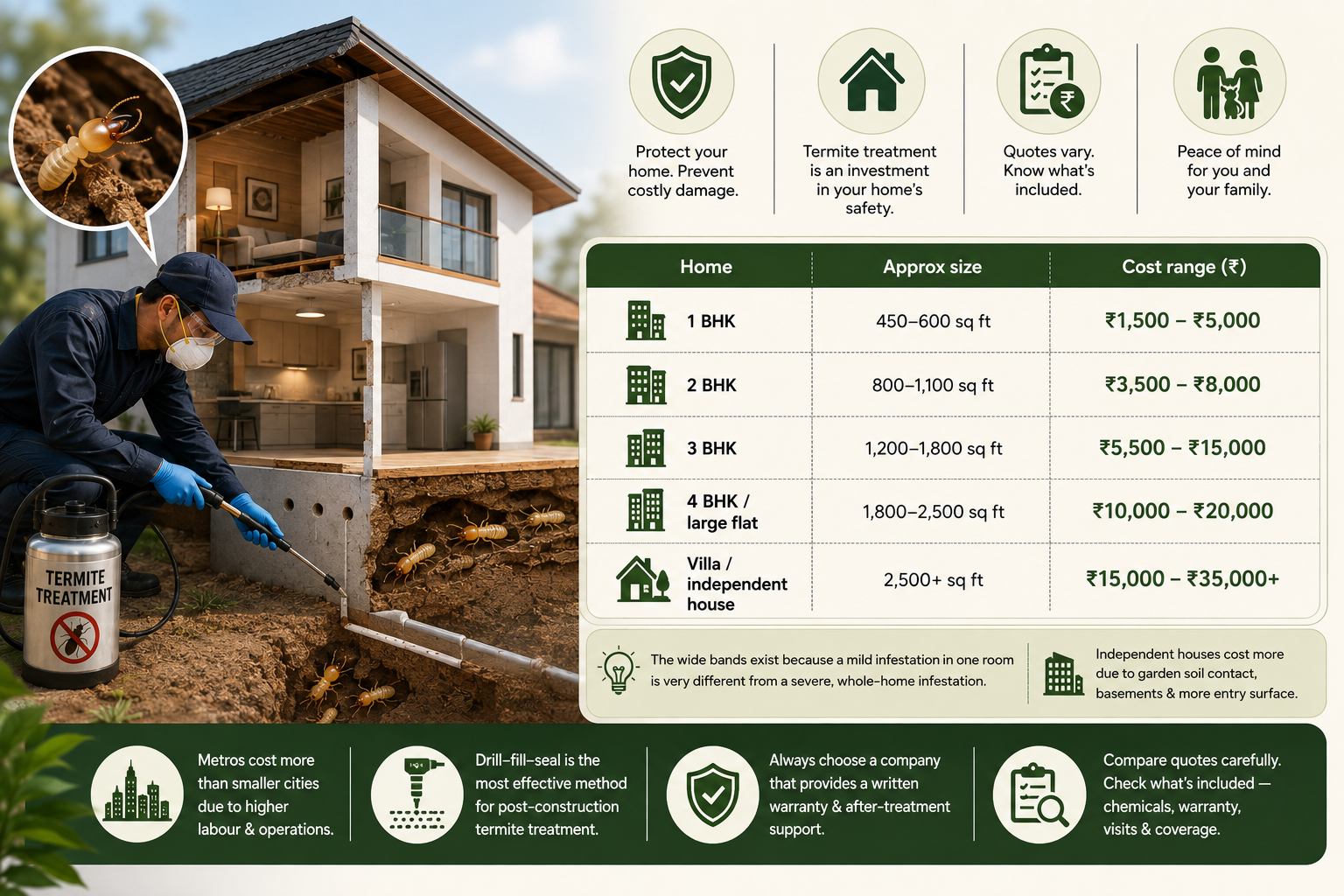
| Home | Approx size | Cost range |
|---|---|---|
| 1 BHK | 450–600 sq ft | ₹1,500–₹5,000 |
| 2 BHK | 800–1,100 sq ft | ₹3,500–₹8,000 |
| 3 BHK | 1,200–1,800 sq ft | ₹5,500–₹15,000 |
| 4 BHK / large flat | 1,800–2,500 sq ft | ₹10,000–₹20,000 |
| Villa / independent house | 2,500+ sq ft | ₹15,000–₹35,000+ |
The wide bands exist because a mild infestation in one room costs very differently from a severe one across the home. Independent houses cost more — garden soil contact and basements mean more entry surface. Metros run higher on labour.
Pre-construction Vs Post-construction
This is the single most important distinction, and it decides both cost and lifespan.
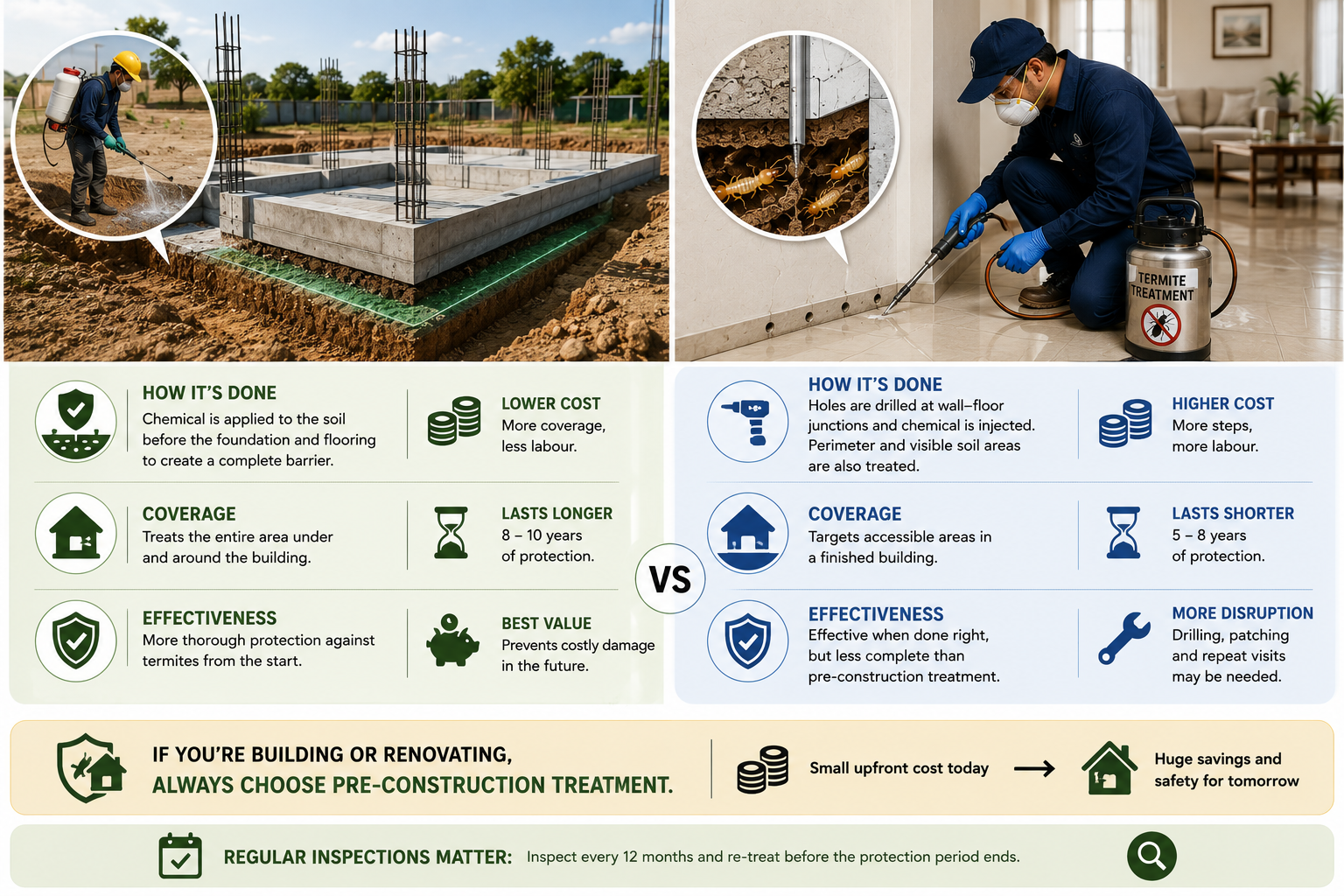
Pre-construction treatment happens before the foundation and flooring go in. Chemical is applied to the soil to create a barrier under the whole building. It's cheaper, more thorough, and lasts 8–10 years — dramatically cheaper than dealing with an infestation later.
Post-construction treatment is done on a finished building. Because the soil is sealed under floors, technicians drill holes at wall-floor junctions, inject termiticide, and treat the perimeter separately. More steps, more labour, higher cost, and it lasts 5–8 years. This is what most people searching for termite treatment actually need.
If you're building or renovating, always opt for pre-construction treatment. The upfront cost is small against the structural repairs it prevents.
The Four Methods Compared
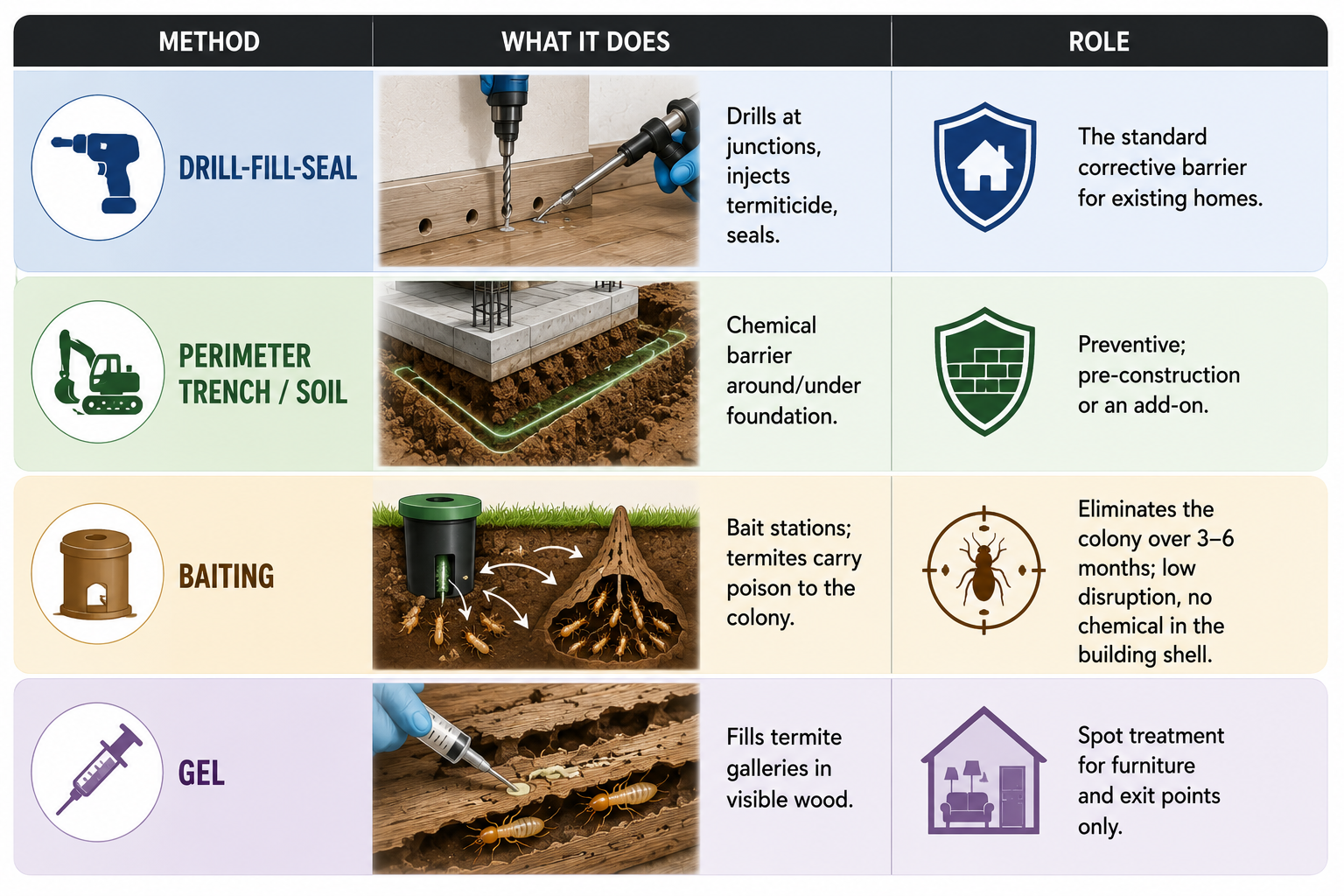
| Method | What it does | Role |
|---|---|---|
| Drill-fill-seal | Drills at junctions, injects termiticide, seals | The standard corrective barrier for existing homes |
| Perimeter trench / soil | Chemical barrier around/under foundation | Preventive; pre-construction or an add-on |
| Baiting | Bait stations; termites carry poison to the colony | Eliminates the colony over 3–6 months; low disruption, no chemical in the building shell |
| Gel | Fills termite galleries in visible wood | Spot treatment for furniture and exit points only |
The red flag that saves you money
Gel and surface sprays cannot reach a subterranean soil colony. If a vendor quotes a cheap "gel termite treatment" for an active mud-tube infestation, walk away. You'll see the termites disappear for 4–6 weeks, then the colony rebuilds through a different route. Gel has a place — furniture spot-treatment and top-ups between drill cycles — but it is never the only treatment for a structural infestation.
Baiting, by contrast, is a legitimate standalone for colony elimination: termites carry the slow-acting bait back and the nest dies in 3–6 months, with the advantage of no chemical injected into the building.
Signs You Have Termites
- Mud tubes — pencil-thick mud tunnels on walls, foundations or in corners.
- Hollow or papery-sounding wood — tap door frames and skirting.
- Frass — tiny pellet-like droppings near wooden items.
- Discarded wings near windows after a swarm.
- Bubbling or uneven paint on wooden surfaces.
- Tight-fitting or warping doors and windows.
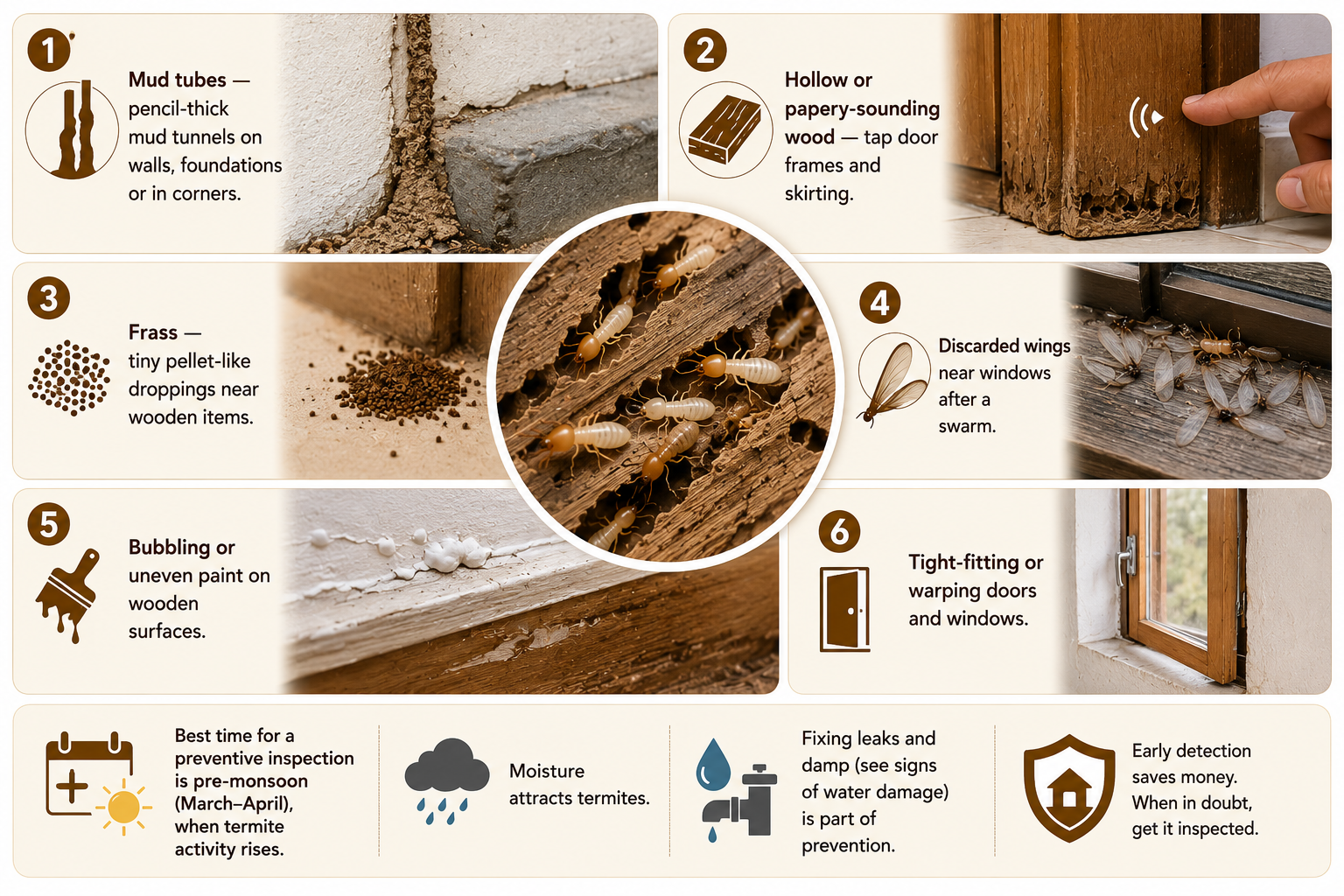
The best time for a preventive inspection is pre-monsoon (March–April), when termite activity rises. Moisture attracts termites, so fixing leaks and damp (see signs of water damage) is part of prevention.
How Long Treatment Lasts & Re-treatment
- Pre-construction: 8–10 years.
- Post-construction: 5–8 years.
- Baiting: ongoing; stations checked every 3–6 months and replenished.
Schedule re-treatment before the existing protection expires to keep coverage continuous. Signs you need it sooner: new mud tubes, more sightings, or the warranty period ending.
How To Vet A Quote (The Anti-scam Checklist)
Because prices vary so wildly, the quote itself is where you protect yourself. A legitimate quote specifies:
- The method — drill-fill-seal, perimeter trench, baiting, or a combination.
- The chemical name and concentration — not vague "government-approved chemical". (Common professional chemicals include Premise/Envu for soil and Biflex/FMC for wood.)
- The area treated and rate per sq ft — so you can compare fairly.
- Warranty details — length and what it covers. Two years is common; longer with an AMC.
- Follow-up schedule and re-treatment terms.
- Company credentials — a licensed, certified company with a documented warranty process charges more than a two-person operation, and that difference shows when you actually try to claim.
Get at least two written quotes. A verbal phone quote without an inspection means little. And don't default to the cheapest — with termites, a failed treatment means the colony quietly keeps eating while you think you're protected.
For the full pest-control cost and safety picture, see the parent Pest Control Guide.
Prep & Safety
Modern termiticides are often odourless and low-residue, but follow the technician's instructions. Typical split of responsibilities:
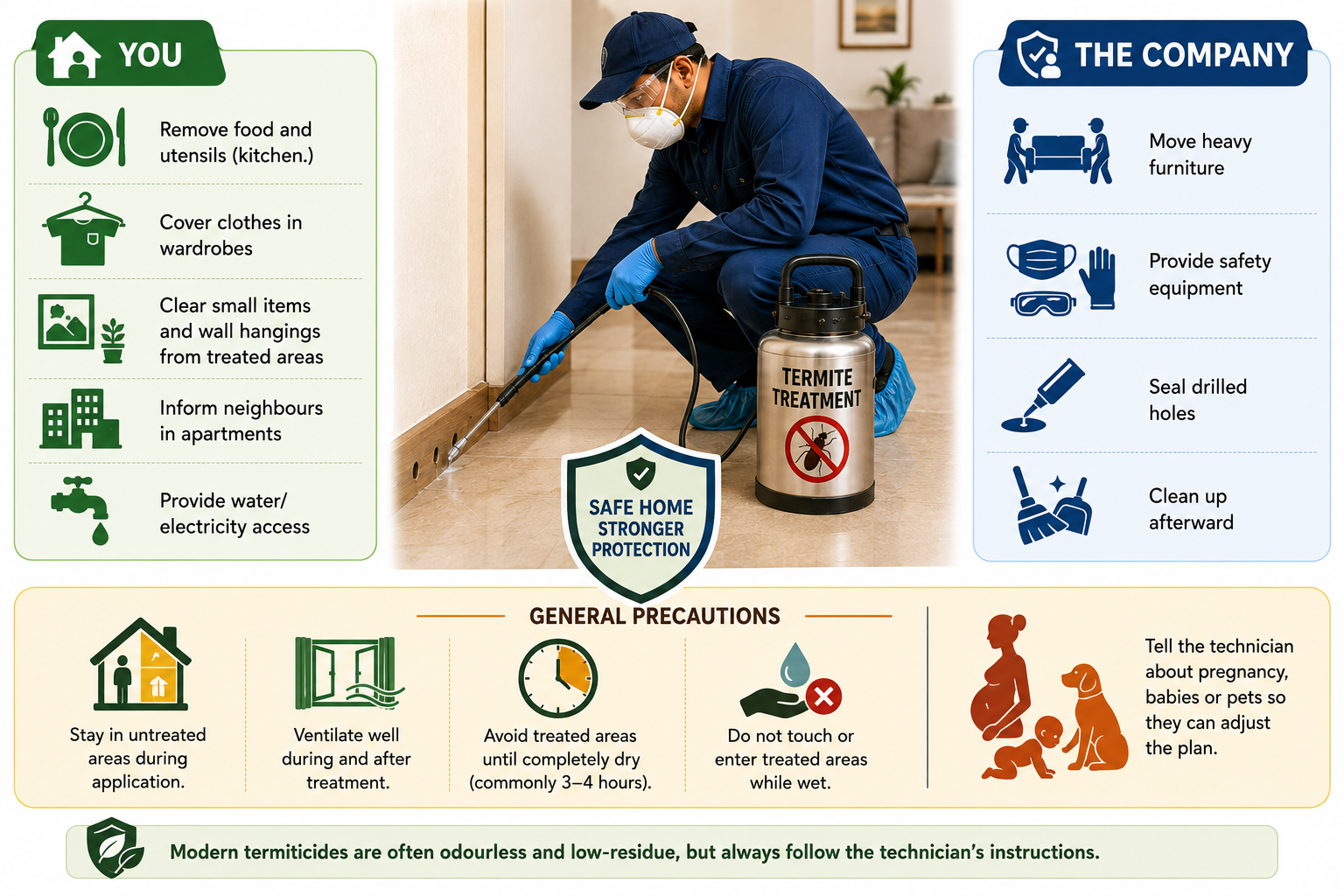
You: remove food and utensils (kitchen), cover clothes in wardrobes, clear small items and wall hangings from treated areas, inform neighbours in apartments, provide water/electricity access.
The company: move heavy furniture, provide safety equipment, seal drilled holes, clean up afterward.
General precautions: stay in untreated areas during application, ventilate, avoid treated areas until dry (commonly 3–4 hours), and no contact with wet chemical. Tell the technician about pregnancy, babies or pets so they adjust the plan.
Key Takeaways
- Post-construction termite treatment: ₹1,500–₹5,000 (1 BHK) to ₹15,000+ (villa).
- Pre-construction is cheaper and lasts longer (8–10 yrs) — always choose it when building.
- Drill-fill-seal is the standard corrective method; baiting eliminates the colony over 3–6 months.
- Gel-only for an active subterranean infestation is a red flag — it can't reach the colony.
- A legitimate quote names method, chemical + concentration, area, warranty, follow-ups.
- Quotes vary 30–50% for the same home — get two written ones, don't just pick cheapest.
- Inspect pre-monsoon (Mar–Apr); fix moisture, which attracts termites.
Common Mistakes
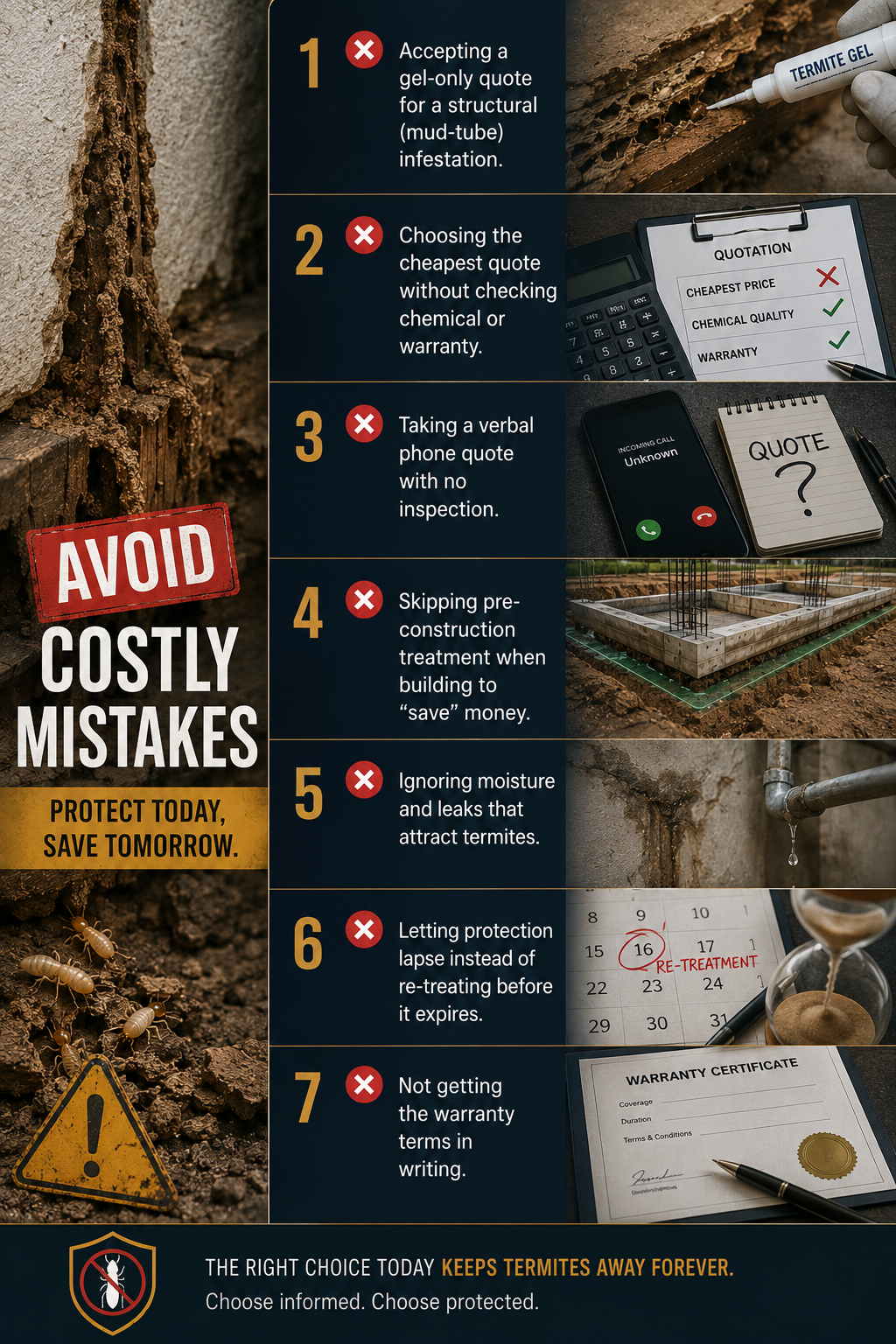
- Accepting a gel-only quote for a structural (mud-tube) infestation.
- Choosing the cheapest quote without checking chemical or warranty.
- Taking a verbal phone quote with no inspection.
- Skipping pre-construction treatment when building to "save" money.
- Ignoring moisture and leaks that attract termites.
- Letting protection lapse instead of re-treating before it expires.
- Not getting the warranty terms in writing.

Comments ()