
Remove Wallpaper or Paint Over It? How to Decide in an Older Home
Updating old wallpaper? Learn when to strip it vs. paint over it based on the wallpaper, wall condition, and how long you want the finish to last.
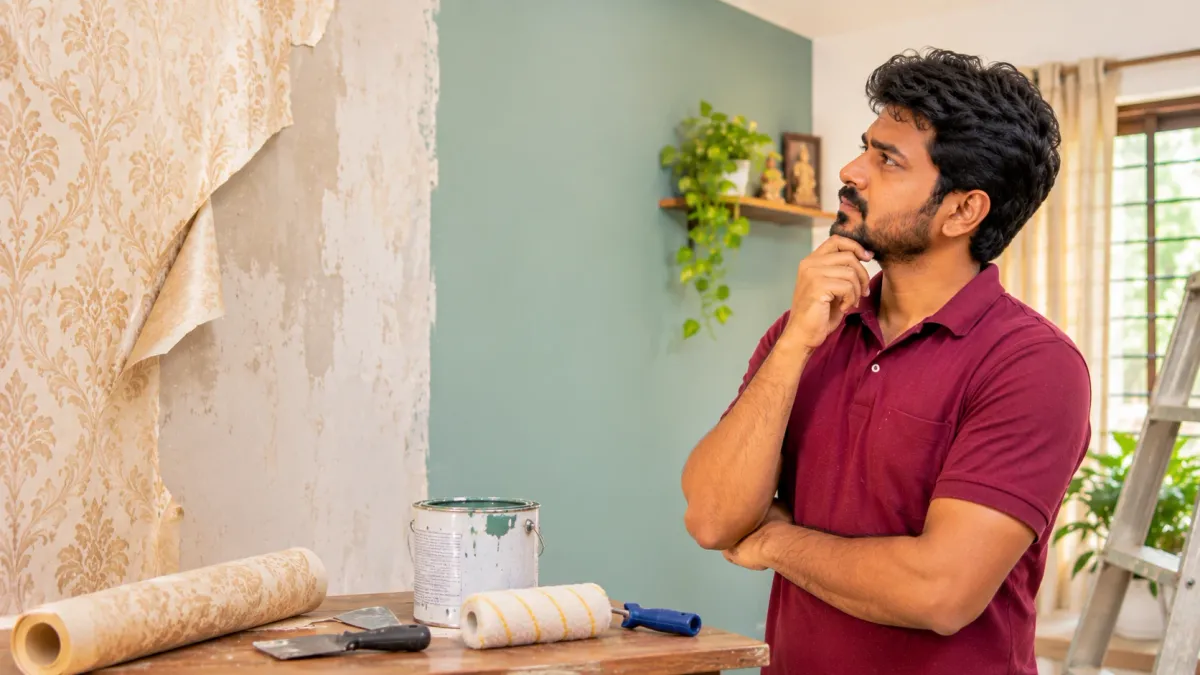
Few home projects start with as much hope and end with as much frustration as wallpaper. Many older houses have at least one room papered decades ago, and the owner who wants a fresh color has to answer one question first: does the paper come off, or does the paint go over it? The right answer depends on the paper, the wall under it and how long you want the finish to last.
When painting over wallpaper can work
Painting over wallpaper is a shortcut, and like most shortcuts it works only in the right conditions. It is worth considering when:
- The paper is a single layer and is tight to the wall everywhere, including the seams and corners.
- The surface is smooth, with no heavy texture or raised pattern that will show through.
- The room is dry. Bathrooms and laundry rooms are poor candidates.
- You accept that removing it later will be harder, because paint makes the paper even more difficult to soak and strip.
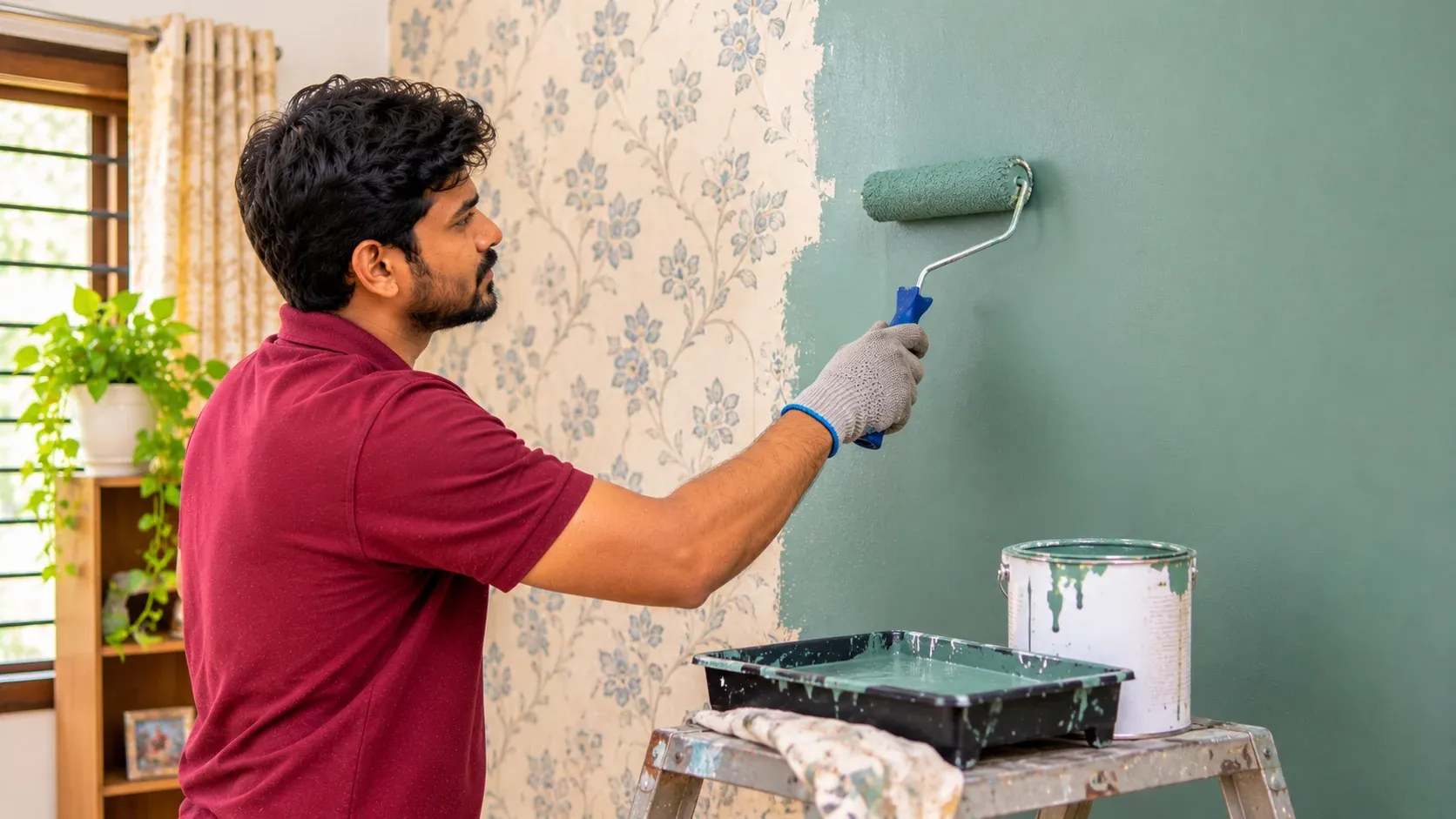
If you go this route, prime first with a primer made to seal wallpaper, usually an oil-based or shellac-based product. A water-based paint applied straight onto paper can soften the old paste and cause bubbles and lifting seams. Glue down any loose edges before priming, and lightly sand the seams so they do not telegraph through the finish.
When the paper should come off
In most older homes, removal is the better choice. Take the paper off when:
- There is more than one layer, or you can see seams lifting in several places.
- The paper is vinyl or heavily textured.
- The room sees steam or humidity.
- You are preparing the house for sale and want walls that will pass a close look.
How removal usually goes
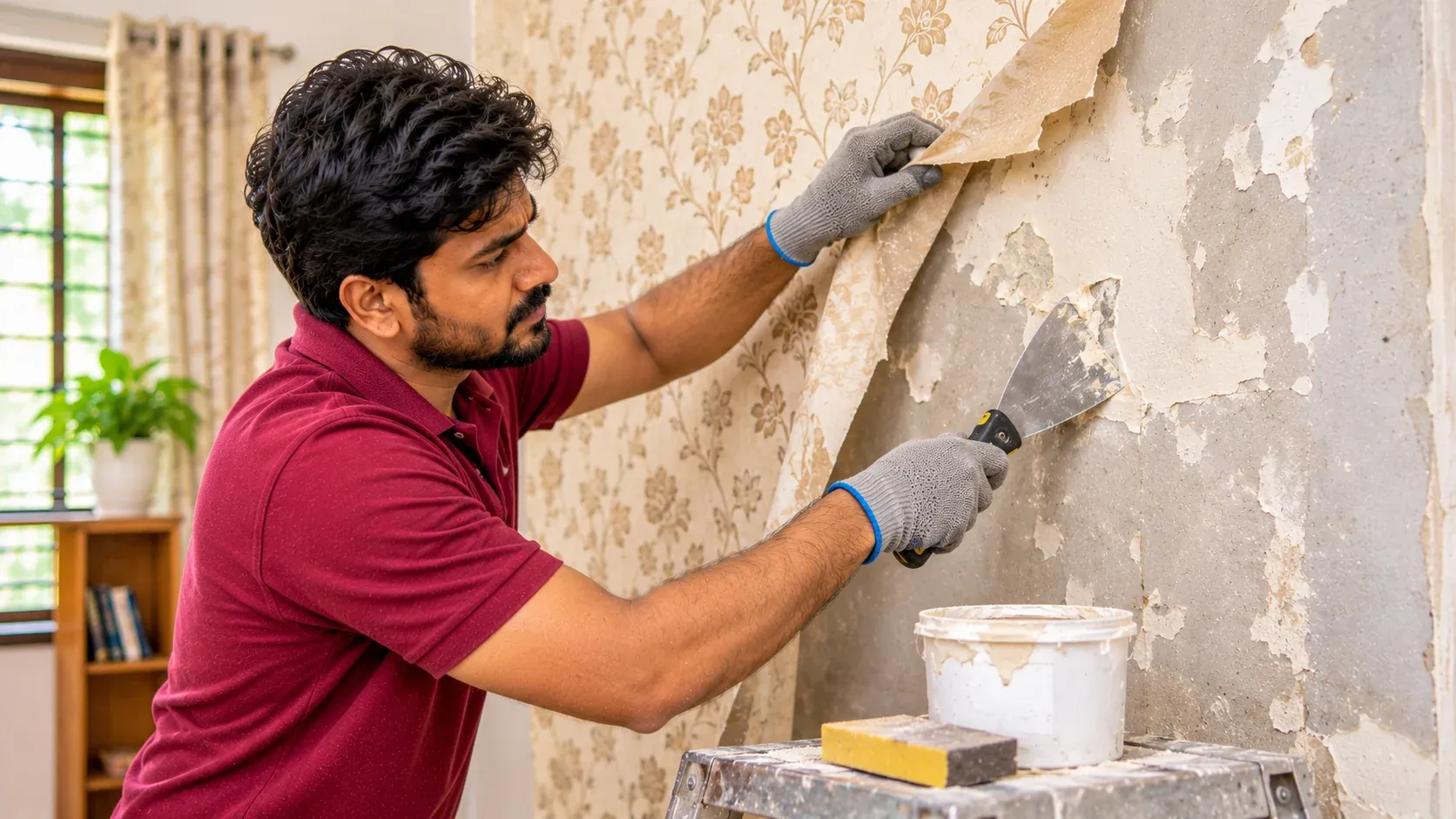
Start by testing a corner. Some papers peel off dry, leaving only a backing layer behind. Most need to be scored lightly and soaked with warm water or a wallpaper remover so the paste softens. Work one section at a time, scrape gently with a wide blade, and keep the blade nearly flat so it does not dig into the wall.
Removing the paper is only half the job. Old paste left on the wall will cause new paint to crack or peel, so wash the walls until they no longer feel slick, then let them dry completely.
The surprise under the paper
The wall underneath is the part nobody can predict. In many older homes, paper was hung directly on drywall that was never primed, so the paper and the drywall's own paper face come off together. That leaves torn, fuzzy patches that will bubble if they get wet again. The fix is to seal those areas with an oil-based or shellac-based primer, then skim coat and sand before painting. Plaster walls bring their own issues, such as hairline cracks that need filling.
This is where many weekend projects stall. A homeowner who reviewed one Kentucky painting company described exactly this: wallpaper removed in three rooms, with drywall underneath that was in rough shape. For a job like that, it makes sense to hire one crew for the whole project. That review was for an interior painting crew in Owensboro that handles wallpaper removal and drywall repair along with the painting, so the walls are fixed and painted by the same people.
Picking the paint once the walls are ready
After all that prep, finish the job properly. Prime any patched or skim-coated areas so the new paint dries evenly. Check the walls under a bright work light before painting, because low light hides ridges that daylight will show later. For most living spaces, an eggshell or satin finish hides small flaws and still wipes clean. Use a paint made for moisture in kitchens and baths.
The short answer
Paint over wallpaper only when it is a single, tight, smooth layer in a dry room, and seal it first. In every other case, take it off, deal with what you find underneath, and give the new paint a clean, sound wall to grip. It takes longer, but it is the version of the room that will still look right years from now.

Comments ()