
How to Compare Fencing Quotes Without Getting Burned
Comparing fence quotes? Why 32-meter boundary estimates vary wildly from $4,200 to $7,400—and how to spot what’s actually included.
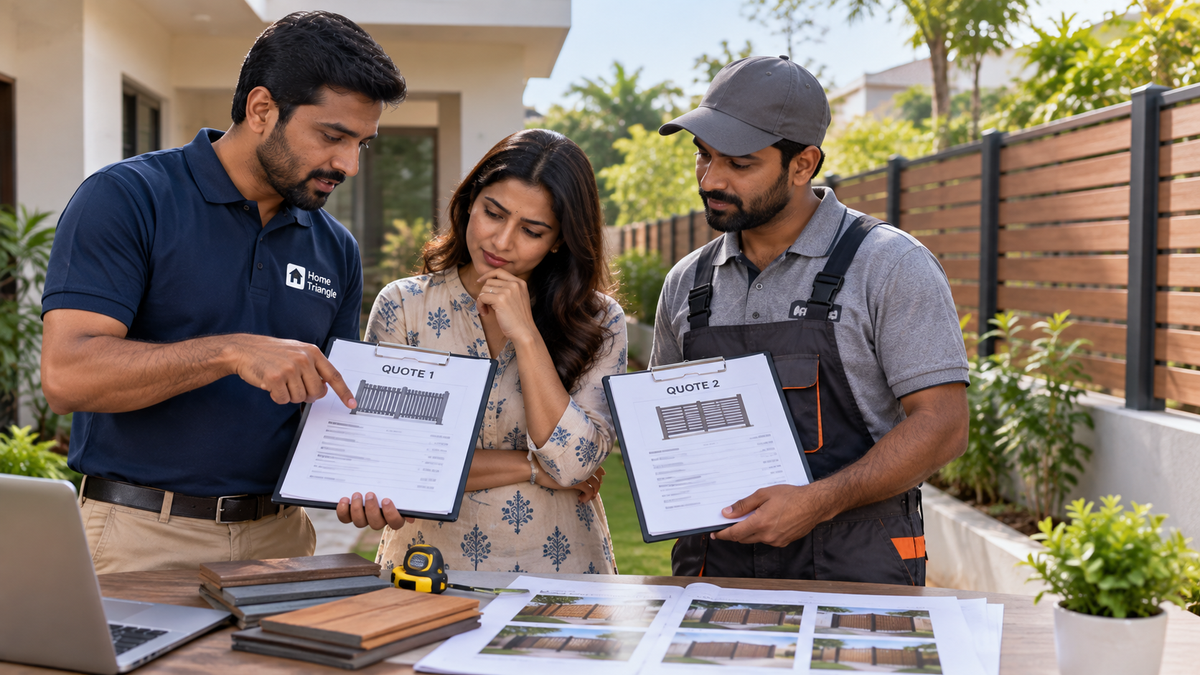
You call three fencing contractors for the same 32 metre boundary. Three people walk your block, take some measurements, and send you a number.
$4,200. $5,800. $7,400.
Same length, same height, same colour. So one of these people is having a lend of you, and the obvious move is to take the cheap one, or maybe the middle one on the theory that the cheap one must be hiding something.
Neither instinct tells you anything useful, because none of those quotes has told you what you are actually buying. Here is how to find out.
Why fencing quotes are so hard to compare
Fencing is unusual among home trades in how much of the finished job is permanently invisible.
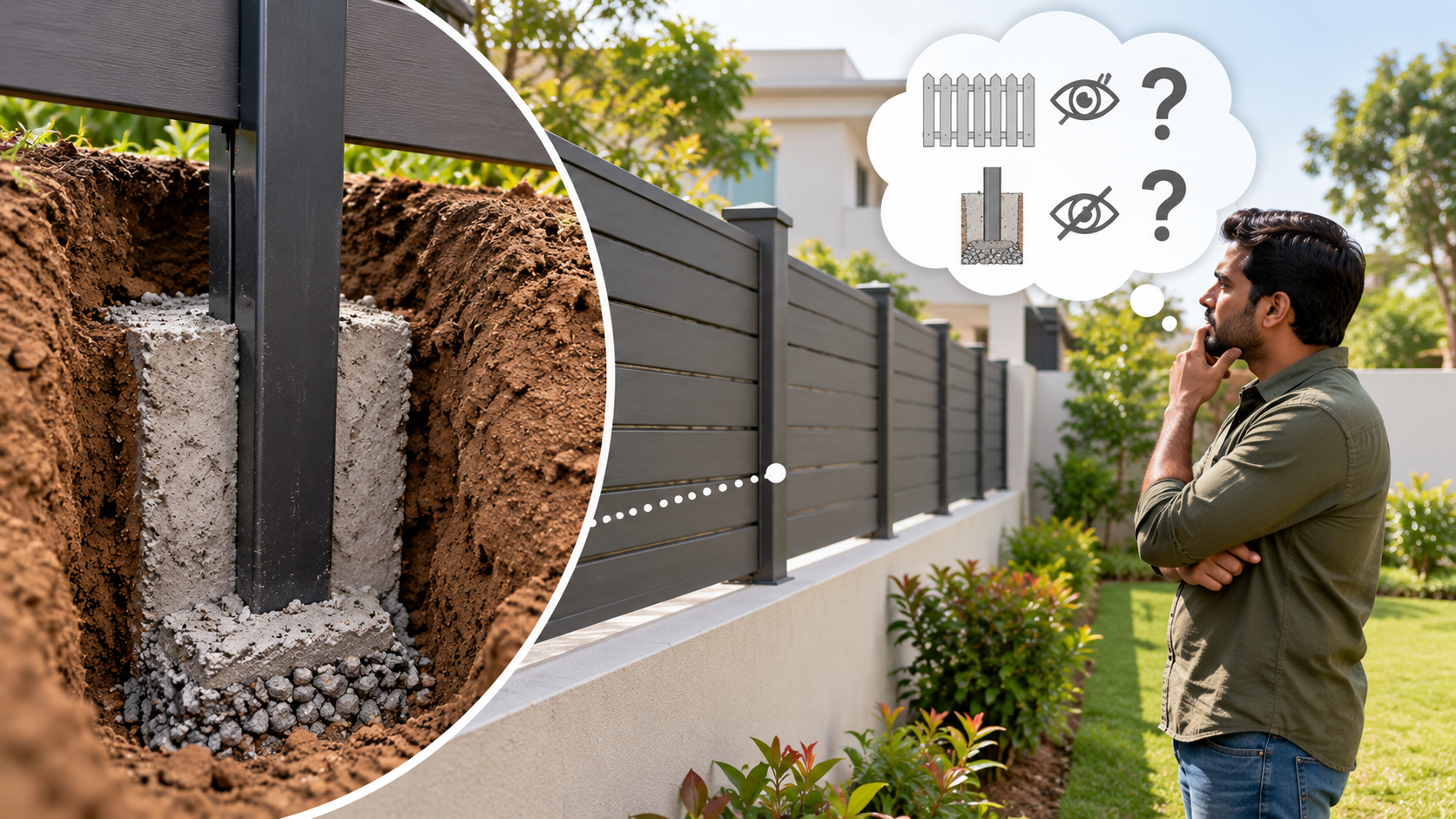
With a kitchen you can open the drawers, feel the benchtop, count the soft-close hinges. With a fence, the only things you can inspect after the crew drives off are height, colour, and whether it is straight on the day.
Everything that determines whether it is still straight in eight years happened in a hole in the ground you will never look into again.
That asymmetry is the entire reason price spreads of seventy or eighty percent are normal in this trade. Sometimes the cheap quote is a genuine bargain from a small operator with low overheads. Sometimes it is a legitimately different product being sold at a price that honestly reflects it. You cannot tell from the number.
The five things a quote should tell you
A quote that says "supply and install 32m of 1.8m Colorbond, $5,400" is not a quote. It is a price with a length attached.
Ask every contractor for these five, in writing, and the comparison becomes possible.
1. Post depth and footing diameter
The single most important number and the one almost nobody asks for.
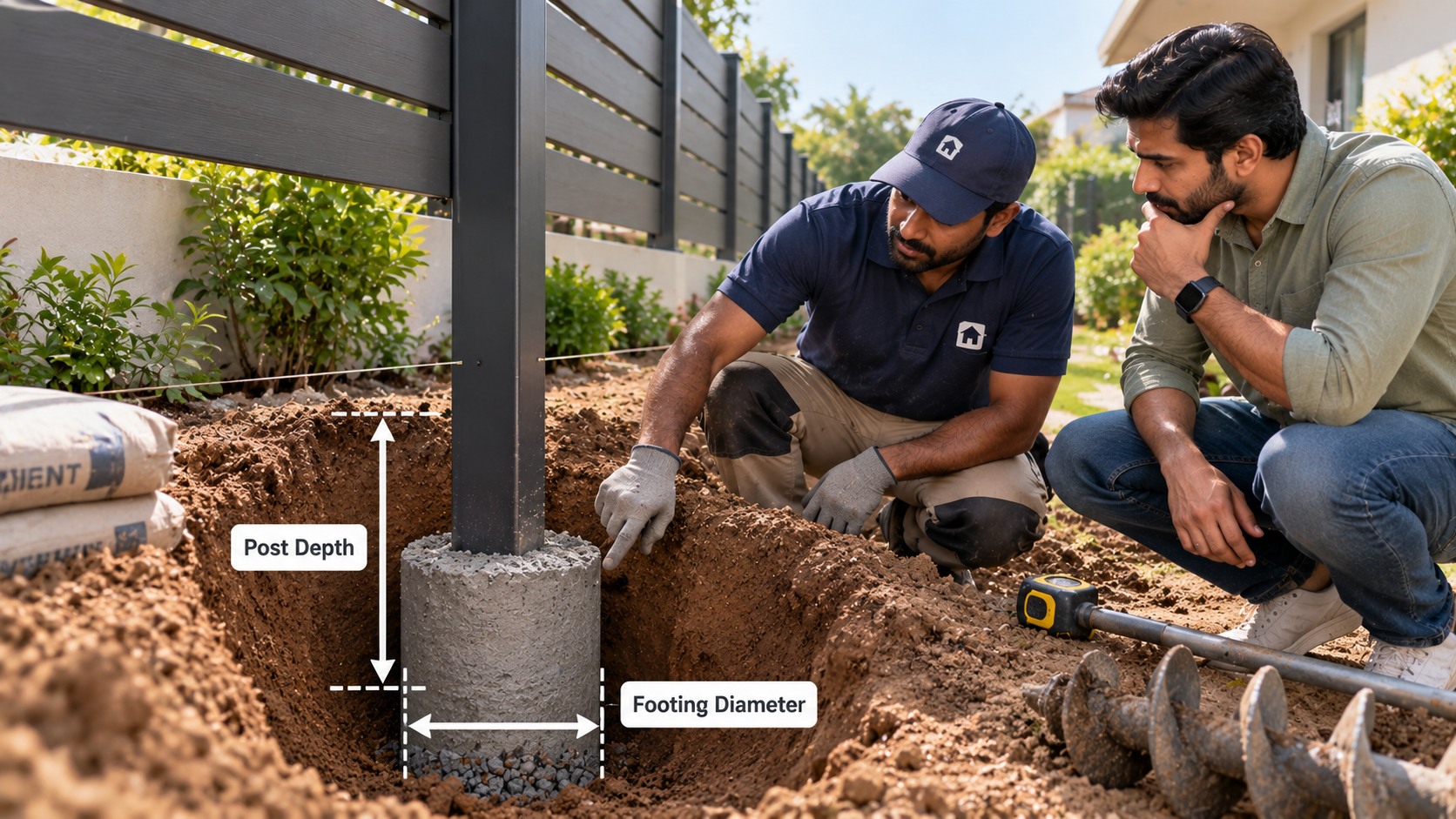
Fence posts do not snap. They rotate. A post that is not embedded deep enough, or is sitting in a hole too narrow to develop capacity, will slowly lean under wind load and ground movement. It takes three to six years, conveniently past the point where anyone connects it back to the day it went in.
The right depth depends on fence height, wind exposure and soil. A quote that specifies a figure has thought about it. A quote that does not has left the decision to whoever is holding the auger, and that bloke is being paid by the job, not the hour.
Ask: How deep do the posts go, what diameter is the hole, and can you put that on the quote?
2. Soil type, and how it changes the job
Ground is not the same everywhere, and in Perth it changes dramatically over remarkably short distances.
The Tamala limestone through the coastal suburbs is hard, slow excavation. It costs real money to do properly, which makes it the most tempting place in the metro to drill a shallower hole than specified. A post properly socketed into limestone holds superbly. One dropped into a shallow scratch does not, and on handover day they look identical.
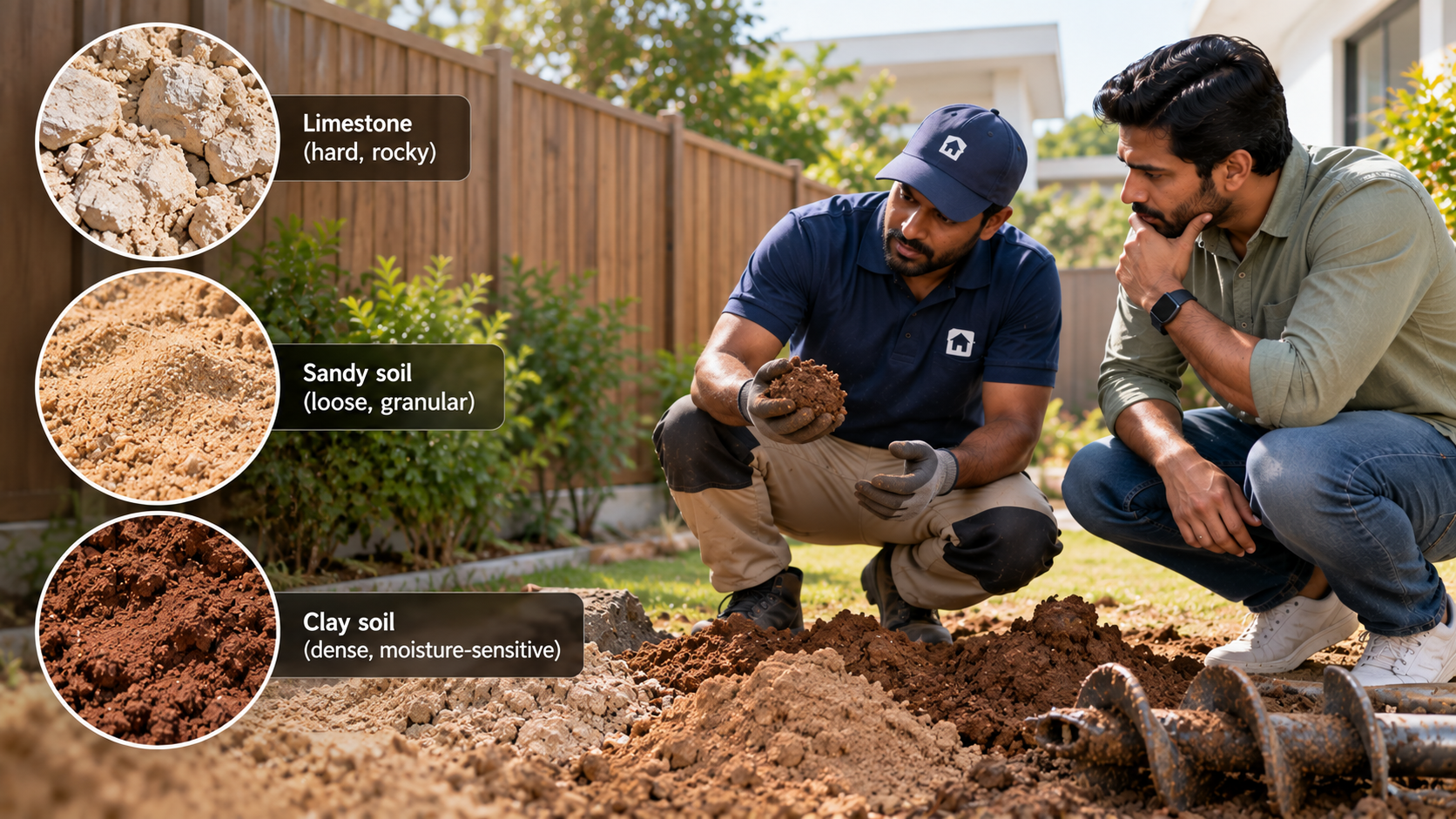
The Karrakatta and Bassendean sands across the coastal plain are the opposite. Sand does not shift seasonally but it gives almost no lateral restraint, so the post depends on the mass and width of its footing. In sand, diameter matters more than depth, and installers who trained on eastern states clay sometimes have that backwards.
The clay up through Kalamunda and Mundaring swells in July and shrinks by February. Posts have to reach below the active zone. Add a mature marri drawing moisture out through a dry summer and you get a localised lean in one section while the rest of the run sits perfectly straight. That is why so many hills fences undulate rather than tilt evenly.
A contractor quoting the identical footing detail everywhere is either over-building it on easy sites, which you are paying for, or under-building it on hard ones, which you will pay for later.
Ask: What is the ground like here, and does it change how you set the posts?
3. Rail count and fixings
More rails means a stiffer fence with less sheet movement. Fewer rails is cheaper and rattles in a decent blow.
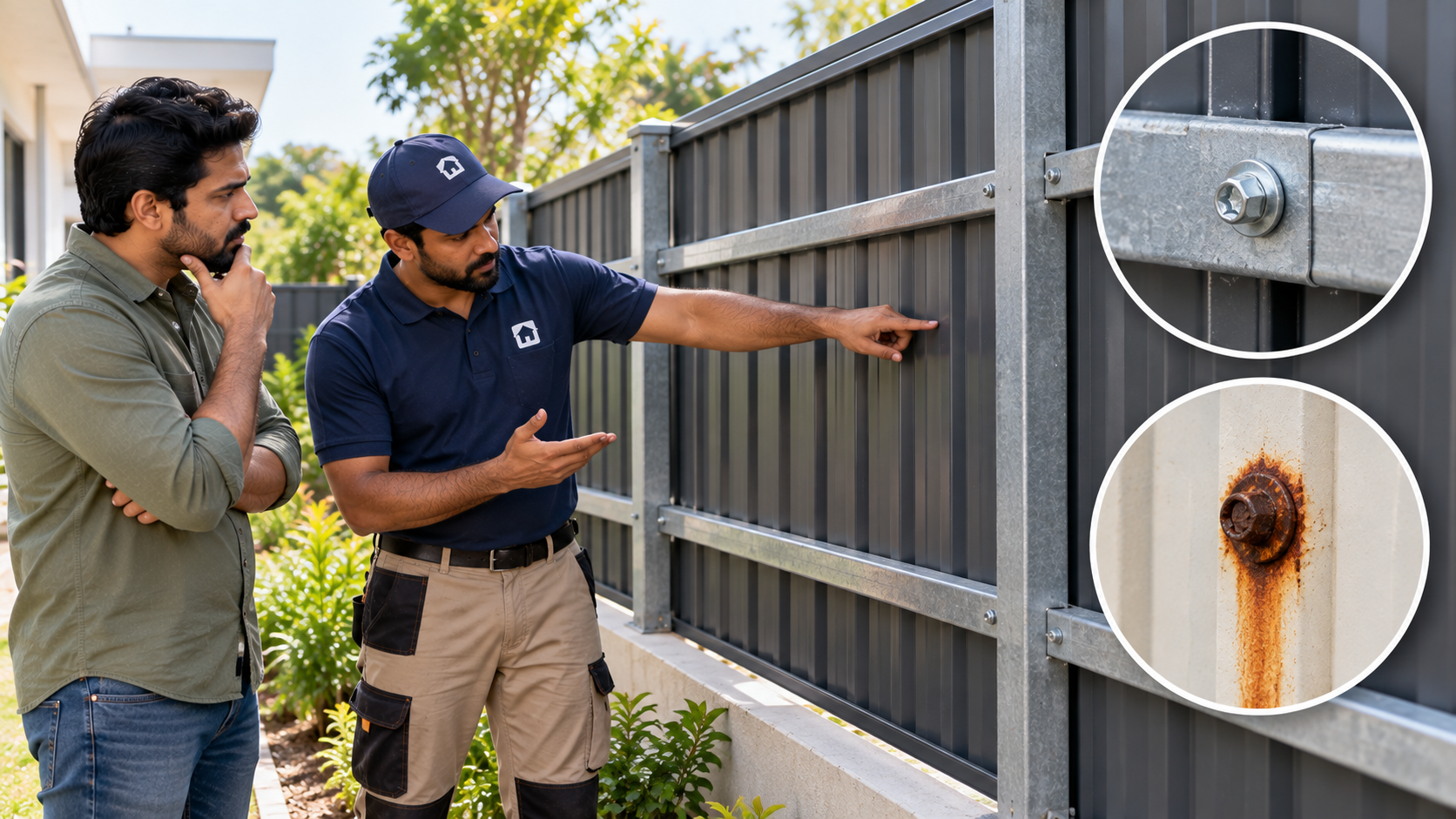
Dropping below the conventional rail count for a given height is one of the quietest ways to shave a quote, and you will not notice until the first serious wind.
Fixings matter for the same reason coating grades matter. Near the coast, the wrong fastener will rust out years before the panels show a mark, and you get that distinctive coastal look: rust freckles at every screw head with brown weep lines running down, while the sheeting between them still looks nearly new.
Ask: How many rails, and what fixings?
4. What happens to the old fence
Removal and disposal is genuine labour and genuine tip fees, and it is frequently excluded from the cheap quote in a way that is technically disclosed and practically invisible.
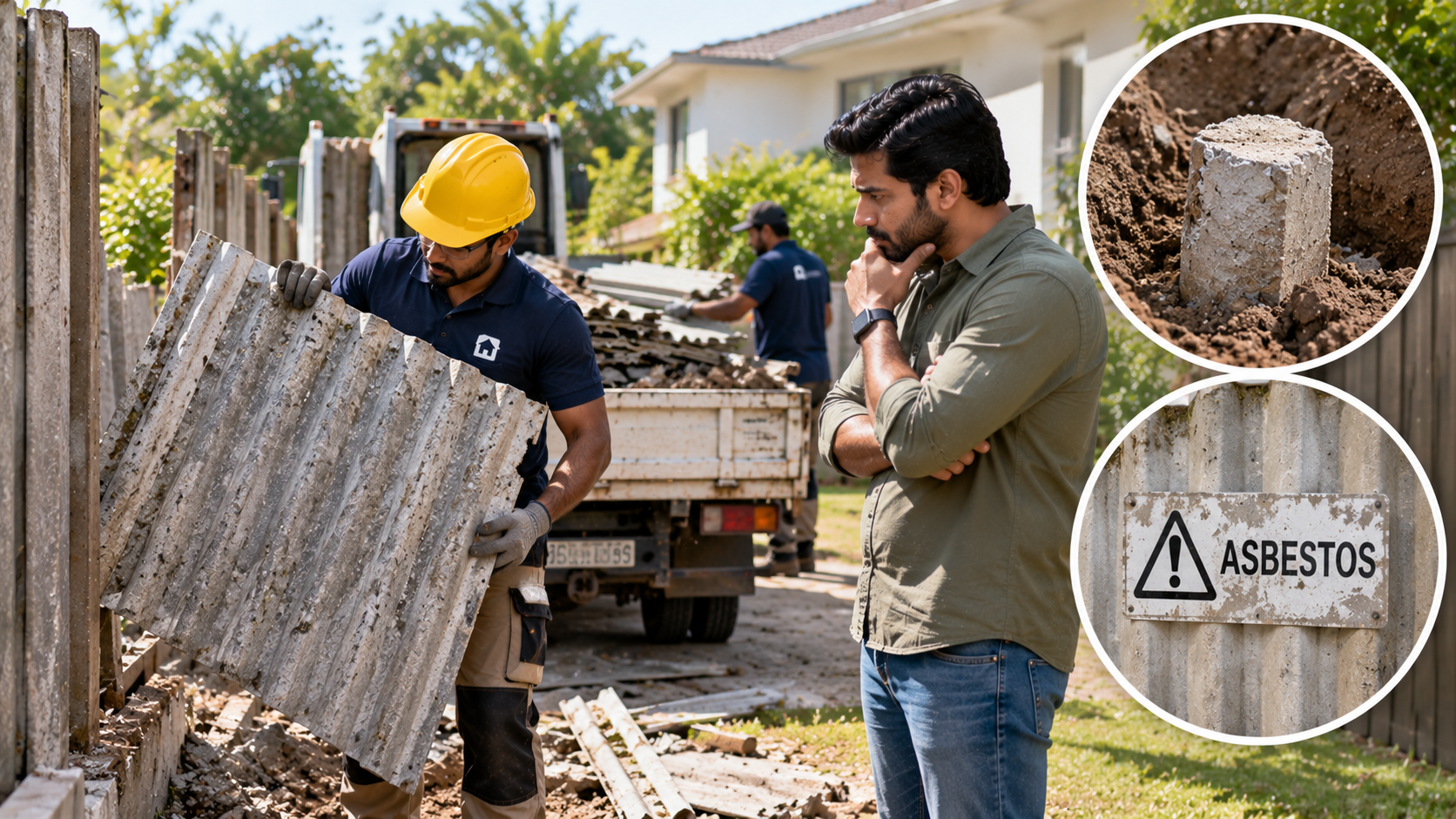
Two follow-ups matter. First, are the old footings coming out, or just being cut off at ground level? Cutting them is faster and leaves concrete lumps that push your new posts out of position and make the next replacement worse.
Second, and this one is serious: is there any asbestos?
Fibro fencing is everywhere in Perth's older suburbs. In places like Bayswater, Como, Morley and Subiaco, where a lot of the housing stock is 1960s and 70s, it is more common than not on at least one boundary.
Here is the number that matters. WorkSafe WA requires a Class B asbestos removal licence for removing more than 10 square metres of non-friable asbestos. A 1.8 metre fence covers 1.8 square metres for every metre of length, so 10 square metres is about five and a half metres of fence. Virtually any full boundary run is well over the threshold and legally requires a licensed removalist, correct containment, approved disposal and a clearance.
If a contractor waves at your old fibro fence and says he will "just take that away", that is not a small shortcut. It tells you how the whole operation runs.
Ask: Is removal included, are the old footings coming out, and how do you handle asbestos if we find it?
5. Whether the price is actually fixed
There is a difference between a quote and an estimate, and it usually surfaces after the crew has started.
Watch for provisional sums and phrases like "allow for" or "subject to ground conditions". Ground conditions are precisely what the contractor came to your property to assess. Making them your risk after the site visit is a choice, not a necessity.
Ask: Is this fixed, and what would cause it to change?
Three more things worth ten minutes
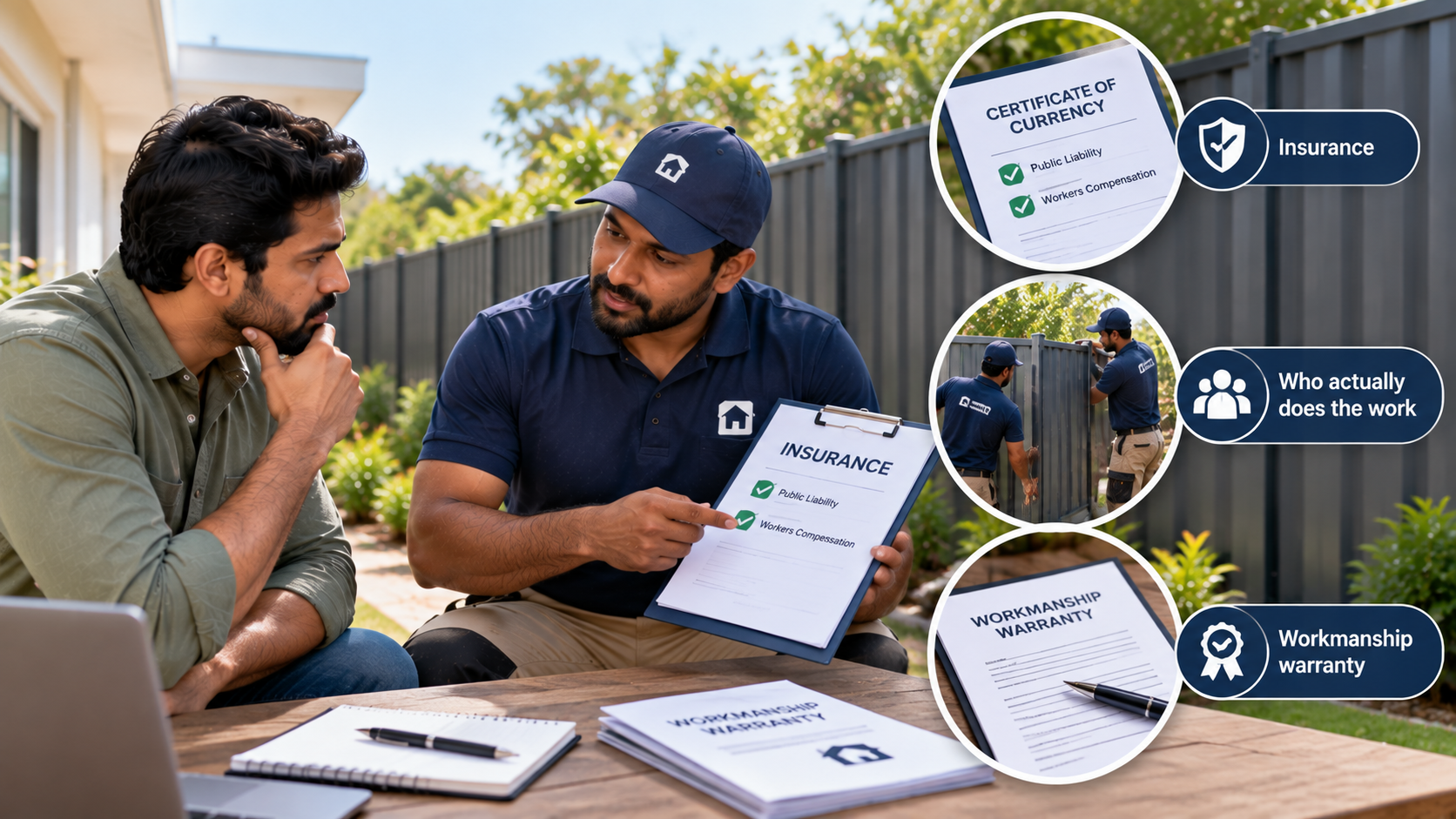
Insurance. Public liability and workers compensation, with certificates of currency available before anyone starts. If someone gets hurt on your block working for an uninsured contractor, that exposure has a way of finding you. A legitimate operator produces the certificate without blinking.
Who actually does the work. Some contractors quote the job and then subcontract the install to whoever is free that week. Not automatically bad, but it means the person who assessed your site is not the person building your fence, and the standard you were quoted is not necessarily the standard you get.
The workmanship warranty, separate from the manufacturer's material warranty. Colorbond materials carry BlueScope's warranty and they rarely fail. Installations do. A workmanship guarantee is a contractor putting their own money behind the part of the job you can never inspect.
Who does this properly
FencrGatr is a Perth fencing company working across the full metro area, from the coastal limestone belt through to the hills clay, installing Colorbond, aluminium slat, timber, glass and steel pool barriers to AS1926.1, gates, gate automation and retaining walls. Footing depth, footing diameter, rail count and coating grade go on the written quote as standard, and removal and disposal sit inside the scope rather than beside it.
That is the behaviour to look for in any fence contractors you shortlist, whoever you end up using. The quote is a document, not a number.
One more thing if you share the boundary
If the fence sits on a shared boundary, the Dividing Fences Act 1961 (WA) applies. It entitles you to a contribution from your neighbour toward a sufficient fence, which means basic. Anything above basic is yours alone.
Sort that conversation out before you book, not after the invoice lands. It goes considerably better in advance.
Back to those three quotes
Ask all three contractors the five questions and see what comes back.
Sometimes the $4,200 quote answers every one of them properly. Small outfit, low overheads, does good work, has no interest in explaining itself unless asked. That happens, and when it does you have found something genuinely worth having.
More often it comes back vague. No depth. Removal excluded. "Subject to ground conditions." That is not a cheaper fence. That is a different fence, and the difference will show up in about year four, at which point the $3,200 you saved will look like a deposit on the replacement.
The point is not that price is meaningless. It is that price is uninterpretable until you know what is in it.

Comments ()