
Healthy Air, Healthy Home: Simple Solutions for Better Indoor Air
Air pollution is one of the biggest environmental problems we’re facing today. We have numerous studies linking it to a wide range of health issues, from respiratory conditions, like asthma, chronic obstructive pulmonary disease (COPD), and lung cancer, to cardiovascular diseases, systemic and metabolic conditions, and neurological disorders.
However, it’s not just the air you breathe outside that can affect your health, but also your indoor air because, unfortunately, air pollution doesn’t stop at your doorstep. You may think you’re safe from it the moment you enter your home, but in reality, the air pollution level in your living space can be two to five times higher, according to the US Environmental Protection Agency (EPA).
These are not the exact same types of pollutants. Outside, carbon monoxide, ozone, lead, nitrogen dioxide, sulfur dioxide, smoke, and dust are typically to blame for the poor air quality, while indoors, we usually deal with volatile organic compounds (VOCs), biological allergens like mold and dust mites, and fumes from cooking and smoking. Nevertheless, the fact that the air in your home may be even more polluted than the air outside is very concerning, especially if you spend a lot of time indoors.
The good news is that, unlike outside air pollution, which you can’t do much about, you can actually control what’s happening inside your home and take steps to improve the quality of your indoor air, so here are a few things you can do in this respect.
Throw your windows wide open
That might sound a bit counterintuitive if you live in a highly polluted area, like a mining town or next to a huge power plant, but since that’s highly unlikely and we’ve already mentioned that in most cases outside air is cleaner than indoor air, this shouldn’t be an issue.
Keeping your windows wide open for a few minutes every day is the simplest and most efficient way to freshen up the air in your home. It also doesn’t cost you anything, so you have every reason to make this part of your daily routine. Just remember to turn your central air conditioning off while the windows are open if you don’t want to spike your utility bills.
Clean your AC regularly
Speaking of ACs, they are great for cleaning the air in your house as most systems integrate filters that trap particles like dust, pet dander and pollen. However, if you want your AC to function properly and benefit from its air cleaning abilities, you need to clean or replace filters regularly, as indicated by the manufacturer, otherwise it will have the exact opposite effect. Clogged filters won’t be able to catch pollutants anymore and will let them into your home. What’s more, dirty filters retain moisture, which, in combination with dust, creates a perfect environment for mold to thrive.
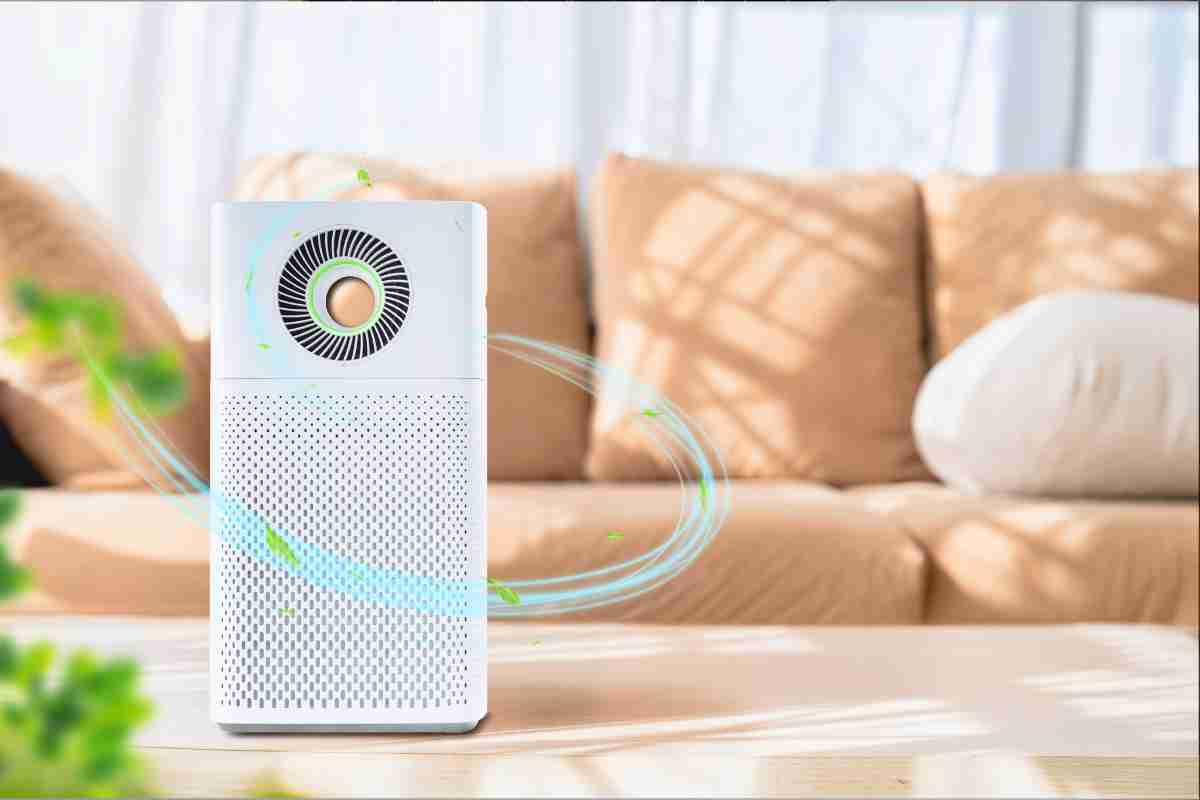
Also, it’s important to know that even the most performant ACs have their limitations and can’t trap all harmful particles like smoke or VOCs. That’s what dedicated air purifiers are for. These devices are specifically designed to circulate the air in your home and clean it, being able to eliminate up to 99.97% of airborne particles, including microscopic pollutants as small as 0.3 microns, making them the perfect solution for getting rid of allergens and other health-threatening compounds.
Include plants in your décor
You don’t have to turn your home into a small jungle – although that’s quite a popular design trend nowadays – but adding a few potted plants in every room can actually help improve air quality, not to mention that they look absolutely beautiful. Certain species like spider plants, snake plants, or peace lilies are known to filter pollutants like formaldehyde, benzene, and xylene.
Another great thing about indoor plants is that they act as natural humidifiers, as they add moisture to the air through a process called transpiration, where they absorb water through their roots and release it through their leaves. And before you ask why this matters for air quality, proper humidity reduces the spread of airborne viruses and also weighs down dust and other particles, so you can easily clean them off surfaces. So, if the air in your home is too dry, you might want to use a humidifier to maintain adequate moisture levels.
Leave your shoes at the door
We don’t mean to impose on you and tell you what to do in your own house, but if you care about the air you breathe and your health, we highly recommend taking off your shoes and leaving them at the door.
How exactly does this connect to air quality, you may wonder. Well, the soles of your shoes harbor a lot of nasty stuff. It’s estimated that they carry around 421,000 types of bacteria, heavy metals, outdoor mold spores, pesticides and other toxic chemicals, so when you enter the house with your shoes on, many of these microscopic particles become airborne or spread on your carpets and floors. This should be enough to convince you to adopt a no-shoes policy inside your home.
Ditch toxic cleaning products
Many of the cleaning products that you rely on to keep your home spotless and fresh are actually doing more harm than good because they contain toxic chemicals that degrade your indoor air quality. The safest alternative is to make your own cleaning products using ingredients that you probably already have at home, such as vinegar, baking soda, and dish soap.
Sure, it’s more convenient to reach for an off-the-shelf cleaning product than to DIY, but once you get in the habit and notice the benefits, you might not want to go back. Removing harsh cleaning products from your home may be one of the best decisions you can make for your health. And while you’re at it, you might also want to get rid (or at least limit the use) of synthetic fragrances, scented candles, and air fresheners.
Improving indoor air quality doesn’t have to be complicated. You just have to start small and work your way up from there.
Comments ()